Chouhan hails India's first indigenous H5N1 bird flu vaccine

Synopsis
Union Agriculture Minister Shivraj Singh Chouhan has celebrated the development of India's first fully indigenous H5N1 avian influenza vaccine, calling it a landmark achievement of Indian science and a testament to the nation's Atmanirbhar Bharat ambitions in animal health biotechnology.
Key Takeaways
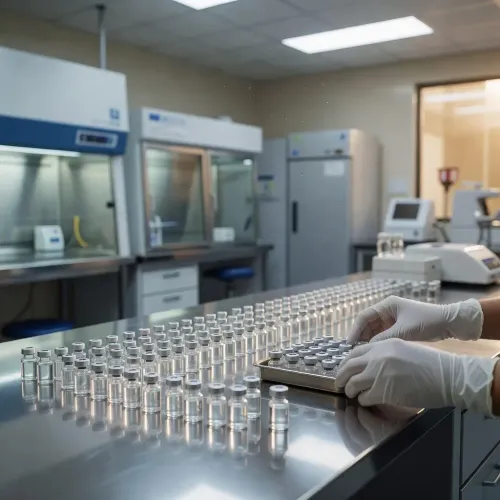
India has developed its first fully indigenous H5N1 avian influenza vaccine , a historic milestone in domestic animal health biotechnology.
Union Agriculture Minister Shivraj Singh Chouhan publicly celebrated the achievement on 20 November 2026 , saluting the scientists behind it.
The development reduces India's dependence on imported poultry disease vaccines, aligning with Atmanirbhar Bharat self-reliance goals.
H5N1 is a highly pathogenic avian influenza strain capable of causing catastrophic losses in poultry flocks and carrying pandemic risk potential.
Regulatory clearances, commercial manufacturing scale-up, and integration into national avian influenza control programmes are the key next steps to watch.
India's poultry sector — a cornerstone of farmer livelihoods and food security — stands to benefit directly from domestic vaccine access.
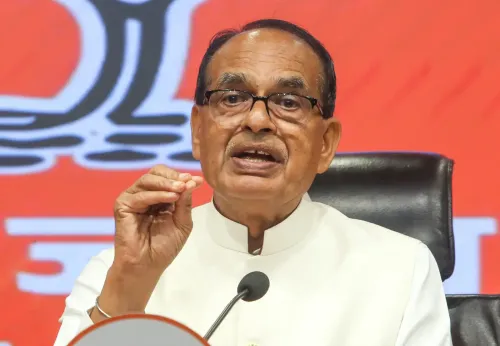
Years of quiet laboratory work by Indian scientists have delivered a landmark: India's first fully indigenous H5N1 avian influenza vaccine — a development that Union Agriculture Minister Shivraj Singh Chouhan marked with an emotional tribute on Friday, 20 November 2026, calling it the fruit of 'years of devotion, tireless effort, and dedication' by the country's researchers.
Posting on X in Hindi, Chouhan wrote — 'आज मन गर्व से भरा है' ('Today my heart is filled with pride') — and offered his deepest respects to every scientist behind the achievement. He invoked the #SwadeshiVaccine hashtag, framing the breakthrough as proof that 'the world is watching India's capability to set new benchmarks through its own effort.'
Why an H5N1 vaccine made in India matters
H5N1 avian influenza is one of the most feared pathogens in livestock health — capable of devastating poultry flocks within days and carrying a persistent, low-probability but high-consequence risk of human transmission. Until now, India's animal health system relied on imported formulations, leaving the country exposed to supply-chain shocks and foreign pricing. A domestically produced vaccine changes that calculus entirely.
The breakthrough sits squarely within the Atmanirbhar Bharat framework, which has pushed Indian science and industry to close import-dependence gaps in sectors from semiconductors to pharmaceuticals — and now, critically, to animal health biotechnology. For India's vast poultry sector, which supports millions of farmers and underpins a multi-billion-rupee protein economy, domestic vaccine availability is not just a scientific milestone; it is an economic security upgrade.
What comes next: from lab to field
The path from a successful vaccine to a nationwide deployment runs through regulatory clearance, scaled commercial manufacturing, and integration into national avian influenza control programmes. Each step carries its own timeline — and the speed with which authorities move will determine how quickly poultry farmers across states can access and benefit from the protection the vaccine promises.
Animal health researchers and farm-sector stakeholders will be watching closely for official announcements on approvals and rollout. The vaccine's development marks the starting line, not the finish tape — but it is a starting line India has now, for the first time, drawn for itself.
For a country that vaccinated more than a billion people against COVID-19 with domestically made doses, adding a homegrown H5N1 vaccine to its arsenal signals that Indian biotechnology has found a new frontier — and intends to own it.
Point of View
Linking a scientific achievement to the BJP government's flagship Atmanirbhar Bharat narrative at a time when self-reliance in critical sectors is a core political identity marker. The Agriculture Ministry's ownership of the moment is also notable: animal health biotechnology sits at the intersection of farm welfare, food security, and pandemic preparedness, all three of which are politically sensitive portfolios. If the vaccine moves swiftly through regulatory and manufacturing pipelines, it could become a touchstone campaign point for the ruling coalition among India's large rural and farmer voter base. The speed of institutional follow-through — not the announcement itself — will determine whether this milestone becomes a durable policy legacy.
NationPress
20 Nov 2026
Frequently Asked Questions
What is India's indigenous H5N1 bird flu vaccine?
It is India's first fully domestically developed vaccine against the H5N1 strain of avian influenza, created by Indian scientists without dependence on foreign technology or formulations.
Why is the H5N1 bird flu vaccine important for India?
H5N1 avian influenza can devastate poultry flocks rapidly and poses a low-probability but serious human pandemic risk. A domestic vaccine reduces import dependence and gives India direct control over supply and pricing for its large poultry sector.
What did Shivraj Singh Chouhan say about the H5N1 vaccine?
Chouhan posted on X calling the vaccine 'the result of years of devotion, tireless effort, and dedication' by Indian scientists, and saluted all researchers involved in the breakthrough.
When will the Indian H5N1 vaccine be available to poultry farmers?
Specific rollout timelines have not been officially announced. The vaccine must still go through regulatory clearances and commercial manufacturing scale-up before reaching farmers through national avian influenza control programmes.
How does the H5N1 vaccine relate to Atmanirbhar Bharat?
The vaccine is a concrete example of India's push for self-reliance in critical sectors. Animal health biotechnology has historically depended on imports, and a domestically made H5N1 vaccine closes a significant gap in India's biosecurity and livestock protection infrastructure.