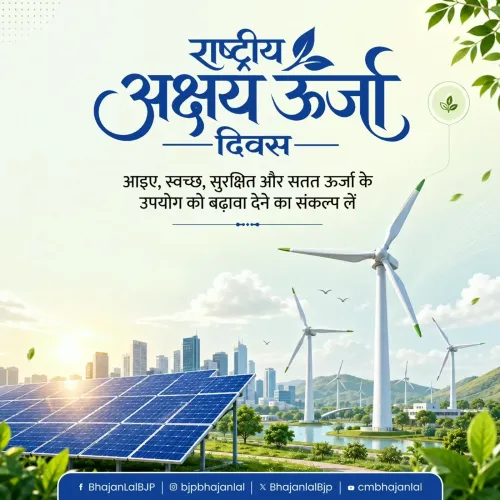
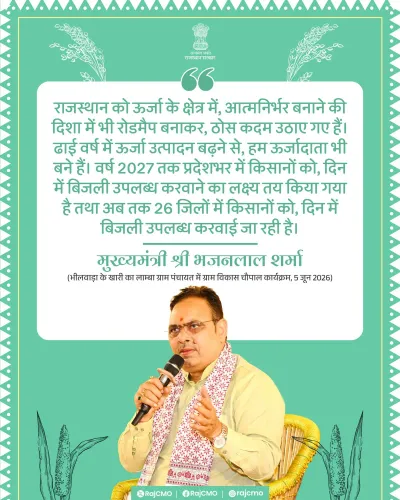
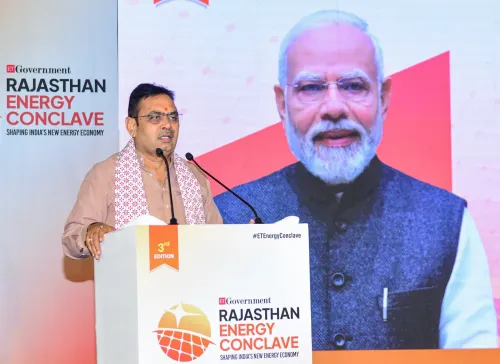
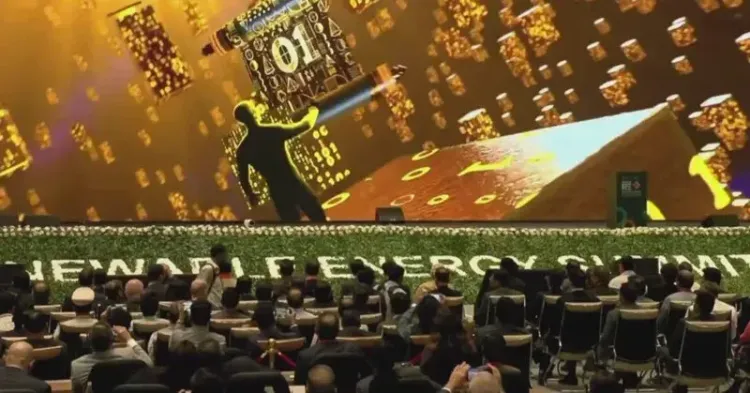
CM Bhajan Lal at India Renewable Energy Summit 2026
Synopsis
Rajasthan Chief Minister Bhajan Lal Sharma attended and live-streamed the India Renewable Energy Summit & Expo 2026 in New Delhi on 2 November, spotlighting Rajasthan's central role in India's drive to achieve 500 GW of non-fossil-fuel capacity by 2030.
Key Takeaways
Rajasthan CM Bhajan Lal Sharma live-streamed the India Renewable Energy Summit & Expo 2026 from New Delhi on 2 November 2026 .
India has committed to 500 GW of non-fossil-fuel capacity by 2030 , a target announced at COP26 in Glasgow in 2021 .
Rajasthan is among India's most strategically important states for solar deployment due to its high-irradiance desert geography.
India's structured solar push dates to the Jawaharlal Nehru National Solar Mission (2010) , which built the regulatory foundation for today's gigawatt-scale projects.
National summits of this kind serve as primary forums for investment pledges, grid-integration policy, and state-centre coordination on renewable targets.
Follow-up project allocations or policy announcements from the summit — particularly those naming Rajasthan — will be the key signal to watch.
Rajasthan Chief Minister Bhajan Lal Sharma joined the India Renewable Energy Summit & Expo 2026 in New Delhi on Monday, 2 November 2026, live-streaming the national conference to his followers — a signal that India's clean-energy push is now as much a political priority as a policy one.
Rajasthan's stake in India's 500 GW mission
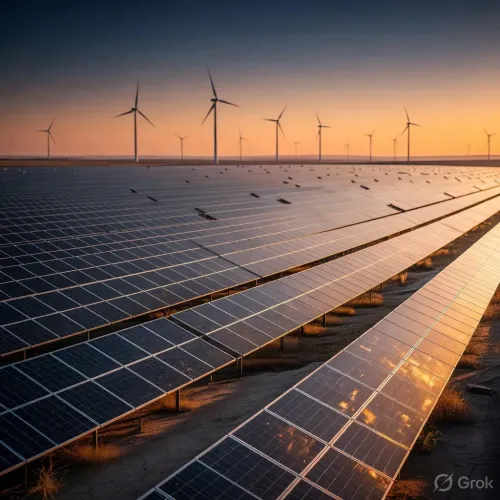
The summit is no routine industry gathering. It sits squarely on the path India charted at COP26 in Glasgow in 2021: 500 GW of non-fossil-fuel electricity capacity by 2030. With roughly five years left on that clock and a significant gap still to close, national-level convenings like this one are where government and developers hammer out the 'how'.
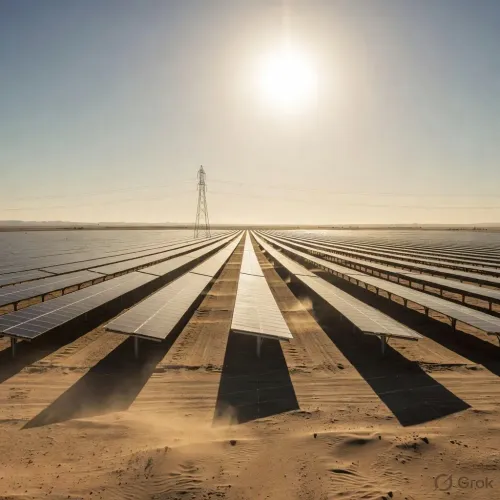
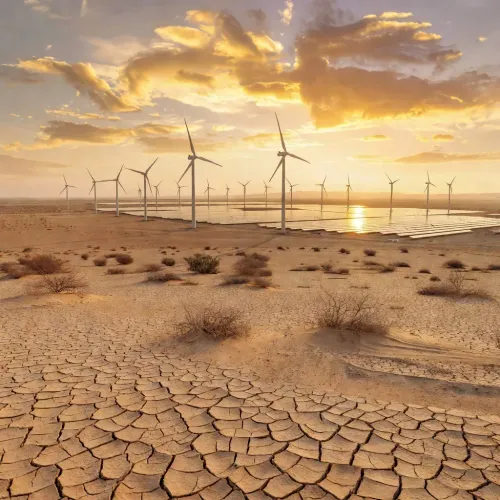
Rajasthan is central to that conversation. The state's vast stretches of high-solar-irradiance desert make it one of the country's most valuable renewable real-estate assets. CM Sharma's presence — and his decision to broadcast the event live — underlines that the state intends to remain at the front of the queue when project allocations and policy incentives are on the table.
From Nehru's solar mission to a 2026 expo
India's structured push into solar began with the Jawaharlal Nehru National Solar Mission, launched in 2010, which seeded the industrial and regulatory architecture that now underpins gigawatt-scale deployments. Summits of this format — part exhibition, part policy forum — have since become the primary venue for grid-integration debates, investment pledges, and technology showcases that translate long-range targets into signed contracts.
The 2026 edition arrives at a moment when India is simultaneously managing the pace of capacity addition, the challenge of battery storage at scale, and the grid-balancing demands that come with a rapidly growing share of intermittent renewables. Those are the kinds of structural questions a summit in New Delhi is designed to surface — and, if the political will is present, to resolve.
Why a CM's live feed matters
State chief ministers do not routinely amplify central-government energy events to their own audiences. Sharma's live broadcast is a quiet but deliberate act of alignment — telling investors, developers, and the central government that Rajasthan is open for renewable business. In a sector where state-level land acquisition, grid connectivity approvals, and power-purchase agreements are the actual bottlenecks, that kind of visible buy-in from a CM carries real weight.
Watch for any project announcements or policy commitments that emerge from the summit floor — particularly those naming Rajasthan as a destination for new capacity. Those follow-through signals will tell the real story of today's live stream.
Point of View
Not just wait, for central allocations. Rajasthan's geography already makes it a natural anchor for the national solar programme; the CM's visible alignment with the summit strengthens that claim in the eyes of investors and the central government alike. The move also fits a broader BJP-governed-state pattern of using high-profile energy events to attract private capital, framing climate commitments as economic opportunity rather than regulatory burden. Whether today's optics translate into binding project agreements will determine how substantive this moment truly is.
NationPress
2 Nov 2026
Frequently Asked Questions
What is the India Renewable Energy Summit and Expo 2026?
The India Renewable Energy Summit & Expo 2026 is a national-level conference and exhibition held in New Delhi that brings together government officials, industry players, and investors to coordinate on technology, investment, and policy for scaling India's clean-energy capacity.
Why did Rajasthan CM Bhajan Lal Sharma attend the renewable energy summit?
As Chief Minister of one of India's most solar-rich states, Sharma's attendance signals Rajasthan's intent to remain a leading destination for renewable energy investment and project allocations as India races toward its 500 GW target by 2030.
What is India's renewable energy target by 2030?
India committed at COP26 in Glasgow in 2021 to achieving 500 GW of non-fossil-fuel electricity capacity by 2030, a cornerstone of its Paris Agreement climate pledges.
What is Rajasthan's role in India's solar energy expansion?
Rajasthan's vast, high-solar-irradiance desert landscape makes it one of India's most valuable states for utility-scale solar deployment, and it has been a consistent focus of national renewable energy policy and private investment.
What was the Jawaharlal Nehru National Solar Mission?
Launched in 2010, the Jawaharlal Nehru National Solar Mission was India's foundational policy framework for scaling solar power, establishing the regulatory and industrial architecture that underpins today's large-scale renewable projects.