CM Bhajan Lal Sharma Invokes 2016 Surgical Strike on Anniversary
Synopsis
On the tenth anniversary of India's 2016 surgical strikes, Rajasthan CM Bhajan Lal Sharma quoted PM Modi's Mann Ki Baat address, framing the cross-LoC operation as a defining moment in India's counter-terrorism doctrine that signalled a shift from strategic restraint to public resolve.
Key Takeaways
Rajasthan CM Bhajan Lal Sharma posted a quote from PM Narendra Modi's Mann Ki Baat on 27 September 2026 , the tenth anniversary of the 2016 surgical strikes.
The surgical strikes were conducted on 29 September 2016 , eleven days after the Uri attack (18 September 2016) killed 19 Indian soldiers .
The Indian government's public acknowledgement of the cross-LoC operation was historically unprecedented for India.
Modi's quoted statement described the strikes as presenting 'a new example of India's anti-terrorism policy before the entire world.' The BJP has consistently cited the 2016 operation as the pivot from strategic restraint to a more assertive national-security posture.
Ten years ago, India drew a line — and crossed it. Rajasthan Chief Minister Bhajan Lal Sharma marked the anniversary of the 2016 surgical strikes on Sunday, 27 September 2026 by sharing Prime Minister Narendra Modi's words from Mann Ki Baat, calling the cross-LoC operation a defining statement of India's counter-terrorism doctrine to the entire world.
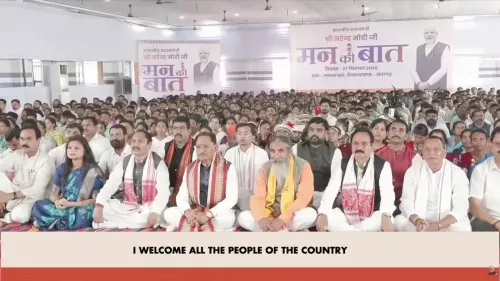
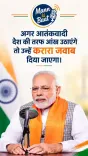
Sharma quoted Prime Minister Modi directly: 'Surgical strike ne danke ki chot par puri duniya ke samne Bharat ki aatankwad virodhi neeti ka ek naya udaharan prastut kiya tha' — 'The surgical strike presented, with a resounding declaration before the whole world, a new example of India's anti-terrorism policy.'
What the Surgical Strike Was — and Why It Still Resonates
The operation traces back to the Uri attack of 18 September 2016, when a pre-dawn assault on an Indian Army brigade headquarters in Jammu and Kashmir killed 19 soldiers — one of the deadliest strikes on Indian forces in years. Eleven days later, on 29 September 2016, the Indian Army announced it had conducted cross-Line of Control raids, targeting terrorist launch pads in Pakistan-administered territory. The government's public acknowledgement was itself historic: India had for decades maintained deliberate ambiguity around such operations. That decision to announce — loudly and by name — set a new template. The message, both domestic and diplomatic, was unmistakable.Mann Ki Baat as a Platform for National Security Messaging
Prime Minister Modi's monthly radio address, Mann Ki Baat, has regularly served as a direct-to-citizen channel for framing national security milestones. By surfacing this particular quote from the programme, Chief Minister Sharma reinforces a BJP talking point that has grown into a cornerstone of the party's national-security identity over the past decade: that the 2016 surgical strikes marked the end of strategic restraint and the beginning of what the ruling dispensation terms a 'new India' doctrine on cross-border terrorism. The anniversary falls at a moment when security posture, border management, and India's response calculus to terror remain live political and policy conversations across the country.A Decade of Doctrine: From Restraint to Public Resolve
The surgical strike did not emerge from a vacuum. For years, strategic analysts had debated India's options under the nuclear overhang — how to respond to state-sponsored terrorism without triggering escalation. The 2016 operation represented a calibrated answer: a limited, deniable-by-convention but publicly confirmed cross-border strike, accompanied by a government press briefing that made sure the world heard it. Since that moment, successive BJP-led governments have cited the precedent as evidence of a harder, more self-assured security posture — one that Sharma's post today deliberately keeps in public memory.Point of View
Timed precisely to the anniversary and anchored in PM Modi's own words from Mann Ki Baat, is a deliberate act of political memory: keeping a decade-old precedent alive as a benchmark for India's counter-terror doctrine. It also signals how subnational BJP leaders continue to amplify the Centre's security narrative, even in the absence of a new triggering event. The underlying policy argument — that public acknowledgement of limited military action deters future attacks — remains contested among strategic analysts but politically potent for the ruling party.
NationPress
27 Sept 2026
Frequently Asked Questions
What was the 2016 surgical strike by India?
The 2016 surgical strike was an Indian Army cross-Line of Control operation conducted on 29 September 2016, targeting terrorist launch pads in Pakistan-administered territory. It came eleven days after the Uri attack killed 19 Indian soldiers on 18 September 2016.
Why is the 2016 surgical strike anniversary significant?
The anniversary marks a decade since India publicly acknowledged a cross-LoC counter-terrorism operation — a break from decades of strategic ambiguity that the BJP government has since framed as a turning point in India's anti-terror policy.
What did Bhajan Lal Sharma post about the surgical strike?
Rajasthan Chief Minister Bhajan Lal Sharma quoted PM Modi's Mann Ki Baat address on X, stating that the surgical strike 'presented a new example of India's anti-terrorism policy before the entire world' with a resounding public declaration.
What is Mann Ki Baat and how is it related to the surgical strike?
Mann Ki Baat is Prime Minister Modi's monthly radio address to citizens. PM Modi used the programme to discuss the significance of the surgical strikes, framing them as a bold articulation of India's counter-terrorism resolve on the world stage.
What was the Uri attack that preceded the surgical strike?
The Uri attack on 18 September 2016 was an assault on an Indian Army brigade headquarters in Jammu and Kashmir that killed 19 soldiers, prompting India to conduct the surgical strikes across the Line of Control eleven days later.