CM Bhajan Lal Sharma: Youth Are Rajasthan's Biggest Strength
Synopsis
Rajasthan Chief Minister Bhajan Lal Sharma on 23 October 2026 declared youth the state's greatest strength, pledging that the BJP's double-engine government will link young people's ambitions to concrete opportunities and build a self-reliant future for the state.
Key Takeaways
CM Bhajan Lal Sharma posted on 23 October 2026 reaffirming youth development as a core priority for Rajasthan.
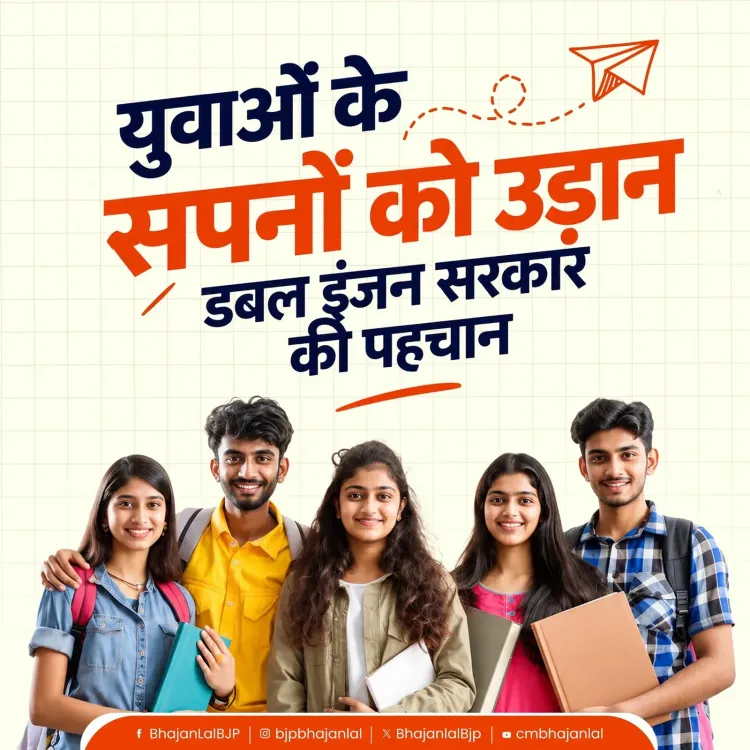
He described youth as the 'foundation of Rajasthan's progress and greatest strength of a developed future.' The post invokes the BJP's 'double engine government' frame — aligned central and state governance — as the delivery mechanism.
Key goals stated are making youth self-reliant ( aatmanirbhar ) and empowered ( sashakt ) by connecting dreams to opportunities.
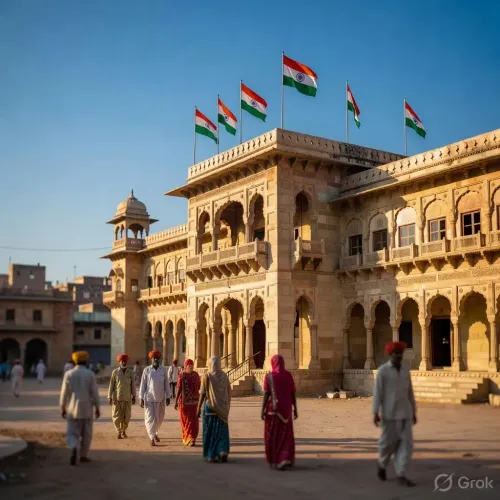
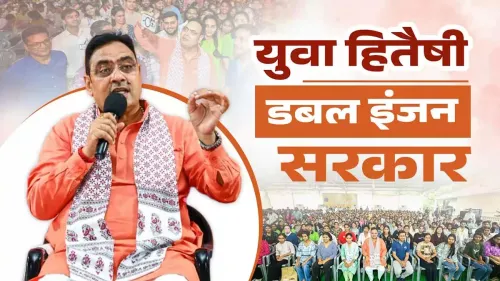
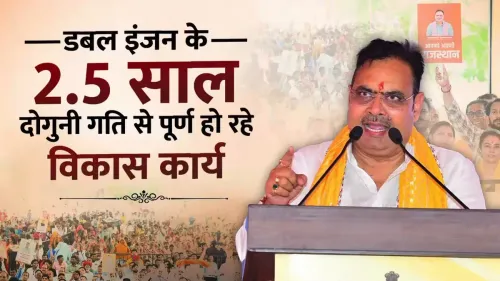
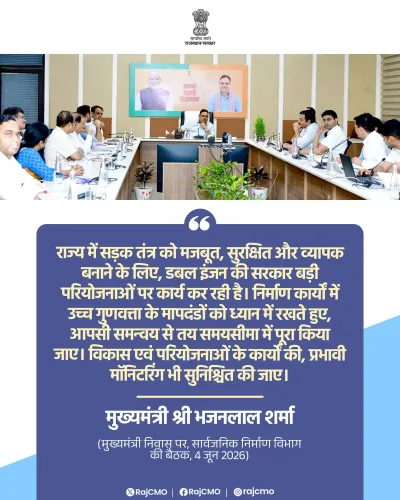
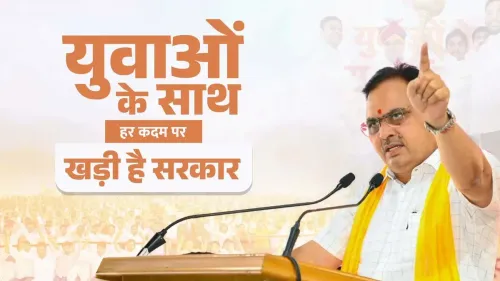
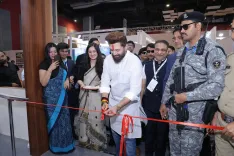
The post was accompanied by four images , indicating possible on-ground activity, though no specific scheme or data was cited.
Rajasthan has been BJP-governed since the 2023 assembly elections , with youth welfare highlighted since Sharma assumed office in December 2023 .
Rajasthan's young population is not just a statistic — it is, in Chief Minister Bhajan Lal Sharma's framing, the very engine of the state's future. On Friday, 23 October 2026, the BJP leader took to X to reaffirm his government's commitment to turning youthful ambition into concrete opportunity, pitching Rajasthan's 'double engine' administration as the vehicle to get there.
Posting in Hindi, Sharma wrote: 'युवा शक्ति राजस्थान की प्रगति का आधार और विकसित भविष्य की सबसे बड़ी ताकत है' — 'The power of youth is the foundation of Rajasthan's progress and the greatest strength of a developed future.' He added that the double-engine government is 'committed to connecting the dreams of youth with opportunities and making them self-reliant and empowered.'
The 'Double Engine' Pitch and What It Means for Rajasthan's Youth
The phrase 'double engine government' is the BJP's shorthand for a state and central government both flying the same flag — the argument being that policy alignment between Jaipur and New Delhi removes friction and accelerates delivery. Since sweeping to power in Rajasthan in the 2023 assembly elections, the BJP administration under Sharma has consistently framed youth development as a headline priority, threading state schemes into the broader national push to harness India's demographic dividend.
The post came with four images, suggesting an on-ground event or programme — though no specific scheme name, number, or beneficiary count was cited in the text itself. The messaging is deliberate: self-reliance (aatmanirbhar) and empowerment (sashakt) are the twin pillars of the BJP's youth-welfare vocabulary, echoing the Centre's own skills and employment-linkage framework.
A Recurring Signal Across BJP-Governed States
Sharma's post fits a pattern visible across BJP-ruled states — periodic, high-visibility affirmations that youth welfare is central to governance, timed to keep the conversation active between budget cycles and major scheme launches. For Rajasthan, a state with a large share of young job-seekers and a historically competitive public-employment market, such signals carry real political weight. The proof, however, will surface in the specifics: skill-training enrolments, employment numbers, and budgetary allocations when the state legislature next takes up financial business.
Sharma's government knows that demographic dividends do not pay themselves — they demand consistent institutional investment. The question Rajasthan's youth will eventually ask is not whether they are called a 'strength', but whether the machinery backing that label delivers.
Point of View
Pre-loading the political narrative. It reinforces the party's consistent framing of demographic strength as a governance achievement rather than a structural given. The absence of concrete scheme names or numbers is notable; it keeps the message broad and aspirational, useful for optics but ultimately benchmarked against delivery in budget sessions and employment data. Analysts watching Rajasthan will treat this as a signal to track, not a policy fact to report.
NationPress
23 Oct 2026
Frequently Asked Questions
What did Rajasthan CM Bhajan Lal Sharma say about youth on 23 October 2026?
Sharma declared that youth are the foundation of Rajasthan's progress and its greatest strength, and reaffirmed that the double-engine government is committed to making them self-reliant and empowered by connecting their dreams to real opportunities.
What does 'double engine government' mean in Rajasthan?
'Double engine government' is the BJP's term for having the same party in power both at the state level in Jaipur and at the Centre in New Delhi, arguing that policy alignment between the two speeds up scheme delivery and governance outcomes.
When did Bhajan Lal Sharma become Chief Minister of Rajasthan?
Bhajan Lal Sharma became Chief Minister of Rajasthan in December 2023 after the BJP won the state assembly elections that year.
What specific youth schemes has the Rajasthan government announced?
The 23 October 2026 post did not cite specific scheme names or statistics. The BJP government has broadly highlighted youth-focused development as a priority since taking office in late 2023, with specifics expected to be detailed in state budget sessions and policy documents.
Why does Rajasthan's youth population matter politically?
Rajasthan has a large share of young job-seekers and a competitive public-employment market, making youth welfare messaging especially significant. Delivering on employment and skill-development promises is seen as crucial to the BJP's political standing in the state.