CM Bhajanlal visits Partition Horrors exhibition in Bikaner
Synopsis
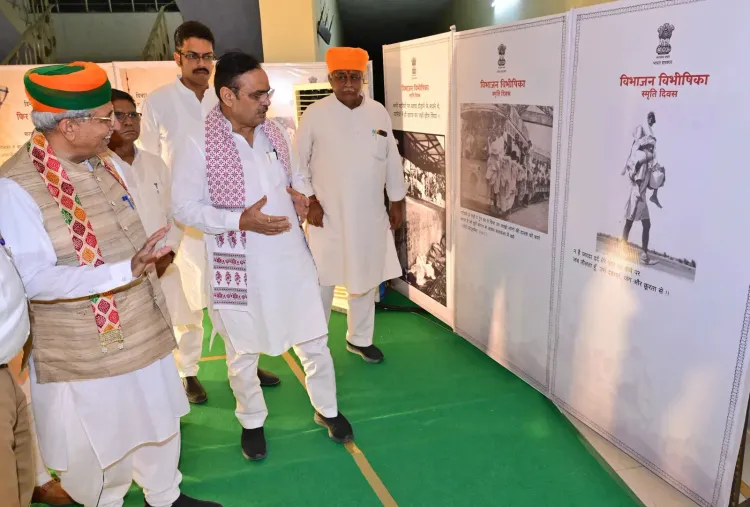
On India's 80th Independence Day, Rajasthan CM Bhajanlal Sharma visited a Partition Horrors Remembrance Exhibition at Swami Keshwanand Agricultural University in Bikaner, paying homage to victims and displaced families of the 1947 Partition alongside Union Minister Arjun Ram Meghwal and state ministers.
Key Takeaways
CM Bhajanlal Sharma visited the Vibhajan Vibheeshika Smriti Pradarshani (Partition Horrors Remembrance Exhibition) in Bikaner on 15 August 2026 .
The exhibition was held at Kisaan Bhawan, Swami Keshwanand Rajasthan Agricultural University , a state institution focused on arid-zone farming communities.
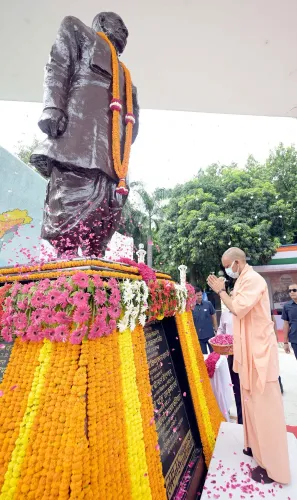
Sharma paid tribute to all known and unknown victims of the 1947 Partition and to families who endured displacement and separation.
Union Minister Arjun Ram Meghwal (Law and Justice, Independent Charge) and state minister Sumit Godara (Food and Civil Supplies) were present at the event.
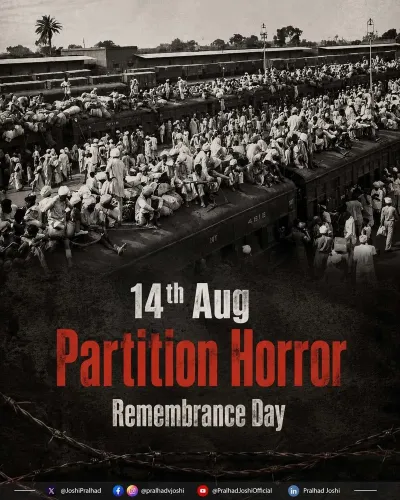
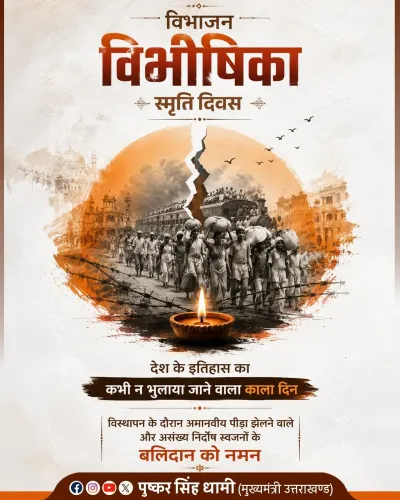
The event is part of the annual Partition Horrors Remembrance Day framework established by the Union Government on 14 August 2021 .
Bikaner's proximity to the India-Pakistan border gives the city particular historical resonance with Partition-era displacement narratives.
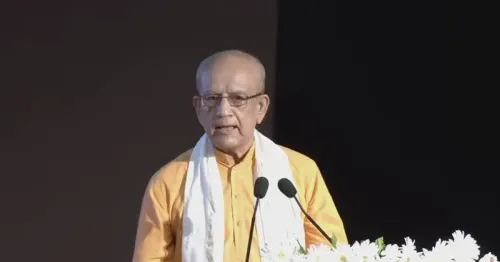
Seventy-nine years after the bloodiest demographic rupture of the twentieth century, Rajasthan Chief Minister Bhajanlal Sharma stood inside Kisaan Bhawan at Swami Keshwanand Rajasthan Agricultural University, Bikaner, on 15 August 2026 — Independence Day — and paid tribute to every known and unknown soul lost to the violence of the 1947 Partition.
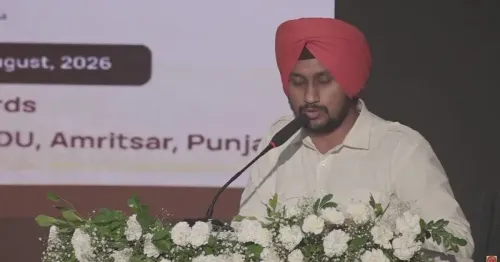
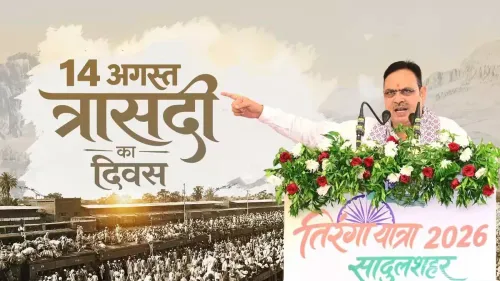
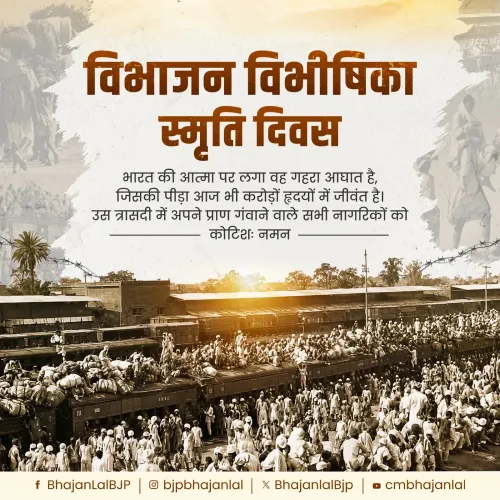
The Chief Minister's Office announced that Sharma visited the Vibhajan Vibheeshika Smriti Pradarshani — Partition Horrors Remembrance Exhibition — held at the university campus. He expressed grief and respect for those who lost their lives, and for the families who endured pain, separation, and displacement in the months surrounding Independence.
A desert city with deep Partition memory
Bikaner is not a random venue. The historic desert city sits close to the India-Pakistan border, and its population carries living threads of cross-border family separation from 1947. Hosting the exhibition at an agricultural university — an institution that serves rural communities across arid Rajasthan — widens its reach beyond urban audiences and into the farming families whose histories are often intertwined with Partition-era migration.
Central and state government in one room
The event drew Union Minister of State for Law and Justice (Independent Charge) Arjun Ram Meghwal — himself a Bikaner MP — alongside Rajasthan Food and Civil Supplies Minister Sumit Godara, several elected representatives, and senior officials. The joint presence of central and state leadership underlines the coordinated, institutionalised character that Partition remembrance has taken on since the Union Government designated 14 August as Partition Horrors Remembrance Day in 2021.
From national designation to state-level commemoration
That 2021 notification transformed what had been scattered local acts of memory into an annual, government-backed framework. State governments have since integrated exhibitions, seminars, and public programmes into their Independence Day calendars, using university campuses and civic venues to carry Partition narratives to younger generations who have no direct memory of the events. Rajasthan, with its long shared border and large displaced-family population, has been among the more active states in this commemorative cycle.
The hashtags #SwatantrataKaSankalp and #80thIndependenceDay accompanying the post place the tribute squarely within the broader national celebration of India's 80th Independence Day — a reminder that remembering the cost of freedom is, itself, part of the observance.
Memory, when it is this specific — a name, a border, a displaced family — does not stay ceremonial for long. It becomes a demand on the present.
Point of View
Such events have evolved from ad hoc memorials into coordinated state-centre programming, with BJP-governed states among the most active participants. The joint appearance of a Union minister and the Chief Minister in a border district reinforces the political as well as emotional salience of Partition memory for the ruling party's outreach in Rajasthan. Whether this commemorative energy translates into dedicated budget lines for Partition education or permanent memorials will be the next indicator of how deep the institutional commitment runs.
NationPress
15 Aug 2026
Frequently Asked Questions
What is Partition Horrors Remembrance Day in India?
Partition Horrors Remembrance Day is observed on 14 August every year, following a Union Government notification in 2021 to commemorate the victims of the 1947 Partition of British India, which caused mass displacement, violence, and loss of life.
Why did CM Bhajanlal Sharma visit Bikaner on Independence Day 2026?
CM Bhajanlal Sharma attended the Vibhajan Vibheeshika Smriti Pradarshani (Partition Horrors Remembrance Exhibition) at Swami Keshwanand Rajasthan Agricultural University in Bikaner on 15 August 2026 to pay tribute to Partition victims and displaced families.
Who is Arjun Ram Meghwal and why was he at the Bikaner event?
Arjun Ram Meghwal is the Union Minister of State for Law and Justice (Independent Charge) and a BJP MP from Bikaner. He attended the Partition remembrance exhibition in his constituency alongside CM Bhajanlal Sharma.
What is Swami Keshwanand Rajasthan Agricultural University?
Swami Keshwanand Rajasthan Agricultural University is a state agricultural university established in 1987 in Bikaner, focused on research and extension work in arid-zone farming across Rajasthan.
Why does Bikaner have a special connection to the 1947 Partition?
Bikaner is a historic desert city in northern Rajasthan located close to the India-Pakistan border. Its population has significant cross-border family linkages stemming from the displacement and migration that accompanied the 1947 Partition.