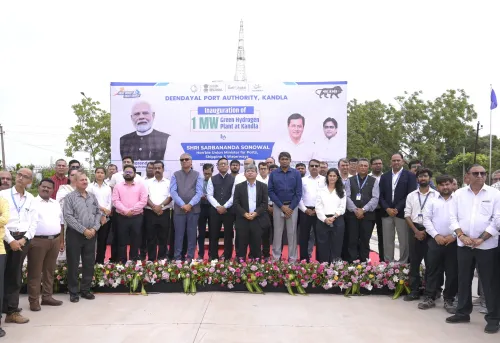
CM Bhupendra Patel backs Deendayal Port as green hydrogen hub
Synopsis
Gujarat Chief Minister Bhupendra Patel announced that Deendayal Port is being developed as a premier green hydrogen hub under the National Green Hydrogen Mission, with Assam Petrochemicals' e-methanol plant positioned to supply clean maritime fuel and advance India's net-zero 2070 target.
Key Takeaways
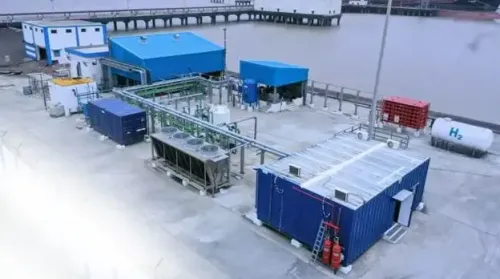
Deendayal Port in Gujarat is being developed as a major green hydrogen hub under India's National Green Hydrogen Mission (launched 2023).
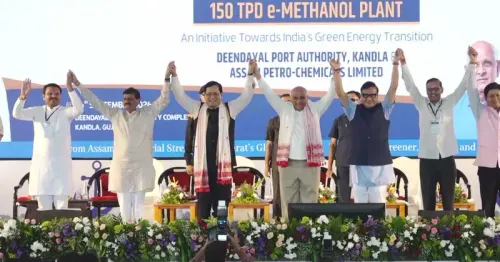
Assam Petrochemicals is establishing an e-methanol plant designed to supply clean fuel to vessels docking at the port.
E-methanol is produced by combining green hydrogen with captured CO2, making it a viable drop-in maritime fuel.
The initiative is part of India's commitment to reach net-zero emissions by 2070 , announced at COP26 in Glasgow.
The port-hub model co-locates renewable power, electrolysis, and bunkering infrastructure to serve international shipping lanes.
Key milestones to watch: Cabinet-approved tenders for green hydrogen facilities at Deendayal Port and first commercial e-methanol supply contracts for Indian-flagged ships.
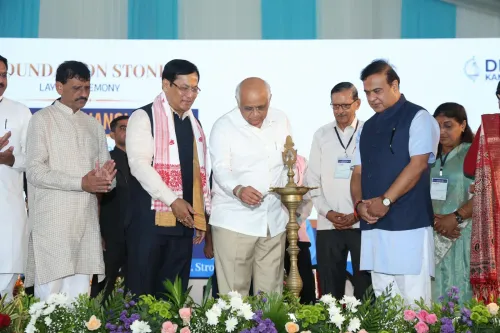
India's maritime decarbonisation story is gaining a concrete address — Deendayal Port in Gujarat — and Gujarat Chief Minister Bhupendra Patel used Saturday, 26 September 2026 to spell out exactly what is being built there, and why it matters for every ship that docks on India's western coast.
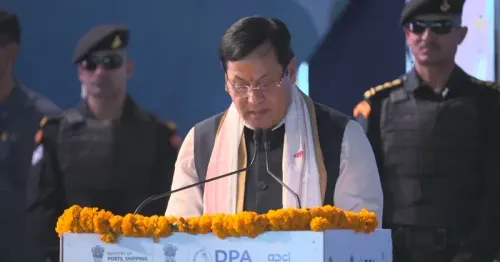
In a post on X, CM Patel wrote — 'राष्ट्रीय ग्रीन हाइड्रोजन मिशन के तहत दीनदयाल पोर्ट को एक प्रमुख ग्रीन हाइड्रोजन हब के रूप में विकसित किया जा रहा है' — ('Under the National Green Hydrogen Mission, Deendayal Port is being developed as a major green hydrogen hub'). He added that Assam Petrochemicals' upcoming e-methanol plant would serve as a critical link in this ecosystem, supplying clean fuel directly to vessels and pushing India closer to its net-zero target by 2070.
Deendayal Port's pivot from cargo gateway to clean-fuel node
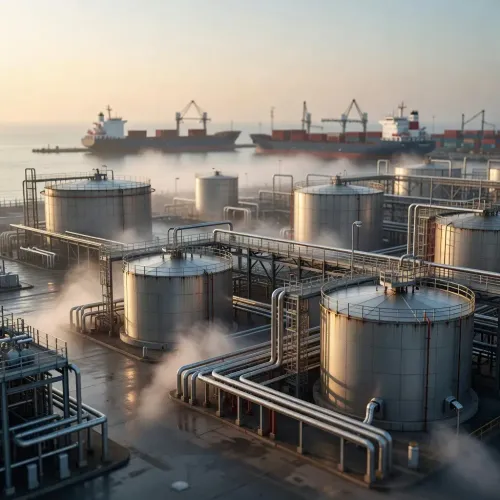
Deendayal Port, one of India's largest cargo-handling facilities by tonnage, sits at the western tip of Kutch district in Gujarat — already a strategic point for petroleum imports. The pivot to green hydrogen is no accident of geography. Port-based hubs are central to the National Green Hydrogen Mission, launched in 2023 with production-linked incentives, because they allow co-location of renewable power input, industrial-scale electrolysis, and bunkering infrastructure for international shipping lanes. A port that once moved fossil fuels in could, in principle, move green fuels out.
CM Patel framed the development explicitly within Prime Minister Narendra Modi's broader clean-energy vision, citing green hydrogen, green methanol, and green shipping as the three pillars of India's future fuel architecture. The language is deliberate: each 'green' prefix represents a different stage of the value chain — production, derivative conversion, and final maritime application.
Assam Petrochemicals' e-methanol plant — the missing link
Assam Petrochemicals, a state public-sector unit, is establishing an e-methanol facility that CM Patel described as a 'strong link' in this ambitious ecosystem. E-methanol — produced by combining green hydrogen with captured carbon dioxide — is emerging globally as one of the most viable drop-in fuels for large ocean-going vessels that cannot easily be electrified. Its appeal is logistical: existing ship engines can run on it with relatively minor modifications, making adoption faster than a full fleet redesign.
CM Patel did not specify a commissioning timeline or plant capacity for the Assam Petrochemicals facility, and those details remain to be announced officially. What the post does confirm is that the facility is being intentionally wired into the Deendayal Port supply chain — a cross-state industrial linkage that signals coordination between Gujarat's port infrastructure and Assam's petrochemical base.
Why maritime decarbonisation is India's hardest clean-energy test
Shipping is among the most stubborn emitters in the global economy. Heavy fuel oil has powered the sector for over a century, and the International Maritime Organisation's tightening emissions rules are forcing ports and fleets worldwide to find alternatives fast. India, with its coastline of over 7,500 kilometres and ambitions to become a global maritime hub, has both the incentive and the obligation to lead this transition in the Indo-Pacific.
CM Patel tied the initiative directly to India's 'Viksit Bharat' — developed India — agenda and to energy security for future generations. Clean-green energy adoption, he argued, is not just an environmental commitment; it is the foundation on which a self-reliant, prosperous India will be built. The next watchpoints: Cabinet approvals or tenders for green hydrogen and ammonia facilities at Deendayal Port, and the first commercial e-methanol supply contracts for Indian-flagged vessels.
Gujarat's largest port is no longer just a gateway for what India imports. It is being engineered into a launchpad for the fuel India wants to export to the world.
Point of View
Reinforcing the state's centrality in the BJP's clean-energy narrative ahead of tenders and investment decisions. The cross-state linkage with Assam Petrochemicals is notable: it presents the green hydrogen mission not as a Gujarat-centric project but as a nationally integrated supply chain, lending it broader political legitimacy. Port-led hubs are also a direct response to tightening IMO emissions rules, meaning this is simultaneously domestic politics and global compliance strategy. Whether the ecosystem delivers on its ambition will depend on how quickly Cabinet approvals, private investment, and commercial offtake contracts follow the rhetoric.
NationPress
26 Sept 2026
Frequently Asked Questions
What is the National Green Hydrogen Mission and when was it launched?
The National Green Hydrogen Mission is a central government scheme launched in 2023 to scale up green hydrogen production, storage, and use across sectors including industry and maritime transport, with production-linked incentives and port-based hubs as key pillars.
Why is Deendayal Port being developed as a green hydrogen hub?
Deendayal Port in Kutch, Gujarat is being developed as a green hydrogen hub because its location enables co-location of renewable energy input, industrial electrolysis, and bunkering infrastructure for international shipping lanes, making it an efficient node for producing and distributing green fuels.
What is e-methanol and why is it important for shipping?
E-methanol is produced by combining green hydrogen with captured carbon dioxide. It is important for shipping because existing vessel engines can run on it with relatively minor modifications, making it a practical drop-in clean fuel for large ocean-going ships without requiring a full fleet redesign.
What is Assam Petrochemicals' role in India's green hydrogen ecosystem?
Assam Petrochemicals, a state public-sector unit, is establishing an e-methanol plant that will supply clean maritime fuel to vessels through the Deendayal Port supply chain, linking Assam's petrochemical capacity to Gujarat's port infrastructure.
What is India's net-zero target and how does green hydrogen fit in?
India announced a net-zero emissions target by 2070 at COP26 in Glasgow in 2021. Green hydrogen and its derivatives like e-methanol are central to decarbonising hard-to-abate sectors such as maritime transport, where direct electrification is not yet feasible.