CM Bhupendra Patel Chairs SWAGAT Grievance Session
Synopsis
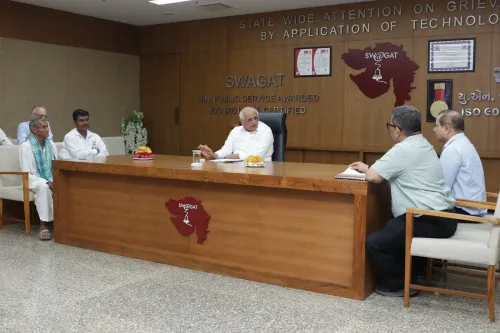
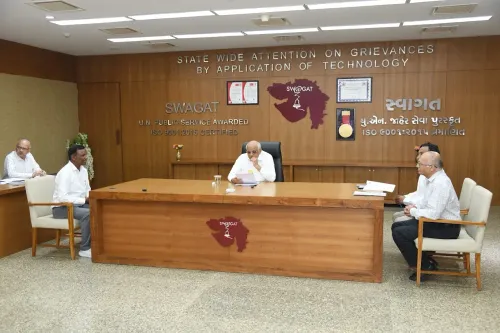
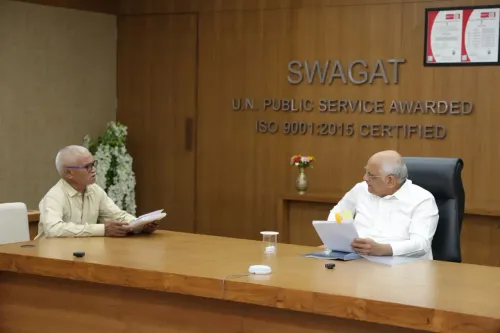
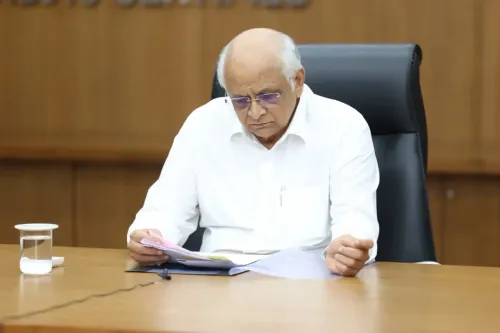
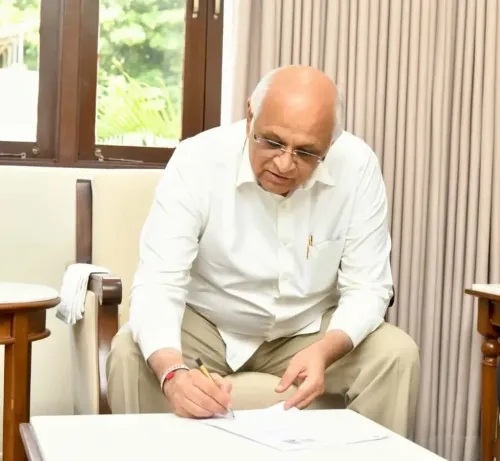
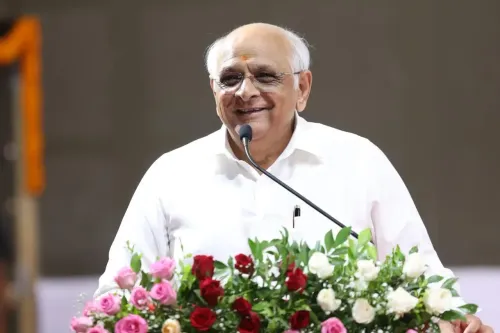
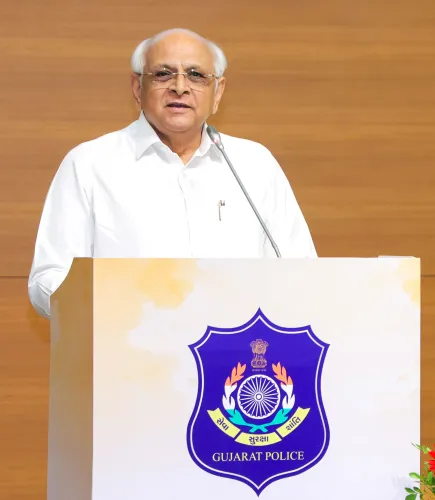
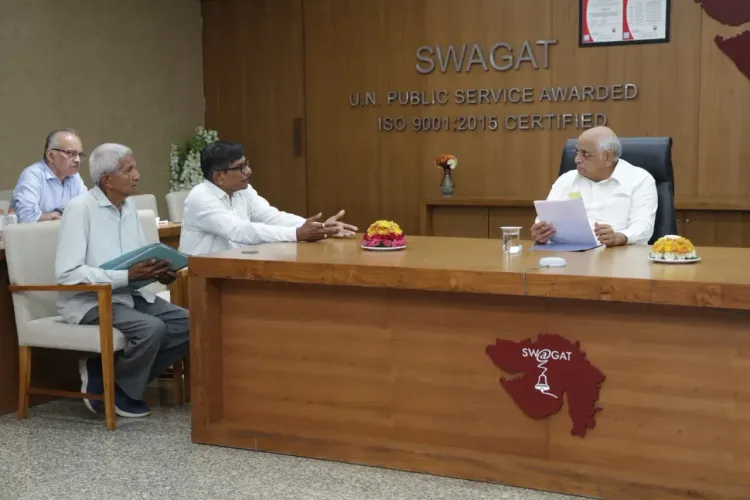
Chief Minister Bhupendra Patel personally presided over Gujarat's SWAGAT Online Grievance Redressal session on 22 June 2026, hearing citizens' representations and directing departments and district administrations to ensure swift, transparent, and time-bound resolution of public issues.
Key Takeaways
CM Bhupendra Patel chaired the state-level SWAGAT Online Public Grievance Redressal Programme on 22 June 2026 .
Citizens who arrived with direct representations were heard personally and with sensitivity by the Chief Minister.
Instructions were issued to concerned departments and district administrations for quick, transparent, and time-bound grievance disposal.
The SWAGAT platform was originally launched in 2003 by then-CM Narendra Modi as one of India's pioneering e-governance grievance tools.
Gujarat governments have sustained the platform across more than two decades, combining digital infrastructure with periodic direct hearings by the Chief Minister.
The session reinforced the administration's stated commitment to pro-people governance at the state level.
The Chief Minister's Office of Gujarat announced on Monday, 22 June 2026 that Chief Minister Bhupendra Patel personally presided over the state-level SWAGAT Online Public Grievance Redressal Programme, listening with sensitivity to representations brought directly by ordinary citizens and issuing instructions to concerned departments and district administrations for swift, transparent, and time-bound resolution.
Context
The post, shared by the official Chief Minister's Office of Gujarat account, states in Gujarati that 'મુખ્યમંત્રીશ્રીએ રાજ્ય સ્વાગતમાં આવેલી બધી જ રજૂઆતોમાં જનહિતકારી સંવેદના દાખવીને ઝડપી નિવારણ અંગેનો અભિગમ દર્શાવ્યો' — loosely translated: 'The Chief Minister demonstrated a pro-people sensitivity in all representations received at the state SWAGAT and conveyed an approach of rapid resolution, giving citizens an experience of pro-people governance.' Citizens who had arrived with physical representations were heard in person, while the session was conducted through the online platform simultaneously.
Policy Backdrop
SWAGAT — an acronym for State-Wide Attention on Grievances by Application of Technology — was launched in 2003 by then-Chief Minister Narendra Modi as one of India's earliest technology-driven public grievance platforms. The scheme was designed to give ordinary citizens direct access to the state administration without bureaucratic intermediaries, using video-conferencing and digital filing to bridge the gap between the government and the governed.
Successive Gujarat governments under the Bharatiya Janata Party have sustained and expanded the platform across more than two decades, integrating periodic personal hearings by the Chief Minister with the digital backend. Bhupendra Patel, who took office in September 2021, has continued this tradition, holding regular SWAGAT sessions as part of the state's administrative calendar. The platform is credited with disposing of a large volume of citizen grievances across districts and departments over its operational life.
Stakeholders and Impact
The primary beneficiaries of the SWAGAT programme are common citizens — particularly those from rural and semi-urban areas who may lack direct access to senior officials. By enabling representations to reach the Chief Minister's level, the programme creates a pressure mechanism on district administrations and line departments to resolve pending complaints within defined timelines.
During the 22 June 2026 session, CM Patel issued necessary guidance and instructions to concerned departments and district-level machinery, directing them to ensure quick, transparent, and time-bound disposal of citizen issues. The emphasis on 'pro-people governance' signals that the administration views these sessions not merely as ceremonial but as an active accountability tool for district officers.
What's Next
Observers and civil society groups tracking Gujarat's governance record periodically monitor district-wise and department-wise grievance disposal rates to assess whether the SWAGAT sessions translate into on-ground resolution. Any state budget allocations for expanding digital grievance infrastructure or adding new features to the platform will be a key indicator of the government's long-term commitment to the mechanism.
With Gujarat's model of combining technology with direct executive oversight having influenced similar schemes in other Indian states, the continued regularity of these sessions under CM Patel will be watched as a benchmark for citizen-responsive administration at the sub-national level.
Point of View
Now in its third decade, remains one of India's most durable examples of institutionalised e-governance — a model that has outlasted the political career of its founder and been adopted in varied forms by other states. CM Bhupendra Patel's continued personal participation in these sessions is a deliberate signal that the BJP's Gujarat model of administrative accessibility remains intact and is not merely archival. The emphasis on 'pro-people governance' in official communication also reflects a broader national BJP messaging arc around citizen-centric administration. Whether the sessions produce measurable improvements in grievance disposal timelines, rather than serving primarily as optics, is the question that will define their long-term credibility.
NationPress
23 Jun 2026
Frequently Asked Questions
What is the SWAGAT programme in Gujarat?
SWAGAT stands for State-Wide Attention on Grievances by Application of Technology. It is Gujarat's online public grievance redressal platform, launched in 2003 by then-Chief Minister Narendra Modi, which allows citizens to bring complaints directly to the state administration, including the Chief Minister, through a technology-enabled system.
What did CM Bhupendra Patel do at the SWAGAT session on 22 June 2026?
CM Bhupendra Patel personally heard representations from ordinary citizens who had arrived with direct complaints and issued instructions to relevant departments and district administrations to ensure swift, transparent, and time-bound resolution of their grievances.
How often does Gujarat's Chief Minister hold SWAGAT sessions?
SWAGAT sessions are held periodically as part of Gujarat's administrative calendar. The Chief Minister chairs these sessions regularly, combining the digital platform with direct personal hearings to maintain executive oversight over grievance redressal.
Who can participate in Gujarat's SWAGAT grievance programme?
Any ordinary citizen of Gujarat can bring representations to the SWAGAT programme. The platform is designed to give direct access to the state administration, particularly benefiting citizens from rural and semi-urban areas who may otherwise lack access to senior officials.
How does Gujarat's SWAGAT model compare with other states?
Gujarat's SWAGAT programme, launched in 2003, is one of India's earliest and most sustained technology-driven grievance platforms. Its model of combining digital filing with periodic direct hearings by the Chief Minister has influenced similar e-governance mechanisms adopted by other Indian states over the years.