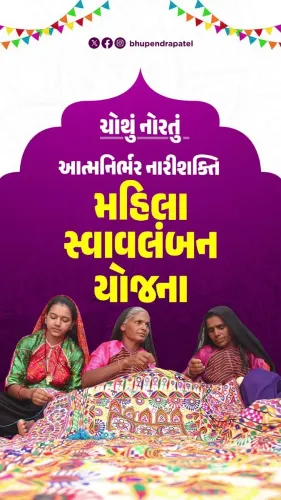
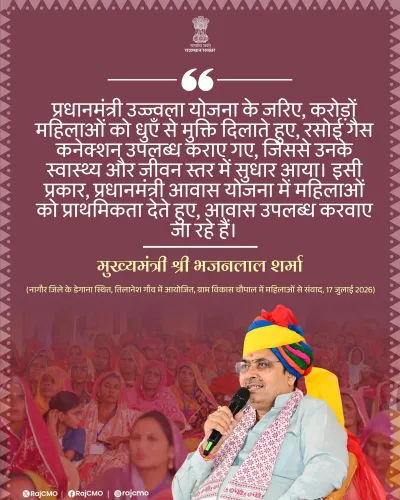
CM Bhupendra Patel invokes Ujjwala Yojana on Navratri's seventh day
Synopsis
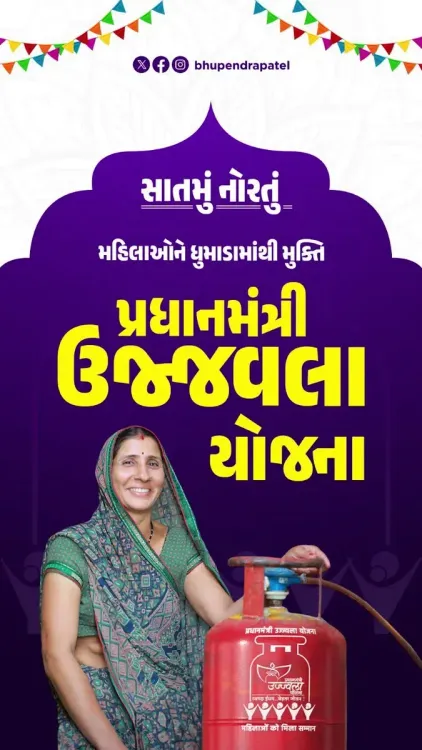
Gujarat Chief Minister Bhupendra Patel marked Navratri's seventh night — dedicated to Maa Kalaratri — by highlighting the Pradhan Mantri Ujjwala Yojana's role in freeing millions of women from smoky hearths and pledging to advance health and well-being for every woman.
Key Takeaways
Gujarat CM Bhupendra Patel posted on 17 October 2026 , the seventh night of Navratri, invoking Maa Kalaratri to pledge women's welfare.
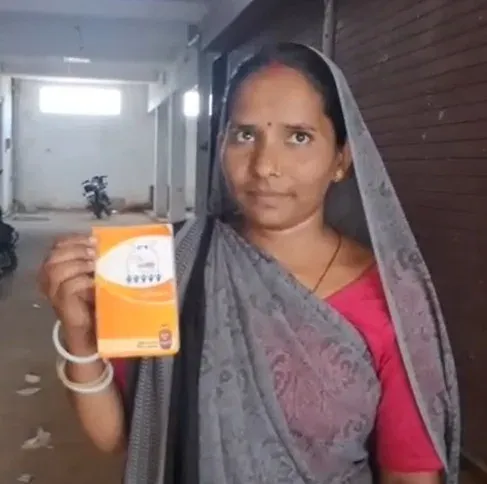
He described the Pradhan Mantri Ujjwala Yojana as a scheme that has 'liberated millions of women from the smoke of the hearth.' PMUY was launched in May 2016 to provide subsidised LPG connections to women from below-poverty-line households.
CM Patel framed a woman's good health as 'the foundation of a happy and prosperous family and society.' The post, including a video, links Navratri's devotional moment to a specific central welfare scheme — a pattern repeated by BJP chief ministers across festival cycles.
On the seventh night of Navratri — the day dedicated to Maa Kalaratri, the goddess believed to vanquish disease and suffering — Gujarat Chief Minister Bhupendra Patel turned a moment of devotion into a pledge for women's welfare, linking the spirit of the festival to the tangible impact of clean-cooking fuel across India.
Writing in Gujarati on Saturday, 17 October 2026, CM Patel declared: 'મહિલાનું ઉત્તમ સ્વાસ્થ્ય એ સુખી અને સમૃદ્ધ પરિવાર તથા સમાજનો પાયો છે' — 'A woman's good health is the foundation of a happy and prosperous family and society.' He called the Pradhan Mantri Ujjwala Yojana a scheme that has 'liberated millions of women from the smoke of the hearth' and significantly improved their health and well-being through clean fuel.
Smoke, health, and the scheme that changed the kitchen
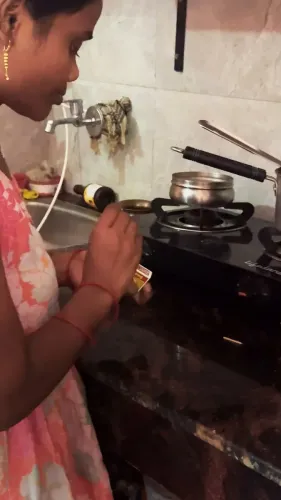
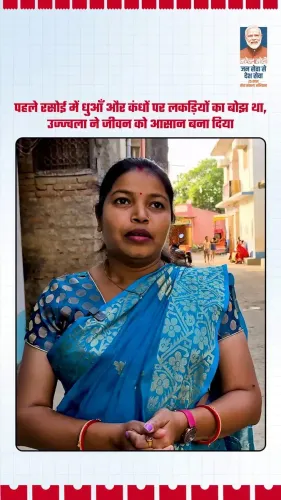
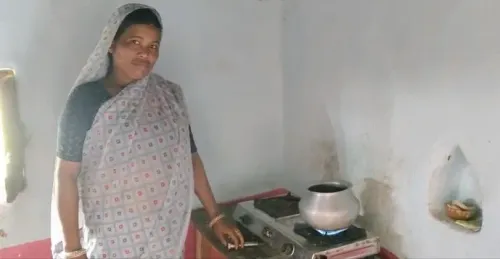
Launched in May 2016, the Pradhan Mantri Ujjwala Yojana (PMUY) was designed to deliver subsidised LPG connections to women from below-poverty-line households — replacing the chulha, the traditional wood or dung-cake stove whose smoke is a documented driver of respiratory illness, eye disease, and maternal health complications. For rural women who spent hours daily at a smoky hearth, a clean-burning gas cylinder was not just convenience; it was a health intervention.
The scheme has since been expanded multiple times in its beneficiary targets, becoming one of the BJP-led central government's most-cited social welfare achievements. BJP chief ministers across states have regularly invoked PMUY during cultural and religious observances, weaving the policy narrative into moments of mass public engagement — and Navratri, one of Gujarat's most widely celebrated festivals, offers precisely that platform.
Maa Kalaratri and the vow for every woman's well-being
The seventh night of Navratri carries particular resonance for this message. Maa Kalaratri — the fierce, protective form of Durga — is traditionally associated with the removal of suffering and disease. CM Patel explicitly drew the parallel: bowing to the goddess on this day, he said, Gujaratis should resolve to spread 'the light of convenience and health in the life of every woman.'
The framing is deliberate and culturally layered. Navratri in Gujarat is not merely devotional — it is a nine-night civic event. Attaching a welfare message to it reaches audiences far beyond a policy announcement. The post arrived with a video, amplifying the visual reach of the appeal.
Why Gujarat's Ujjwala numbers matter beyond the festival
Gujarat has been among the states tracking LPG penetration in rural and semi-urban households as a health-outcome metric. Analysts watching the state will look for updated connection numbers and health assessments during and after this festival period, as the government continues to frame clean-fuel access as a women's empowerment issue rather than merely an energy one.
The symbolic weight of the ninth avatar of Durga — nine nights, nine forms, each a different power — pairing with nine specific welfare narratives is a communication strategy the party has refined over several Navratri cycles. This year's seventh-day message plants PMUY squarely in that tradition.
When a goddess of healing lends her name to a gas cylinder, the politics of welfare and the pulse of faith beat together — and in Gujarat, that is not an accident.
Point of View
An energy policy, and a women's empowerment narrative. Attaching it to Navratri's seventh night, specifically dedicated to the goddess who removes suffering, is not incidental — it reflects a disciplined multi-cycle communication strategy. With state elections always on the horizon in Gujarat, keeping PMUY visible and emotionally resonant in communities of women beneficiaries carries obvious political as well as developmental value.
NationPress
17 Oct 2026
Frequently Asked Questions
What is the Pradhan Mantri Ujjwala Yojana?
The Pradhan Mantri Ujjwala Yojana (PMUY) is a central government scheme launched in May 2016 to provide subsidised LPG connections to women from below-poverty-line households, replacing smoky traditional stoves with clean cooking fuel to improve health outcomes.
Why did Bhupendra Patel mention Ujjwala Yojana on Navratri?
CM Patel tied the scheme to Navratri's seventh night — dedicated to Maa Kalaratri, the goddess believed to remove disease and suffering — framing PMUY as a real-world instrument of the same values the goddess embodies: removing suffering and improving women's well-being.
What is the significance of Navratri's seventh day, Maa Kalaratri?
The seventh night of Navratri is dedicated to Maa Kalaratri, a fierce form of Goddess Durga traditionally associated with the destruction of disease, fear, and suffering. Devotees seek her blessings for protection and good health.
How does PMUY benefit women's health?
By replacing wood and dung-cake stoves — whose smoke causes respiratory illness, eye disease, and complications for pregnant women — with clean-burning LPG, PMUY directly reduces household air pollution, improving the health of women and children who spend the most time in kitchens.
Who are the beneficiaries of Pradhan Mantri Ujjwala Yojana?
The scheme targets women from below-poverty-line (BPL) households across India, prioritising rural and semi-urban families who previously lacked access to clean cooking fuel.