CM Bhupendra Patel: Kavach Laid on 404 km in Ahmedabad
Synopsis
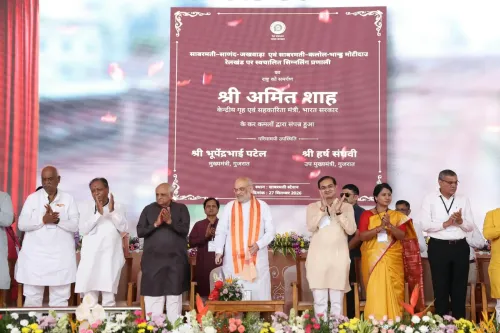
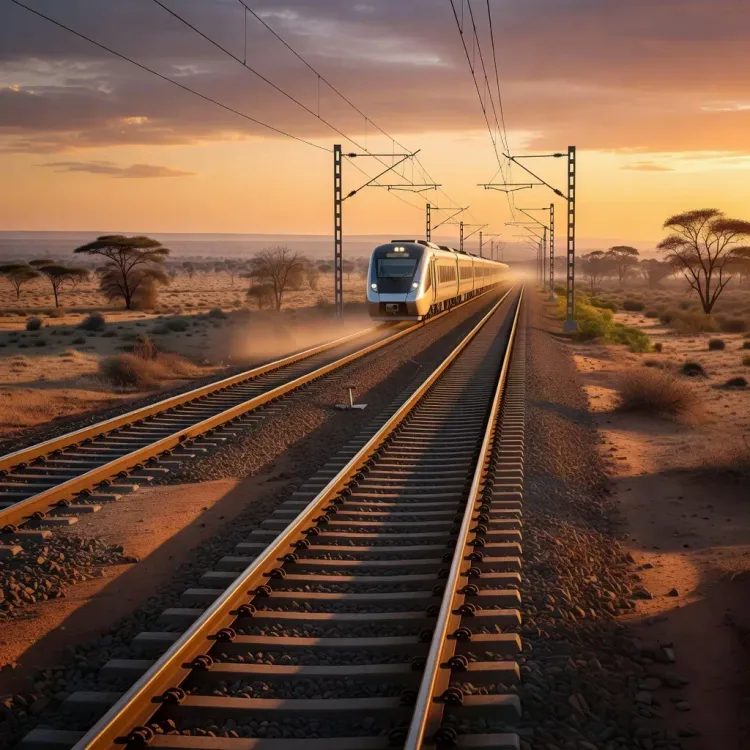
Gujarat CM Bhupendra Patel hailed the foundation-stone laying — by Union Home Minister Amit Shah — of the indigenous Kavach Automatic Train Protection system across 404 km of the Ahmedabad Division and the doubling of the Sabarmati-Sarkhej railway line, citing Make in India and Viksit Bharat @ 2047 goals.
Key Takeaways
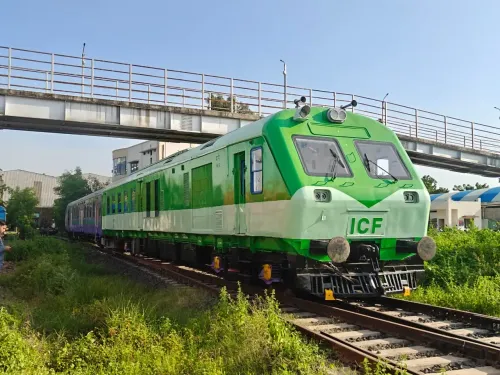
Kavach ATP system is being deployed across 404 km of the Ahmedabad Division rail network in a single phase.
The Sabarmati–Sarkhej railway line doubling was also foundation-stone-laid on the same day, boosting corridor capacity.
Both projects were inaugurated by Union Home Minister Amit Shah in Ahmedabad on 27 September 2026 .
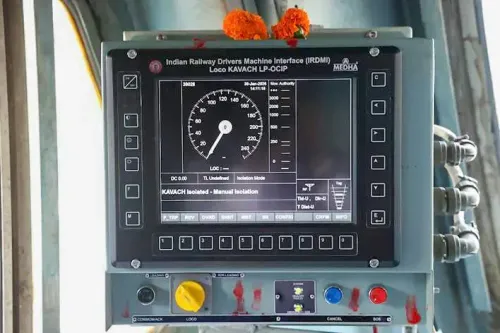
Kavach is an indigenously developed collision-prevention system built under the Make in India framework.
The deployments align with Indian Railways' pan-India Kavach rollout approved after 2022 trials on South Central Railway.
CM Patel linked the projects to the national Viksit Bharat @ 2047 vision for a developed, self-reliant India.
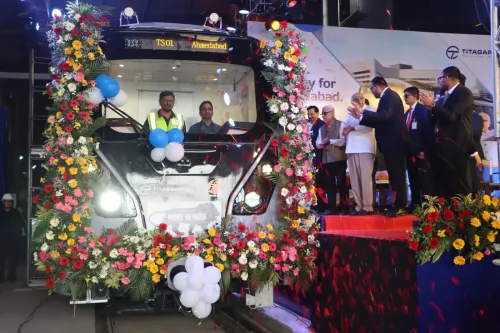
A safety system built in India, laid on 404 kilometres of track in one go — that is the scale of what was inaugurated in Ahmedabad on Sunday, 27 September 2026. Gujarat Chief Minister Bhupendra Patel announced the foundation-stone laying of the indigenous Kavach Automatic Train Protection system across the Ahmedabad Division's 404-km rail stretch, alongside the doubling of the Sabarmati–Sarkhej railway line — both projects initiated by Union Home Minister Amit Shah.
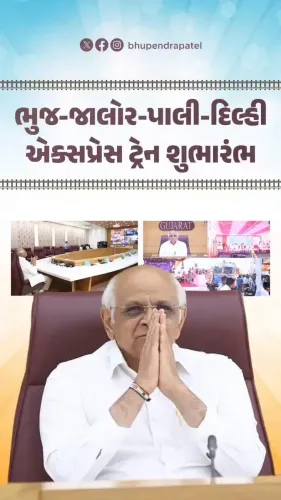
Posting in Gujarati, CM Patel described the occasion as 'સુરક્ષા અને ગતિનો અદ્ભુત સમન્વય' — 'a remarkable convergence of safety and speed' — and credited the foundation-stone ceremony to Amit Shah's presence.What Kavach Does — and Why It Matters Here
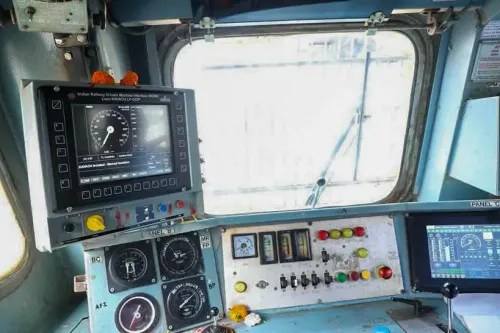
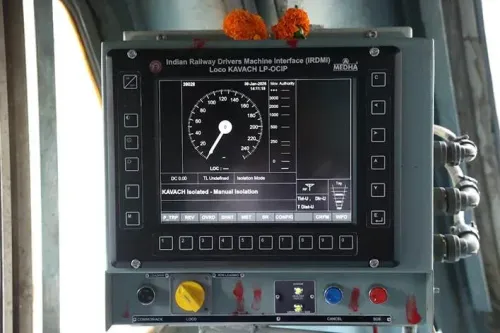
Kavach is India's home-grown Automatic Train Protection system, developed by the Research Designs and Standards Organisation (RDSO). It is engineered to apply brakes automatically if two trains approach the same track, effectively taking human error out of the collision equation. After early trials on the South Central Railway around 2022, the system received in-principle approval for a pan-India rollout — and the Ahmedabad Division deployment is a direct continuation of that national push.
Covering 404 km in a single phase is significant. Railway corridors in Gujarat carry both passenger and freight traffic feeding the state's industrial hubs, making any safety upgrade here consequential far beyond commuter convenience.
Sabarmati–Sarkhej Doubling: Capacity, Not Just Safety
Running alongside the Kavach announcement is the doubling of the Sabarmati–Sarkhej railway line — a corridor in Ahmedabad that currently operates as a single track. Doubling it means two trains can move in opposite directions simultaneously, dramatically increasing throughput. For a city whose suburban rail demand has grown with its industrial footprint, this is less an upgrade and more a necessity.
Track-doubling has been a core plank of Indian Railways' capacity augmentation programme since the mid-2010s, and the Sabarmati–Sarkhej project fits squarely into that lineage.
Make in India on the Rails
CM Patel framed both projects explicitly within Prime Minister Narendra Modi's Make in India and Atmanirbhar Bharat vision — and the framing holds on the merits. Kavach is indigenously designed, and its large-scale deployment reduces India's dependence on imported signalling technology. The CM added that this modern, safe transport infrastructure would form the 'strong spine' of the national goal of Viksit Bharat @ 2047 — the government's roadmap to a fully developed India by the centenary of independence.
That rhetoric aside, the substance is concrete: a safety net across hundreds of kilometres of busy track and a doubling project that directly serves Gujarat's industrial corridors — both moving forward on the same day.
Point of View
With a senior Union minister presiding, reinforces the central government's political and policy messaging around Make in India in critical infrastructure. The Sabarmati–Sarkhej doubling simultaneously addresses a mundane but stubborn capacity bottleneck, suggesting the state government wants tangible commuter wins alongside the flagship safety narrative. Taken together, both moves feed directly into the Viksit Bharat @ 2047 scorecard that the BJP-led government is actively building ahead of future electoral cycles.
NationPress
27 Sept 2026
Frequently Asked Questions
What is the Kavach system in Indian Railways?
Kavach is an indigenous Automatic Train Protection system developed by RDSO that automatically applies brakes to prevent collisions when two trains are on the same track, removing the risk of human error.
Which railway stretch is getting Kavach in Gujarat?
The Kavach system is being deployed across the Ahmedabad Division's 404-km rail network , as announced by Gujarat CM Bhupendra Patel on 27 September 2026.
What is the Sabarmati–Sarkhej railway line doubling project?
It is a project to convert the existing single-track Sabarmati–Sarkhej rail corridor in Ahmedabad into a double track, allowing trains to run in both directions simultaneously and significantly increasing capacity.
Who laid the foundation stone for the Kavach and Sabarmati–Sarkhej projects?
Union Home Minister Amit Shah performed the foundation-stone laying ceremony for both projects in Ahmedabad on 27 September 2026 .
How does Kavach relate to Make in India?
Kavach is indigenously designed and manufactured in India, directly supporting the Make in India initiative by reducing reliance on imported foreign signalling and safety technology for Indian Railways.