CM Bhupendra Patel Reviews Monsoon Situation at Gujarat SEOC
Synopsis
Chief Minister Bhupendra Patel visited Gujarat's State Emergency Operation Centre on 25 July 2026, reviewing district-level monsoon conditions and directing collectors of four North Gujarat districts — Patan, Mehsana, Vav-Tharad, and Banaskantha — to stay on high alert ahead of forecast heavy rainfall.
Key Takeaways
CM Bhupendra Patel visited the State Emergency Operation Centre on the evening of 25 July 2026 to review Gujarat's monsoon situation.
The India Meteorological Department forecast widespread rainfall in North Gujarat within the next 24 hours .
District collectors of Patan , Mehsana , Vav-Tharad , and Banaskantha were directed to remain on high alert.
Authorities in South Gujarat and other affected districts were ordered to begin clean-up, health measures, and damage surveys immediately after floodwaters recede.
The response follows Gujarat's established framework under the National Disaster Management Act, 2005 .
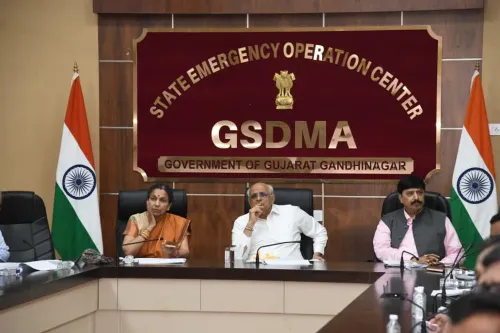
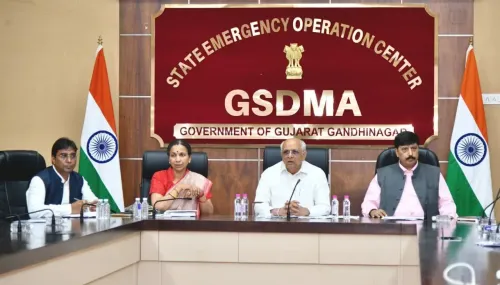
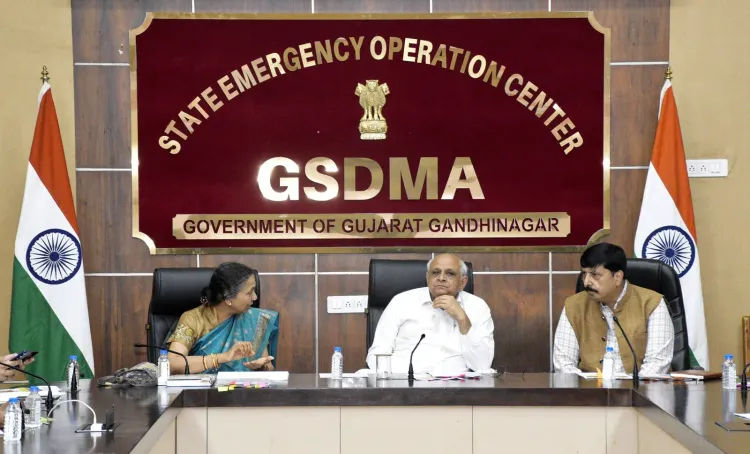
Chief Minister Bhupendra Patel visited the State Emergency Operation Centre (SEOC) in Gandhinagar on the evening of Saturday, 25 July 2026, to review the rainfall situation across Gujarat's districts and issue preparedness directives to district collectors ahead of forecast heavy rains in northern parts of the state.
What Happened
The Chief Minister's Office of Gujarat announced that CM Patel personally visited the SEOC late on Saturday evening to obtain a district-wise picture of the ongoing monsoon conditions. Acting on India Meteorological Department forecasts of widespread rainfall in the next 24 hours, he directed the district collectors of Patan, Mehsana, Vav-Tharad, and Banaskantha in North Gujarat to remain on high alert. The post, published in Gujarati, stated: 'mukhyamantrishree ae agami 24 kalakma uttar Gujaratna Patan, Mehsana, Vav-Tharad ane Banaskantha jillaoana Collectorshreeo ne satark rahevana dishanirdesh aapya hata' — ('The Chief Minister issued directives to the collectors of Patan, Mehsana, Vav-Tharad, and Banaskantha in North Gujarat to remain alert over the next 24 hours').
Context
Banaskantha and Patan are among North Gujarat's most flood-vulnerable districts, regularly placed under watch during the June–September monsoon season. The SEOC serves as the nerve centre for real-time disaster monitoring and inter-agency coordination under Gujarat's framework aligned with the National Disaster Management Act, 2005. A Chief Minister's direct visit to the SEOC signals an elevated operational posture, typically reserved for situations where IMD forecasts indicate significant rainfall risk.
Policy Backdrop
Gujarat has institutionalised annual pre-monsoon preparedness reviews and continuous SEOC activation as standard operating procedure. Successive state administrations have prioritised rapid post-flood sanitation drives, health interventions, and damage surveys to contain secondary impacts such as waterborne disease outbreaks and crop-loss disputes. CM Patel also directed that as soon as floodwaters recede in South Gujarat and other affected districts, authorities must immediately begin clean-up operations, health measures, and damage-assessment surveys.
Stakeholders and Impact
District collectors in the four flagged North Gujarat districts are the immediate action-takers, responsible for mobilising local administration, rescue teams, and relief logistics. Farmers in the Banaskantha and Patan agricultural belts face the greatest economic exposure from waterlogging and crop damage. Residents of low-lying areas in South Gujarat, already affected by recent rains, stand to benefit directly from the ordered sanitation and health measures once waters recede.
What's Next
District-level situation reports over the next 48–72 hours will determine whether the state escalates its response — including potential deployment of NDRF teams or release of relief funds. The speed and quality of post-flood sanitation and damage surveys ordered by the Chief Minister will be closely watched as indicators of the state machinery's on-ground effectiveness this monsoon season.
Point of View
Late-evening visit to the SEOC is a deliberate signal of administrative seriousness — it puts district collectors on notice that inaction will be visible at the top. Gujarat's institutionalised disaster management architecture, built over two decades since the 2001 Bhuj earthquake, gives the state a structural advantage in rapid response, but the real test lies in execution at the taluka level once heavy rain hits. The dual directive — pre-emptive alertness in the north and immediate post-flood action in the south — reflects a mature two-track approach that distinguishes preparedness from relief. How swiftly damage surveys translate into compensation disbursals will shape the political narrative heading into the rest of the monsoon season.
NationPress
25 Jul 2026
Frequently Asked Questions
Why did CM Bhupendra Patel visit the SEOC on 25 July 2026?
CM Bhupendra Patel visited the State Emergency Operation Centre to personally review district-wise rainfall conditions across Gujarat and issue high-alert directives to collectors in North Gujarat districts facing forecast heavy rain.
Which Gujarat districts were put on high alert for heavy rainfall?
The four districts placed on high alert are Patan, Mehsana, Vav-Tharad, and Banaskantha — all in North Gujarat — where the IMD forecast widespread rainfall within 24 hours of the CM's visit.
What is the State Emergency Operation Centre in Gujarat?
The State Emergency Operation Centre (SEOC) is Gujarat's central facility for real-time monitoring of natural calamities and coordination with district authorities, operating under the state's disaster management framework aligned with the National Disaster Management Act, 2005.
What post-flood measures did CM Patel order for South Gujarat?
CM Patel instructed authorities in South Gujarat and other affected districts to immediately begin clean-up operations, health-related measures, and damage surveys as soon as floodwaters recede.
Is Banaskantha prone to flooding during the monsoon?
Yes, Banaskantha is one of North Gujarat's most flood-vulnerable districts and is regularly monitored during the June-September monsoon season due to its susceptibility to heavy rainfall and agricultural exposure.