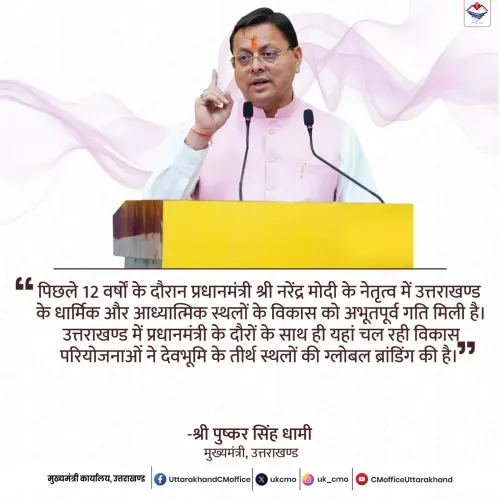
CM Dhami, PM Modi Elevate Uttarakhand Faith Sites
Synopsis
The Chief Minister's Office of Uttarakhand marked 12 years of Garib Kalyan by highlighting how PM Modi's guidance and CM Dhami's leadership have transformed the state's sacred pilgrimage sites, linking federal welfare branding with on-ground religious infrastructure development.
Key Takeaways
The Chief Minister's Office of Uttarakhand posted on 10 June 2026 crediting PM Modi and CM Dhami for making the state's faith sites 'even more divine.' The post was tied to the #12YearsofGaribKalyan campaign marking a decade-plus of central government welfare initiatives since 2014 .
The Char Dham Highway Project (approved 2016 ) and the PRASAD scheme (launched 2014-15 ) are the primary policy instruments behind pilgrimage infrastructure upgrades in Uttarakhand .
The Kedarnath reconstruction master plan, initiated after the 2013 floods , has been a flagship central-government-funded project in the state.
Local communities dependent on religious tourism — including traders, hoteliers, and porters — are key stakeholders in the ongoing development push.
Further phases of Char Dham connectivity works and temple precinct development are expected to continue through 2026 .
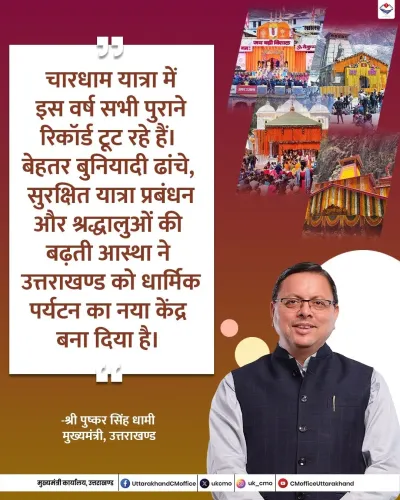
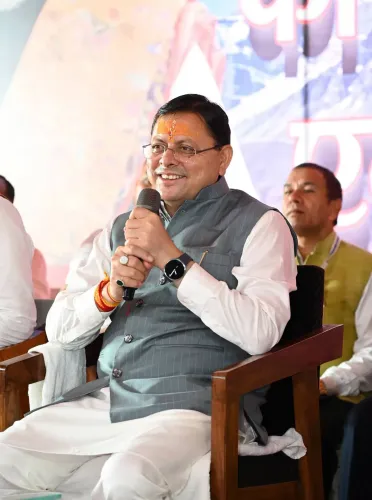
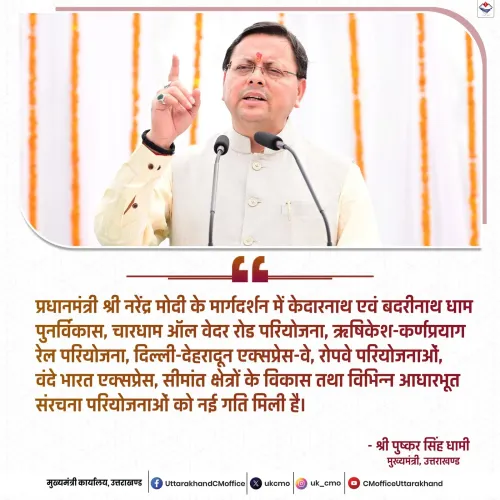
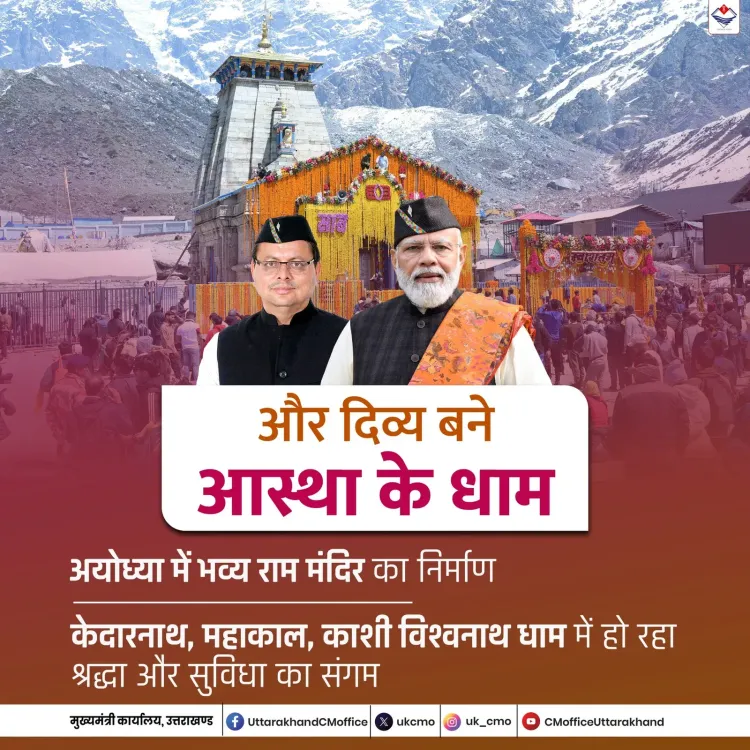
The Chief Minister's Office of Uttarakhand on Wednesday, 10 June 2026, highlighted the ongoing transformation of the state's sacred pilgrimage destinations, crediting the combined leadership of Prime Minister Narendra Modi and Chief Minister Pushkar Singh Dhami for making these sites increasingly divine and spiritually enriching.
The post, shared under the hashtag #12YearsofGaribKalyan (12 years of welfare for the poor), stated in Hindi: 'Pradhanmantri Shri Narendra Modi ke margdarshan va Mukhyamantri Shri Pushkar Singh Dhami ke netritva mein aur divya bane astha ke dham' — meaning, 'Under the guidance of Prime Minister Shri Narendra Modi and the leadership of Chief Minister Shri Pushkar Singh Dhami, the abodes of faith have become even more divine.'
Context
The post arrives as the Bharatiya Janata Party (BJP) marks what it describes as 12 years of Garib Kalyan — an umbrella brand for central government welfare and development initiatives launched after 2014. Uttarakhand, home to the revered Char Dham pilgrimage circuit — comprising Badrinath, Kedarnath, Gangotri, and Yamunotri — has been a focal point of this messaging, with religious tourism and infrastructure upgrades framed as interlinked development goals. The state's pilgrimage sites carry deep significance for millions of Hindu devotees across India and the global diaspora. Footfall at these shrines has grown substantially over the past decade, placing both opportunity and pressure on local infrastructure.Policy Backdrop
The development of faith sites in Uttarakhand has been shaped by several central initiatives. The Char Dham Highway Project, approved in 2016, aimed to widen and improve road connectivity to all four shrine towns, reducing travel time and improving safety for pilgrims. The PRASAD scheme (Pilgrimage Rejuvenation and Spiritual, Heritage Augmentation Drive), launched in 2014-15, provided dedicated funding for the integrated development and beautification of identified pilgrimage destinations. The Kedarnath reconstruction master plan, initiated after the catastrophic 2013 floods, has been a flagship project executed with substantial central funding. Successive phases have included the rebuilding of ghats, pathways, retaining walls, and the broader temple precinct, transforming the site into a model of disaster-resilient religious infrastructure.Stakeholders and Impact
The primary beneficiaries of improved pilgrimage infrastructure are the millions of devotees who undertake the Char Dham Yatra each year. Beyond pilgrims, local communities dependent on religious tourism — including hoteliers, priests, porters, and small traders — stand to gain from higher footfall and better connectivity. Environmental groups and heritage conservationists have, in parallel, raised questions about the ecological sensitivity of large-scale construction in the fragile Himalayan ecosystem, a debate that continues to shape the policy conversation around pilgrimage development.What's Next
Further phases of Char Dham connectivity works are expected to progress through 2026, with state budget allocations for additional temple precinct development likely to feature in upcoming legislative sessions. As the Garib Kalyan anniversary messaging continues, the Uttarakhand government is expected to showcase completed and ongoing projects at faith sites as evidence of the federal-state development partnership under CM Dhami and PM Modi.Point of View
Using a milestone welfare anniversary to anchor tangible infrastructure achievements in a high-visibility religious context. By framing pilgrimage site upgrades under the Garib Kalyan umbrella, the BJP simultaneously targets devotees, local beneficiaries, and the broader Hindu cultural constituency. For CM Dhami, association with the transformation of sites like Kedarnath reinforces his identity as a leader who delivers on religious heritage — a powerful signal ahead of any future electoral cycle. The pattern reflects a deliberate strategy of merging development governance with cultural nationalism, a formula that has proven electorally durable in Uttarakhand.
NationPress
26 Oct 2026
Frequently Asked Questions
What is the Garib Kalyan scheme and why is it being celebrated in 2026?
Garib Kalyan is an umbrella brand for central government welfare and development initiatives launched after 2014. The year 2026 marks 12 years of these programmes, and the BJP has used the anniversary to highlight achievements across sectors including pilgrimage infrastructure.
What development work has been done at Char Dham sites in Uttarakhand?
Key projects include the Char Dham Highway Project approved in 2016 to improve road connectivity to Badrinath, Kedarnath, Gangotri and Yamunotri, the PRASAD scheme for beautification of pilgrimage sites, and the Kedarnath reconstruction master plan funded by the central government after the 2013 floods.
What is CM Pushkar Singh Dhami's role in Uttarakhand pilgrimage development?
Chief Minister Pushkar Singh Dhami is responsible for implementing central schemes on religious tourism and overseeing state-level infrastructure upgrades at pilgrimage destinations across Uttarakhand.
What is the PRASAD scheme for pilgrimage sites in India?
PRASAD — Pilgrimage Rejuvenation and Spiritual, Heritage Augmentation Drive — was launched in 2014-15 to provide dedicated central funding for the integrated development and beautification of identified pilgrimage destinations across India, including sites in Uttarakhand.
How has Kedarnath been rebuilt after the 2013 floods?
The Kedarnath reconstruction master plan, initiated after the catastrophic 2013 floods, has been executed with substantial central government funding over successive phases, covering the rebuilding of ghats, pathways, retaining walls, and the broader temple precinct.