CM Dhami Hits Congress Over EVM, Institution Blame
Synopsis
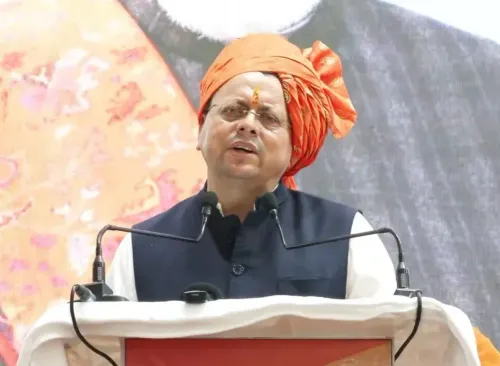
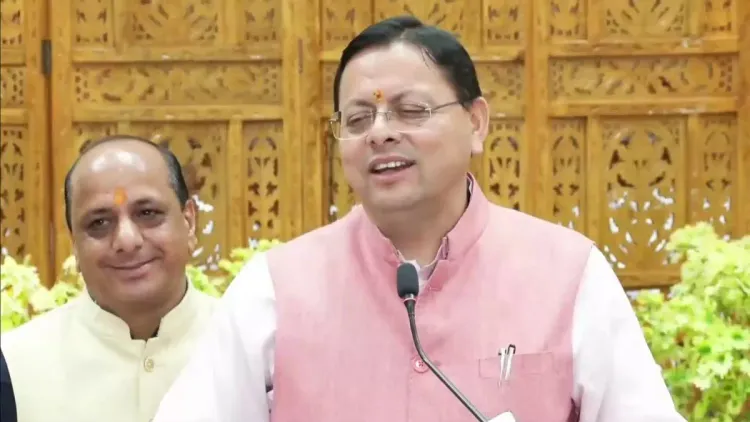
Uttarakhand Chief Minister Pushkar Singh Dhami accused Congress of making it a habit to blame EVMs and constitutional institutions for every electoral loss, saying the party has already lost public trust and will need a fresh excuse.
Key Takeaways
CM Pushkar Singh Dhami posted a sharp attack on Congress on September 27, 2026 , targeting its recurring practice of blaming EVMs and constitutional bodies after poll defeats.
Dhami declared that Congress has lost public trust and will need to find a new excuse for its losses.
Congress leaders publicly questioned EVM reliability after the 2019 Lok Sabha elections and alleged Election Commission bias in multiple state polls since 2017 .
Courts and technical audits have repeatedly dismissed EVM-related challenges without changing India's voting technology framework.
The post is part of a broader BJP narrative framing Congress's institutional complaints as evidence of declining political credibility rather than legitimate reform demands.
Blaming the machines when the votes don't add up — Uttarakhand Chief Minister Pushkar Singh Dhami has turned that recurring pattern into the centrepiece of a sharp political salvo, targeting the Indian National Congress on Sunday, September 27, 2026.
Writing in Hindi on X, Dhami said: 'Apni haar ka theekra kabhi EVM toh kabhi sansthaaon par fodna Congress ki aadat ban gayi hai.' ('Blaming EVMs and constitutional institutions for every defeat has become a habit for Congress.') He went further, adding that a party that has already lost the public's trust will now need to find some new excuse for its losses.
A Playbook Congress Has Run Before
The charge is not new — and that, politically, is precisely Dhami's point. After the 2019 Lok Sabha elections, senior Congress figures publicly called for a return to paper ballots, alleging that Electronic Voting Machines (EVMs) could be tampered with. In multiple state assembly elections since 2017, party spokespersons levelled allegations of bias against the Election Commission of India following defeats. Courts and technical audits have repeatedly examined and dismissed these challenges without altering the legal framework for voting.
The BJP, which has consistently won the contests at the centre of these disputes, has defended EVM-based voting as transparent and tamper-proof, framing the opposition's complaints as sour-grapes politics rather than substantive electoral reform advocacy.
Why the Jab Lands Now
The timing and register of Dhami's post signal a broader BJP strategy: keep Congress on the defensive over credibility, not policy. By framing the EVM debate as a symptom of public trust already lost — rather than engaging the technical merits — Dhami shifts the conversation from electoral mechanics to political viability. It is a rhetorically efficient move: let your opponent's complaint become the proof of their problem.
The broader pattern is well-established across Indian politics. Opposition parties have invoked EVM concerns after losses since the machines' nationwide rollout, yet no systemic change to voting technology has followed. What has changed is the political cost of the argument: each successive cycle in which the complaint surfaces — and then recedes without institutional consequence — arguably makes the next iteration easier to dismiss.
With the next round of state assembly elections on the horizon, the battle over who controls the post-poll narrative — and who looks like they are already making excuses — has already begun.
Point of View
It reframes the entire Congress argument as a credibility problem — a sign of a party that blames referees rather than improving its game. The attack fits a pattern in which the BJP attempts to exhaust the EVM narrative by repetition, betting that voters will eventually tune out a complaint that never produces legal or institutional change. For Congress, the dilemma is structural: raising institutional concerns energises a frustrated base, but doing so repeatedly after losses makes the party vulnerable to exactly this kind of counter-attack. The exchange illustrates how post-poll rhetoric in India has become as strategically choreographed as the campaigns themselves.
NationPress
27 Sept 2026
Frequently Asked Questions
What did CM Dhami say about Congress and EVMs?
Dhami said that blaming EVMs and constitutional institutions for defeats has become a habit for Congress, and that the party — having already lost the public's trust — will need to find a new excuse for its losses.
Has Congress raised EVM concerns before?
Yes. After the 2019 Lok Sabha elections, several Congress leaders demanded a return to paper ballots, and following multiple state assembly defeats since 2017, party spokespersons alleged bias by the Election Commission of India.
Are EVM tampering allegations valid in India?
Courts and technical audits have repeatedly examined and dismissed EVM-related challenges in India. No systemic change to the voting technology framework has resulted from these petitions.
Why is Dhami commenting on national politics from Uttarakhand?
As a senior BJP leader and sitting Chief Minister, Dhami regularly weighs in on national political debates. The BJP often uses its state chief ministers to amplify central party messaging, particularly ahead of election cycles.
What is the BJP's official position on EVMs?
The BJP has consistently defended Electronic Voting Machines as transparent and tamper-proof, arguing that all opposition challenges have been addressed by courts and technical review committees.