CM Dhami Meets Rail Minister Vaishnaw to Push Uttarakhand Connectivity
Synopsis
Chief Minister Pushkar Singh Dhami met Union Railway Minister Ashwini Vaishnaw in New Delhi on 10 July 2026 to discuss rail projects and connectivity expansion for Uttarakhand, reinforcing the state's push for faster progress on long-pending Himalayan rail links including the Rishikesh–Karnaprayag corridor.
Key Takeaways
CM Pushkar Singh Dhami held a formal meeting with Union Railway Minister Ashwini Vaishnaw in New Delhi on 10 July 2026 .
Discussions centred on rail projects and connectivity expansion for Uttarakhand , as confirmed by the Chief Minister's Office.
The Rishikesh–Karnaprayag new rail line , approved in 2010 , is the flagship project aimed at linking the plains to the Char Dham pilgrimage circuit.
Rail improvements would benefit approximately 1.1 crore Uttarakhand residents, pilgrims, and tourists who currently rely on vulnerable mountain roads.
The meeting aligns with the National Infrastructure Pipeline and PM Gati Shakti frameworks prioritising connectivity in India's border states.
Formal project sanctions or revised timelines may follow in upcoming Cabinet Committee on Economic Affairs or Railway Budget decisions.
The Chief Minister's Office of Uttarakhand announced on Friday, 10 July 2026 that Chief Minister Pushkar Singh Dhami met Union Railway Minister Ashwini Vaishnaw in New Delhi to discuss rail projects and connectivity expansion for the hill state. The meeting signals renewed state-level push to accelerate long-pending rail infrastructure in one of India's most terrain-challenged regions.
Context
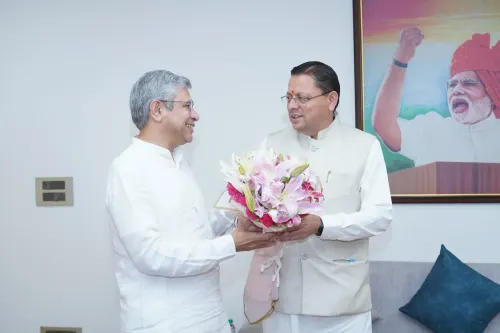
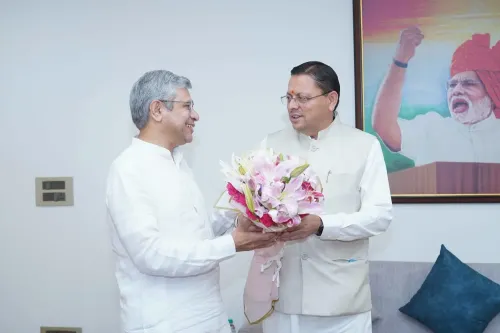
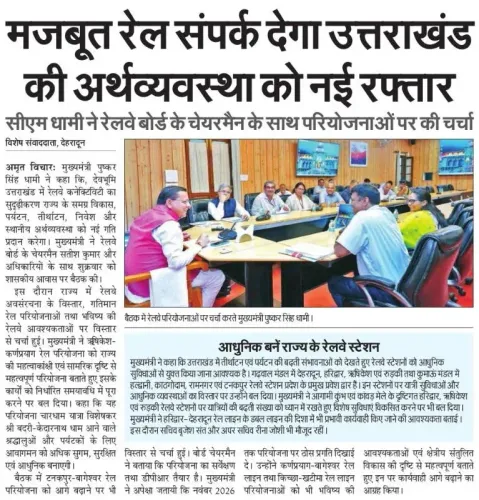
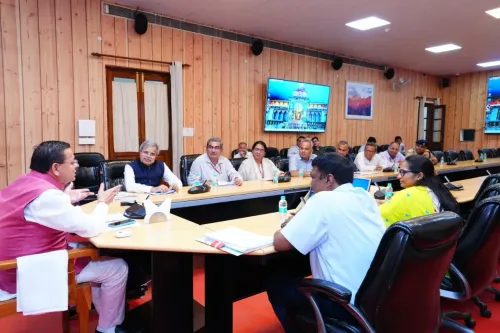
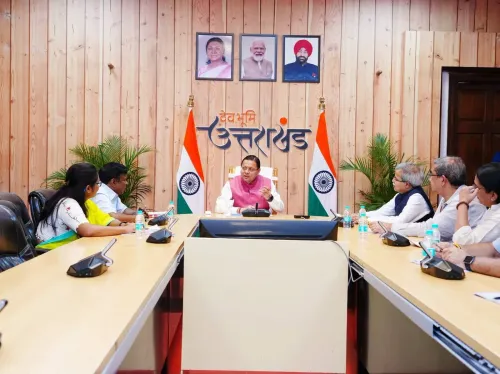
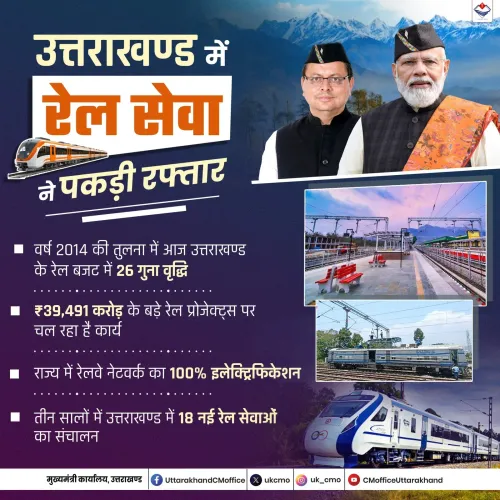
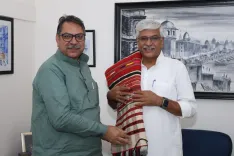
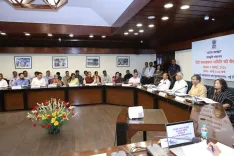
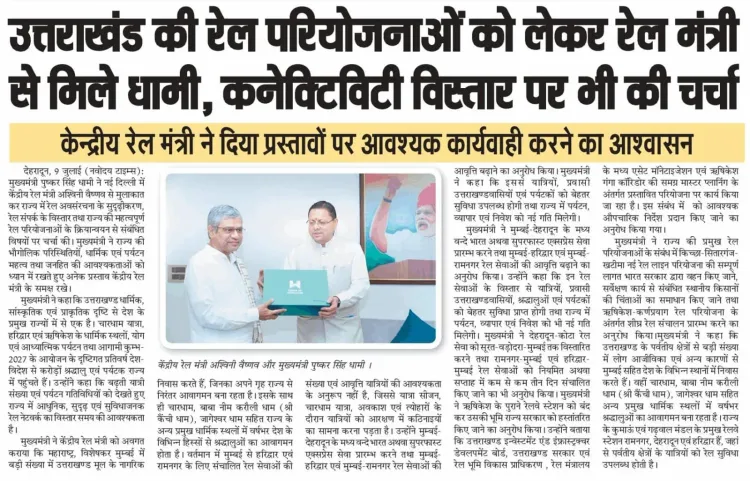
The official post from the Chief Minister's Office reads: 'Mukhyamantri Shri Pushkar Singh Dhami ne Nayi Dilli mein Kendriya Rail Mantri Shri Ashwini Vaishnaw se mulaqat kar rail pariyojanaon evam connectivity vistar par ki charcha' — Chief Minister Pushkar Singh Dhami met Union Railway Minister Ashwini Vaishnaw in New Delhi and discussed rail projects and connectivity expansion. The meeting was accompanied by four official photographs released by the Chief Minister's Office, underscoring its formal diplomatic character.
Uttarakhand, a Himalayan state sharing borders with China and Nepal, has historically depended on road connectivity that remains vulnerable to landslides and seasonal closures. Improving rail access is considered critical for tourism, pilgrimage, defence logistics, and everyday commuting for residents of remote districts.
Policy Backdrop
The most prominent rail undertaking in the state is the Rishikesh–Karnaprayag new rail line, a project that received Cabinet approval in 2010 and has seen phased construction continue across successive budget cycles. The project aims to connect the plains to the Char Dham pilgrimage circuit, reducing travel time for millions of devotees who visit Kedarnath, Badrinath, Gangotri, and Yamunotri every year.
The Union Budget 2023-24 allocated dedicated funds for Uttarakhand rail surveys and doubling works as part of broader Char Dham connectivity plans. These initiatives sit within the framework of the National Infrastructure Pipeline and the PM Gati Shakti master plan, both of which prioritise multimodal connectivity in strategically important border states.
Stakeholders and Impact
The primary beneficiaries of expanded rail connectivity in Uttarakhand are the state's approximately 1.1 crore residents, millions of annual pilgrims, and a growing tourism sector that contributes significantly to the state economy. Better rail links would also ease pressure on mountain highways that currently serve as the sole reliable arteries for freight and passenger movement.
State governments across the Himalayan region have maintained a pattern of regular high-level engagement with the Ministry of Railways to advance hill rail links that require complex tunnelling and bridgework. CM Dhami's visit to Railway Minister Vaishnaw follows this established diplomatic channel between state capitals and the central ministry.
What's Next
Observers and stakeholders will watch for formal sanctions, revised project timelines, or enhanced budget allocations for Uttarakhand rail works in upcoming decisions by the Cabinet Committee on Economic Affairs or the next Railway Budget exercise. Any announcement on accelerating the Rishikesh–Karnaprayag corridor in particular would be seen as a direct outcome of this engagement.
With Uttarakhand positioning itself as a year-round pilgrimage and adventure tourism destination, improved all-weather rail access could prove transformative — reducing dependence on weather-disrupted roads and opening the state's interior to larger volumes of visitors and commerce.
Point of View
Now in its second decade since approval, faces continued scrutiny over delivery timelines. For a BJP-governed state with a BJP-led Centre, such bilateral meetings carry added political salience — they signal alignment and can accelerate clearances that might otherwise stall in bureaucratic queues. The broader pattern of Himalayan states lobbying for rail connectivity also underscores how infrastructure diplomacy has become central to governance optics in electorally significant hill constituencies.
NationPress
10 Jul 2026
Frequently Asked Questions
Why did CM Dhami meet Railway Minister Vaishnaw in July 2026?
Chief Minister Pushkar Singh Dhami met Union Railway Minister Ashwini Vaishnaw in New Delhi on 10 July 2026 to discuss rail projects and connectivity expansion for Uttarakhand, according to the Chief Minister's Office.
What is the Rishikesh–Karnaprayag rail line project?
The Rishikesh–Karnaprayag new rail line is a major infrastructure project approved by the Cabinet in 2010 that aims to connect the Uttarakhand plains to the Char Dham pilgrimage circuit through a new mountain railway, with construction continuing in phases.
Which rail projects are planned for Uttarakhand?
The flagship project is the Rishikesh–Karnaprayag new rail line for Char Dham connectivity. The Union Budget 2023-24 also allocated funds for Uttarakhand rail surveys and doubling works as part of the broader connectivity plan.
How does better rail connectivity benefit Uttarakhand?
Improved rail links would benefit the state's approximately 1.1 crore residents, millions of annual pilgrims visiting the Char Dham shrines, and the tourism sector by reducing dependence on mountain roads that are vulnerable to landslides and seasonal closures.
What is PM Gati Shakti and how does it relate to Uttarakhand rail projects?
PM Gati Shakti is a national master plan for multimodal connectivity that prioritises infrastructure in strategically important regions including border states like Uttarakhand. Rail projects in the state are aligned with this framework alongside the National Infrastructure Pipeline.