CM Dhami: Non-compliant madrasas to shut from July 2026
Synopsis
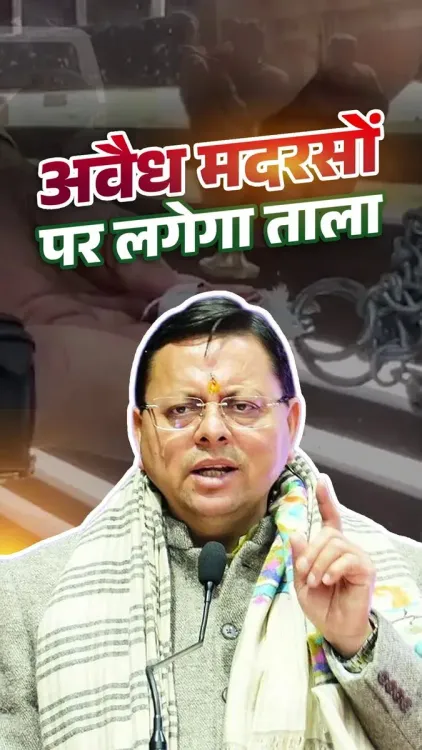
Uttarakhand Chief Minister Pushkar Singh Dhami has declared that madrasas not teaching the state government's prescribed curriculum will be shut from 1 July 2026. The announcement, directed at senior BJP leadership, marks a firm enforcement deadline under the state's ongoing madrasa regulation drive.
Key Takeaways
Uttarakhand CM Pushkar Singh Dhami announced on 25 June 2026 that non-compliant madrasas will be closed from 1 July 2026 .
Madrasas that do not teach the state government-prescribed curriculum will face shutdown under the new order.
The post was addressed directly to PM Narendra Modi , Home Minister Amit Shah , and the PMO , signalling central coordination.
The move aligns with the National Education Policy 2020 's push to integrate traditional institutions into standardised educational frameworks.
BJP -led governments in multiple states have pursued similar madrasa curriculum compliance drives.
The exact number of affected madrasas and formal enforcement mechanisms have not yet been confirmed in official records.
Uttarakhand Chief Minister Pushkar Singh Dhami announced on Thursday, 25 June 2026 that all madrasas in the state failing to teach the curriculum prescribed by the state government will be shut down with effect from 1 July 2026. The declaration, made via a post on X addressed to Prime Minister Narendra Modi and Union Home Minister Amit Shah, signals a firm enforcement posture on madrasa regulation in Uttarakhand.
Context
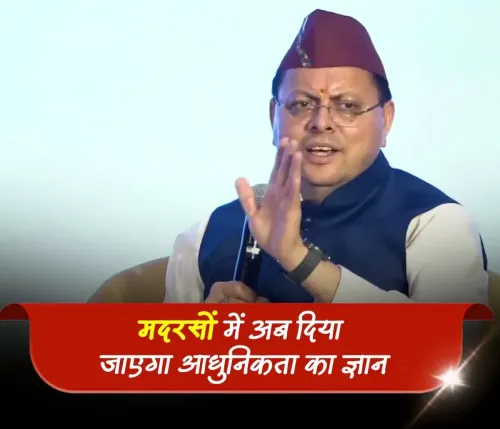
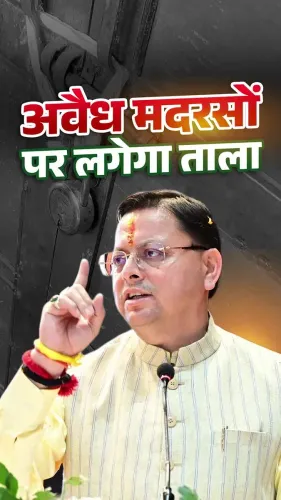
In his post, CM Dhami stated — '01 जुलाई, 2026 से ऐसे सारे मदरसे बंद होंगे जो प्रदेश सरकार द्वारा निर्धारित पाठ्यक्रम नहीं पढ़ाएंगे' — meaning: 'From 1 July 2026, all those madrasas that do not teach the curriculum prescribed by the state government will be closed.' The announcement sets a hard deadline for institutions that have not yet aligned their teaching with the state-mandated syllabus.
The post was addressed to @narendramodi, @AmitShah, @PMOIndia, and @BJP4India, suggesting the Chief Minister is signalling the move to senior BJP leadership and the central government as a coordinated policy step.
Policy Backdrop
The move draws from a broader national framework: the National Education Policy 2020 recommended integrating traditional educational institutions — including religious seminaries — with modern curricula and regulatory oversight. Uttarakhand, governed by the BJP, has pursued regulatory measures on educational institutions as part of this wider standardisation push.
BJP-led state governments across India have advanced similar policies requiring madrasas to incorporate state-prescribed subjects — such as mathematics, science, and social studies — alongside religious instruction. Uttarakhand's 1 July 2026 deadline represents one of the more explicit enforcement timelines announced by any state government under this policy direction.
Stakeholders and Impact
The primary stakeholders are madrasa students, whose access to schooling could be disrupted if their institutions do not comply in time, and madrasa managements, who face the operational and financial challenge of revising curricula to meet state standards. State education officials will be responsible for verifying compliance and executing any closures.
The precise number of madrasas in Uttarakhand that currently fall short of the state-prescribed curriculum has not been confirmed in official public records. Madrasa bodies and civil society groups may contest the deadline through legal or administrative channels before it takes effect.
What's Next
The immediate focus shifts to whether formal government notifications and compliance verification mechanisms are issued ahead of the 1 July 2026 cutoff. Any legal challenge filed by madrasa associations in the Uttarakhand High Court could delay or alter enforcement timelines.
The announcement is likely to intensify scrutiny of similar madrasa regulation policies in other BJP-governed states, making Uttarakhand a test case for how firmly such deadlines are enforced and whether they withstand judicial review. The political and social response in the coming days will shape the trajectory of this policy across the country.
Point of View
Something few states have done explicitly. The move fits a recognisable arc in BJP-governed states: using curriculum standardisation as the legal lever to bring minority educational institutions under uniform state oversight, framed within the language of the National Education Policy 2020. The political calculus is clear: the policy is popular with the party's base and difficult for opponents to oppose on purely educational grounds. Whether the enforcement holds up in court — and whether other BJP states follow with similar deadlines — will determine if this is a durable policy shift or a pre-election signal.
NationPress
25 Jun 2026
Frequently Asked Questions
Which madrasas will be closed in Uttarakhand from July 2026?
Madrasas in Uttarakhand that do not teach the curriculum prescribed by the state government will be closed from 1 July 2026, according to an announcement by Chief Minister Pushkar Singh Dhami on 25 June 2026.
What is the Uttarakhand madrasa curriculum rule?
The Uttarakhand state government requires madrasas to teach a state-prescribed curriculum alongside religious instruction. Institutions that fail to comply face closure under the deadline set by CM Dhami.
How many madrasas will be affected in Uttarakhand?
The precise number of madrasas in Uttarakhand that currently do not comply with the state curriculum has not been confirmed in official public records.
Is the Uttarakhand madrasa closure order legal?
No court ruling has been reported on this specific order as of 25 June 2026. Madrasa bodies may challenge the deadline in the Uttarakhand High Court, which could alter enforcement.
Are other BJP states also closing madrasas?
Several BJP-led state governments have advanced policies requiring madrasas to incorporate state-prescribed subjects, but Uttarakhand's 1 July 2026 hard closure deadline is among the most explicit enforcement timelines announced.