Shivraj Singh Chouhan Backs Integrated Farming to Raise Farm Income
Synopsis
Union Agriculture Minister Shivraj Singh Chouhan on 25 June 2026 reaffirmed his resolve to raise farmers' incomes under PM Modi's guidance, calling for adoption of the Integrated Farming Model that combines crops, livestock, fisheries and agroforestry to make agriculture profitable and resilient.
Key Takeaways
Union Agriculture Minister Shivraj Singh Chouhan posted on 25 June 2026 pledging to raise farmers' incomes as a firm ministerial commitment.
He cited Prime Minister Narendra Modi's guidance as the framework for the Agriculture Ministry's income-enhancement agenda.
The Integrated Farming Model — combining crops, livestock, fisheries and agroforestry — was identified as the central strategy to make farming profitable.
The push builds on the government's 2016 farmer income-doubling target and the PM-KISAN direct-transfer scheme launched in 2019 .
Small and marginal farmers are the primary beneficiaries envisaged, as diversified income streams reduce single-season risk.
Concrete implementation details — new clusters, budget allocations, or a formal Agricultural Roadmap — are yet to be announced.
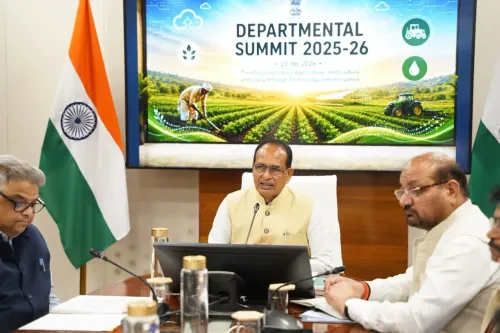
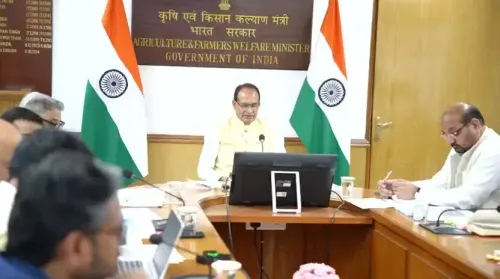
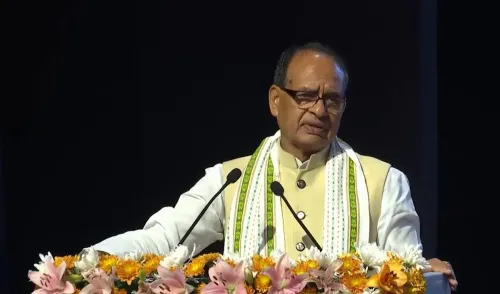
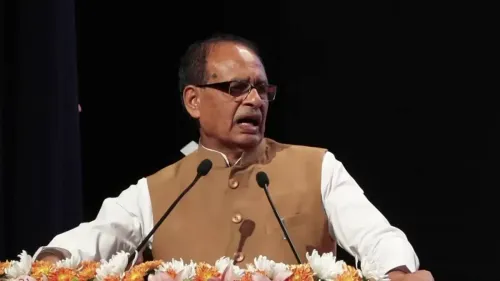
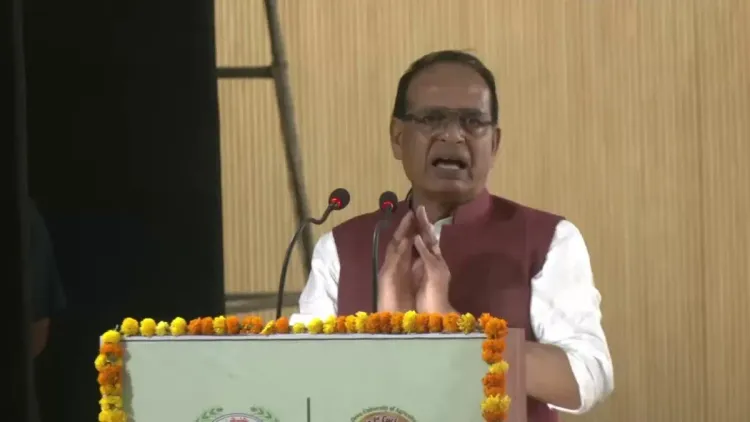
Union Agriculture Minister Shivraj Singh Chouhan on Thursday, 25 June 2026 reaffirmed the government's commitment to raising farmers' incomes, saying the Agriculture Ministry would pursue every possible effort to make farming profitable — with the Integrated Farming Model at the centre of that strategy.
Posting on X, Chouhan wrote: 'आदरणीय प्रधानमंत्री जी के मार्गदर्शन में कृषि मंत्री के रूप में हमारा संकल्प है कि किसानों की आमदनी बढ़ाकर रहना है।' ('Under the guidance of the respected Prime Minister, our resolve as Agriculture Minister is to raise the income of farmers. We must make every possible effort for this. To make agriculture profitable, we will have to adopt the Integrated Farming Model.')
Context
The statement positions Prime Minister Narendra Modi's leadership as the guiding framework for agricultural income policy. Chouhan, a former four-term Chief Minister of Madhya Pradesh, has consistently aligned his ministerial agenda with the broader national goal of making farming economically viable rather than a subsistence-level occupation. The post underscores a personal pledge — the word 'sankalp' (resolve) signals a commitment framed as non-negotiable.
The emphasis on the Integrated Farming Model — a diversified approach combining crops, livestock, fisheries and agroforestry — reflects a deliberate shift away from single-crop dependence, which leaves farmers exposed to price volatility and weather shocks.
Policy Backdrop
The push for farmer income enhancement has deep roots in central government policy. In 2016, the government announced an ambitious target of doubling farmers' income by 2022, anchored in structural reforms, crop diversification and value addition. While that deadline has passed, the underlying policy direction — raising net returns per hectare rather than relying solely on minimum support prices — has remained consistent.
The PM-KISAN scheme, launched in 2019, introduced direct income transfers to landholding farmer families as a complementary income-support measure. Integrated farming clusters have since been piloted in several states, with field data suggesting meaningfully higher net returns per hectare compared with mono-crop systems. Chouhan's post signals that this model will receive renewed ministerial attention.
Stakeholders and Impact
Small and marginal farmers, who constitute the majority of India's agricultural households, stand to gain most from a successful rollout of integrated farming. By combining multiple income streams — crop sales, dairy, fisheries, horticulture — on the same landholding, the model reduces the risk of a single bad season wiping out annual earnings.
Agricultural economists have long argued that income diversification at the farm level is more durable than price-support mechanisms alone. Chouhan's public commitment adds political weight to what has so far been a largely technical recommendation from policy planners.
What's Next
Attention will now turn to how the Ministry operationalises this commitment — whether through new integrated farming clusters, enhanced extension services, or dedicated budget allocations in the next Union Budget or an Agricultural Roadmap announcement. State governments, particularly in large agrarian states, will be key implementation partners. Any concrete scheme launch or funding announcement will be a significant indicator of how quickly this resolve translates into ground-level action.
Point of View
But the choice of the Integrated Farming Model as the vehicle is notable — it sidesteps the politically charged minimum support price debate and instead frames profitability as a structural, diversification-led challenge. For a minister with deep roots in a predominantly agrarian state like Madhya Pradesh, invoking 'sankalp' (resolve) is also a signal to his political base that farm welfare remains a priority. The real test will be whether this rhetorical commitment is followed by measurable scheme launches or budget outlays before the next electoral cycle. Analysts will watch the Union Budget and any Agricultural Roadmap closely for specifics.
NationPress
25 Jun 2026
Frequently Asked Questions
What is the Integrated Farming Model that Shivraj Singh Chouhan mentioned?
The Integrated Farming Model is a diversified agricultural approach that combines crops, livestock, fisheries and agroforestry on the same landholding to generate multiple income streams, reduce risk from a single bad season and raise net returns per hectare.
What did Shivraj Singh Chouhan say about farmers' income on 25 June 2026?
He said that under Prime Minister Modi's guidance, his resolve as Agriculture Minister is to raise farmers' incomes by every possible effort, and that adopting the Integrated Farming Model is essential to making agriculture profitable.
What is PM-KISAN and how does it relate to farmer income policy?
PM-KISAN, launched in 2019, provides direct income support transfers to landholding farmer families and is one of the central government's key measures to supplement farm earnings alongside structural reforms like crop diversification.
Did the government achieve its target of doubling farmers' income by 2022?
The government announced the farmer income-doubling target in 2016 with a 2022 deadline; the target deadline has passed, but the policy direction of raising net farm incomes through diversification and value addition has remained central to agricultural policy.
What should farmers and states expect next from the Agriculture Ministry on integrated farming?
Stakeholders should watch for announcements of new integrated farming clusters, enhanced extension services or dedicated budget allocations in the next Union Budget or a formal Agricultural Roadmap, as these will indicate how the ministerial commitment is being operationalised.