CM Dhami orders state curriculum in all Uttarakhand madrasas
Synopsis
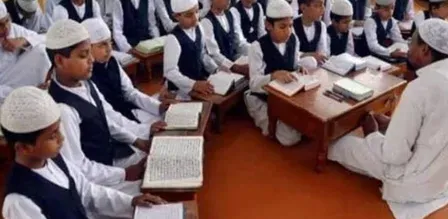
Uttarakhand Chief Minister Pushkar Singh Dhami has declared that all madrasas in the state must follow only the government-prescribed curriculum. He cited the need to ensure modern, equal education for every child and warned against divisive mindsets taking hold in the state.
Key Takeaways
CM Pushkar Singh Dhami announced on 1 July 2026 that all madrasas in Uttarakhand must adopt the state government's prescribed curriculum.
He warned that 'divisive and tribal mentalities' would not be allowed to grow in the state.
The move is framed as ensuring every child's right to modern and equal education.
The directive aligns with the National Education Policy 2020 's mandate for uniform, equitable schooling across all institutions.
Similar curriculum standardisation steps have been taken by BJP -led governments in Uttar Pradesh and Assam .
Formal state education department notifications on timelines and compliance are awaited; legal challenges from minority education bodies remain possible.
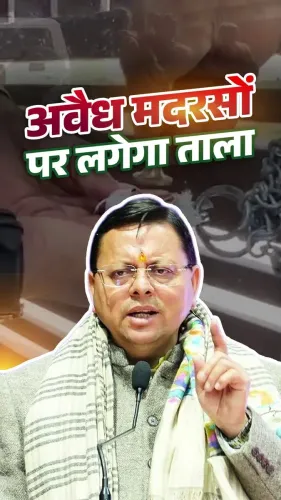
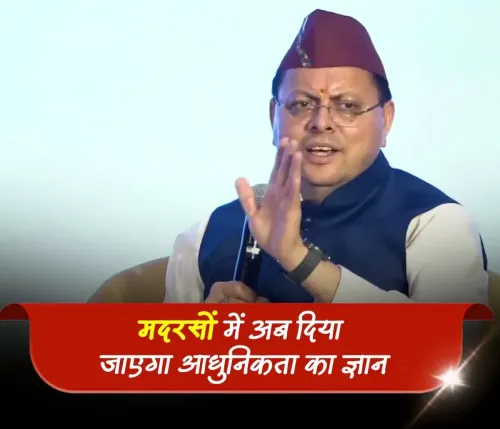
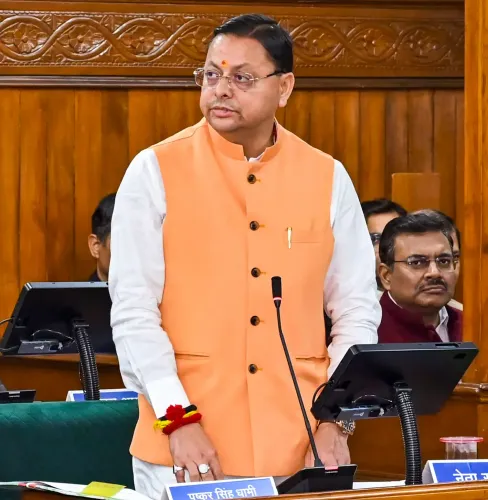
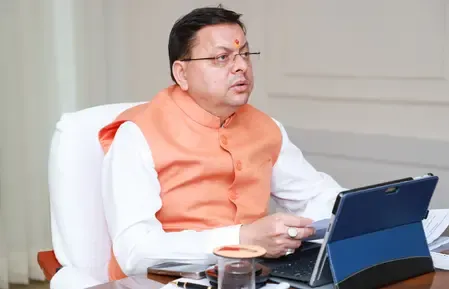
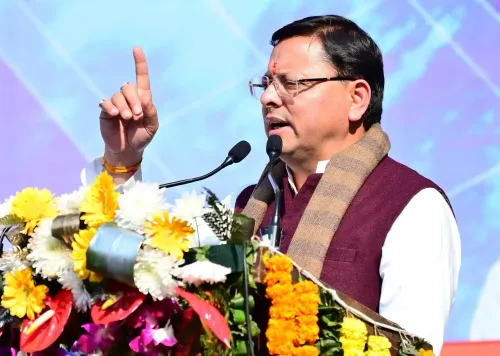
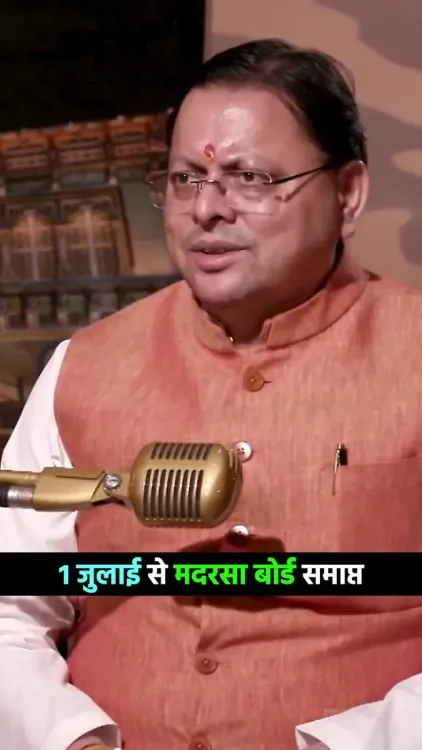
Uttarakhand Chief Minister Pushkar Singh Dhami announced on Wednesday, 1 July 2026 that all madrasas operating in the state will be required to teach only the curriculum prescribed by the state government, framing the move as a guarantee of modern and equal education for every child. The declaration, made via a post on X, also carried a sharp warning against what he described as divisive and tribal mindsets taking root in the state.
Context
In his post, CM Dhami wrote: 'प्रदेश में किसी भी प्रकार की विभाजनकारी और कबीलाई मानसिकता को नहीं पनपने देंगे' — ('We will not allow any kind of divisive or tribal mentality to take root in the state'). He added that all madrasas in Uttarakhand would henceforth teach only the government-mandated syllabus so that 'all children can get the right to modern and equal education.' The post was accompanied by a video, though its contents have not been independently detailed here.
The announcement positions the Dhami government as taking a firm administrative stance on standardising schooling across all categories of educational institutions, including Islamic seminaries, which have traditionally operated with significant curricular autonomy.
Policy Backdrop
The directive aligns with the National Education Policy 2020, which calls for equitable access to modern education and integration of all schooling institutions — including religious ones — into a common national framework. The NEP emphasises that no child should be denied foundational literacy, numeracy, or exposure to contemporary subjects on account of the type of institution they attend.
BJP-governed states have progressively moved to bring madrasas under state curriculum oversight. Uttar Pradesh and Assam have pursued comparable measures in recent years, making Uttarakhand's directive part of a broader pattern of curriculum standardisation in saffron-ruled states. The Dhami government has previously pursued social integration measures alongside other legislative initiatives in the state.
Stakeholders and Impact
The most direct impact falls on students enrolled in Uttarakhand's madrasas, who would gain access to subjects such as science, mathematics, and social studies as mandated by the state board. Proponents argue this opens pathways to mainstream higher education and employment that a purely religious curriculum may not provide.
Minority education institutions and madrasa boards are likely stakeholders who may respond to the directive. Legal challenges from such bodies — questioning whether the order encroaches on the constitutional right of religious minorities to administer educational institutions — remain a possibility that observers are watching closely. The state education department is expected to issue formal notifications detailing rollout timelines and compliance mechanisms.
What's Next
The immediate next step is a formal order from the Uttarakhand state education department specifying which curriculum elements are mandatory, the compliance deadline for madrasa managements, and the inspection or enforcement mechanism. Any legal challenge filed before the Uttarakhand High Court or higher judiciary could shape how far and how fast the directive is implemented.
The announcement sets a clear political tone ahead of any potential electoral or legislative activity in the state, reinforcing the Dhami administration's emphasis on uniform civic and educational standards as a pillar of governance — a test case that other BJP-ruled states may watch closely.
Point of View
A pattern already visible in Uttar Pradesh and Assam. By anchoring the move in the language of children's rights and modern education rather than purely religious or security grounds, the Uttarakhand government is attempting to occupy the developmental high ground on a politically charged issue. The invocation of 'divisive and tribal mentality' signals that the administration views curricular autonomy in madrasas as a social-cohesion risk, not merely an educational gap. How madrasa boards and minority organisations respond — legally or politically — will determine whether this becomes a template for other states or a contested flashpoint.
NationPress
1 Jul 2026
Frequently Asked Questions
What has CM Dhami announced about madrasas in Uttarakhand?
Chief Minister Pushkar Singh Dhami has announced that all madrasas in Uttarakhand must teach only the curriculum prescribed by the state government, ensuring students receive modern and equal education alongside religious instruction.
Why is the Uttarakhand government standardising madrasa curriculum?
The government says the move guarantees every child the right to modern, equal education and prevents divisive or separatist mindsets from developing in the state.
Is this move legal — can the government impose a curriculum on madrasas?
The constitutional right of religious minorities to administer educational institutions is protected under Article 30, but courts have also upheld reasonable state regulation for educational standards. Any legal challenge would likely be heard by the Uttarakhand High Court.
Have other BJP-ruled states done the same with madrasas?
Yes. Uttar Pradesh and Assam have both moved to bring madrasas under state curriculum oversight in recent years, making Uttarakhand's directive part of a broader pattern among BJP-governed states.
What is the National Education Policy 2020's stance on madrasa education?
The National Education Policy 2020 calls for equitable access to modern education across all schooling institutions, including religious ones, and supports integrating them into a common national educational framework.