CM Bhagwant Mann Launches ₹34.51 Cr Kalyan Watercourse Project
Synopsis
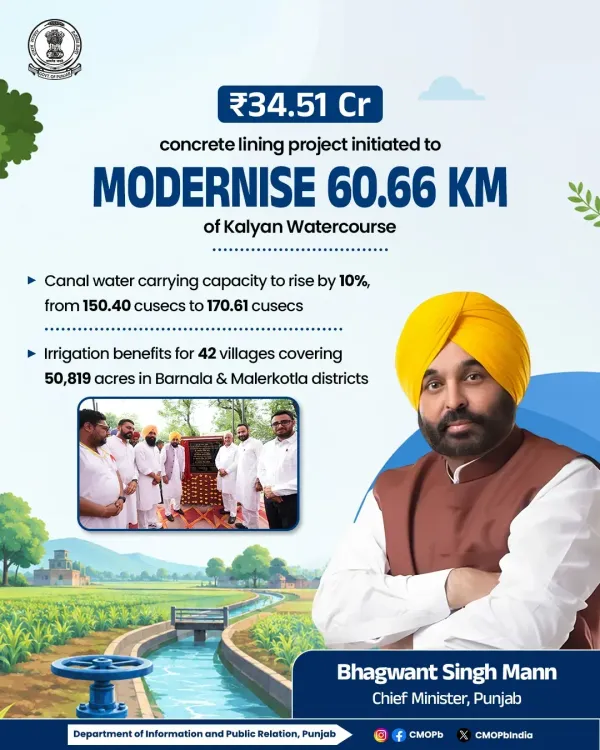
Chief Minister Bhagwant Mann has launched the ₹34.51 crore Kalyan Watercourse Concrete Lining Project to modernise 60.66 km of watercourse, boost canal capacity by 10%, and irrigate 50,819 acres across 42 villages in Barnala and Malerkotla by October 2026, aiming to ease Punjab's groundwater crisis.
Key Takeaways
Chief Minister Bhagwant Mann launched the ₹34.51 crore Kalyan Watercourse Concrete Lining Project on 1 July 2026 .
The project will line 60.66 kilometres of watercourse with concrete to reduce seepage and conveyance losses.
Canal water carrying capacity will increase by 10% upon project completion.
Improved irrigation will cover 50,819 acres across 42 villages in Barnala and Malerkotla districts.
The project targets 'dark zone' areas where groundwater extraction exceeds natural recharge.
Completion is scheduled for October 2026 , after which groundwater impact monitoring will begin.
The Chief Minister's Office of Punjab announced on Wednesday, 1 July 2026 that Chief Minister Bhagwant Mann has launched the ₹34.51 crore Kalyan Watercourse Concrete Lining Project, a major state-funded initiative aimed at conserving rapidly depleting groundwater and strengthening irrigation infrastructure across Barnala and Malerkotla districts.
What the Project Entails
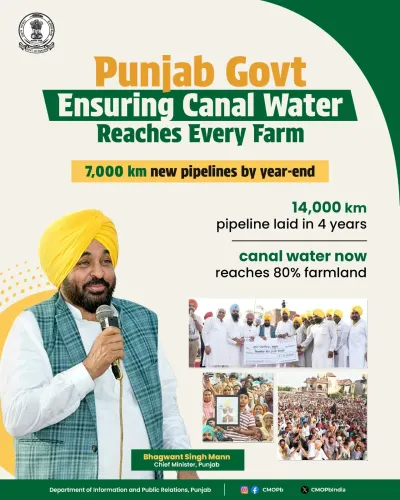
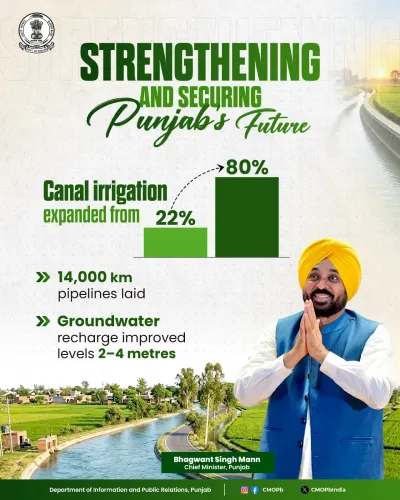
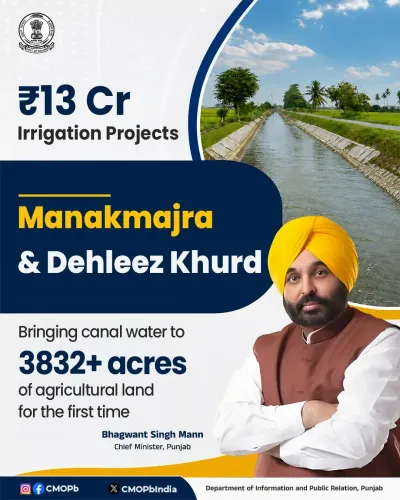
The project will modernise 60.66 kilometres of watercourse through concrete lining, a technique that significantly reduces conveyance losses caused by seepage. Upon completion, the canal water carrying capacity is expected to increase by 10%, ensuring improved irrigation for 50,819 acres spread across 42 villages in Barnala and Malerkotla. The project is scheduled for completion by October 2026.Context: Punjab's Groundwater Crisis
Punjab's agriculture sector relies heavily on a combination of canal water and tubewells, a dependence that has driven widespread groundwater depletion — particularly in areas officially designated as 'dark zones,' where extraction consistently outpaces natural recharge. Barnala and Malerkotla are among the districts classified under this stressed category, owing to the intensive water demands of the dominant paddy-wheat cropping cycle. Concrete lining of watercourses reduces losses in transit, making more surface water available to farmers and lowering the pressure on underground aquifers.Policy Backdrop
The initiative fits within a longer arc of irrigation modernisation in Punjab. The state has previously implemented canal and watercourse lining works under the centrally sponsored Pradhan Mantri Krishi Sinchayee Yojana (PMKSY), launched in 2015, which prioritises 'more crop per drop' outcomes by improving end-to-end irrigation efficiency. The Kalyan project represents a state-funded push in the same direction, targeting specific dark zone geographies where the groundwater situation is most acute. Chief Minister Bhagwant Mann, who has led the Aam Aadmi Party government in Punjab since March 2022, has framed water and agriculture infrastructure as central priorities of his administration.Stakeholder Impact
The most direct beneficiaries are farmers across the 42 villages in Barnala and Malerkotla who currently depend on tubewells to compensate for inadequate canal water supply. By improving the reliability and volume of surface water reaching fields, the project is intended to reduce the cost and ecological toll of groundwater extraction. Smaller and marginal farmers, who bear a disproportionate share of tubewell operating costs, stand to gain the most from a shift toward canal-fed irrigation.What to Watch
With a completion deadline of October 2026, attention will turn to groundwater level monitoring in the covered villages once the lined watercourse becomes operational. Any measurable improvement in aquifer recharge rates in these dark zone areas could serve as a template for expanding concrete lining works to additional watercourses across the state. The Punjab government's follow-up announcements on scaling the programme will be a key indicator of its long-term commitment to reversing the groundwater depletion trend.Point of View
A constituency the AAP cannot afford to lose. Concrete lining is a well-established, low-controversy tool, but its impact is incremental; the real test will be whether the October 2026 deadline is met and whether aquifer data from the 42 villages shows measurable recovery. The project also reinforces Punjab's broader pattern of layering state funds onto centrally sponsored irrigation schemes, signalling that Chandigarh sees water security as too urgent to wait for Delhi's pace. If groundwater indicators improve, this model could be replicated across Punjab's other dark zone districts — making the Kalyan project a potential policy blueprint, not just a one-off capital expenditure.
NationPress
1 Jul 2026
Frequently Asked Questions
What is the Kalyan Watercourse Concrete Lining Project in Punjab?
The Kalyan Watercourse Concrete Lining Project is a ₹34.51 crore state-funded initiative launched by Chief Minister Bhagwant Mann to concrete-line 60.66 kilometres of watercourse in Barnala and Malerkotla districts, improving canal water delivery and reducing groundwater dependence for farmers across 42 villages.
How many acres will benefit from the Kalyan Watercourse project?
The project is designed to ensure improved irrigation for 50,819 acres spread across 42 villages in Barnala and Malerkotla districts of Punjab.
When will the Kalyan Watercourse project be completed?
The project is scheduled for completion by October 2026, after which groundwater impact assessments in the covered villages are expected to follow.
What is a 'dark zone' in the context of Punjab's groundwater?
A 'dark zone' in Punjab refers to areas where groundwater extraction consistently exceeds natural recharge rates, primarily driven by intensive paddy-wheat cultivation that relies heavily on tubewells. Barnala and Malerkotla are among the districts classified under this category.
How does concrete lining of watercourses help Punjab farmers?
Concrete lining reduces water lost to seepage as it travels from canals to fields, making more surface water available to farmers. This lowers the need for costly tubewell pumping and reduces pressure on already-stressed underground aquifers in dark zone areas.