Giriraj Singh flags new rural jobs scheme replacing MGNREGS from July 1
Synopsis
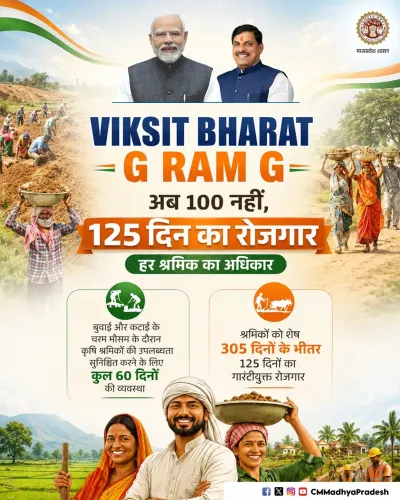
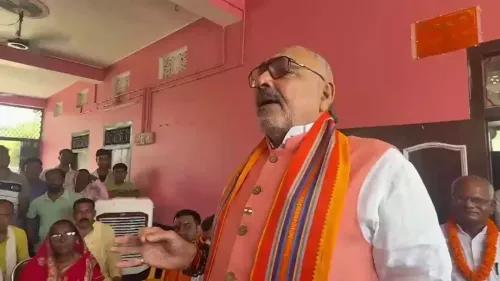
Union Textiles Minister Giriraj Singh claimed on X that a new rural employment scheme has replaced MGNREGS across India from 1 July 2026. The post, shared via the NaMo App, has spotlighted a potentially landmark shift in India's rural welfare policy, pending official confirmation from the Ministry of Rural Development.
Key Takeaways
Union Textiles Minister Giriraj Singh posted on X on 1 July 2026 claiming MGNREGS has been replaced by a new rural employment scheme nationwide.
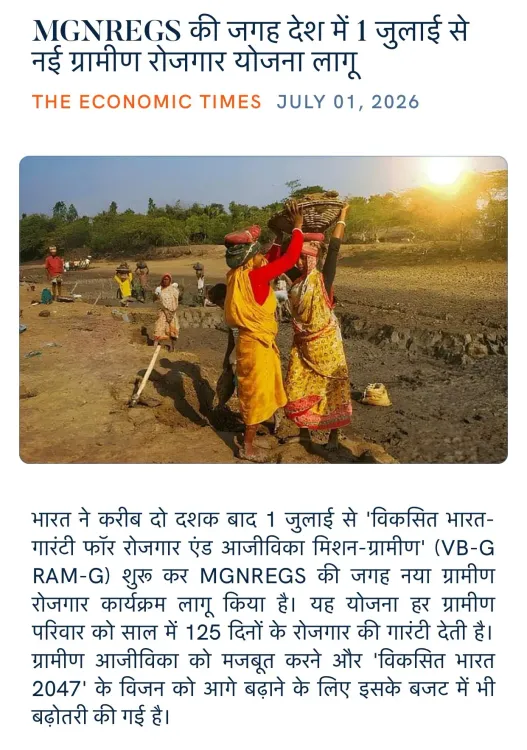
The post was shared in Hindi via the NaMo App and included an image and an external link to a report on the subject.
MGNREGS , enacted in 2005 and renamed in 2009 , guarantees up to 100 days of wage employment annually per rural household and is one of India's largest social security programmes.
Rural employment policy falls under the Ministry of Rural Development , not the Textiles Ministry, making Singh's post an act of political amplification rather than an official ministerial announcement.
Formal gazette notifications and implementation circulars from the Ministry of Rural Development are awaited to confirm the statutory basis and operational details of any replacement scheme.
The transition, if confirmed, would have immediate implications for state governments , gram panchayats, and tens of crore rural households currently registered under MGNREGA job cards.
Union Textiles Minister Giriraj Singh on Wednesday, 1 July 2026, shared a post on X claiming that a new rural employment scheme has replaced the Mahatma Gandhi National Rural Employment Guarantee Scheme (MGNREGS) across India with effect from 1 July 2026. The post, shared via the NaMo App, linked to a report about the purported policy change and has drawn attention to what would be a landmark shift in India's rural welfare architecture.
Context
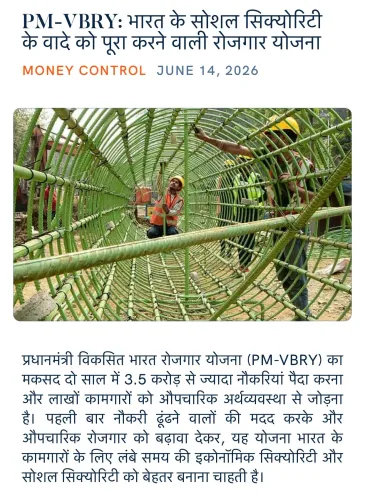
Giriraj Singh posted in Hindi: 'MGNREGS की जगह देश में 1 जुलाई से नई ग्रामीण रोजगार योजना लागू' — which translates to: 'A new rural employment scheme comes into effect across the country from 1 July, replacing MGNREGS.' The post was accompanied by an image and a link to a report on the subject, shared through the official NaMo App platform used by BJP leaders and supporters to disseminate government-related content.
It is notable that Singh holds the portfolio of Union Minister of Textiles, and rural employment policy falls under the purview of the Ministry of Rural Development. His amplification of the claim signals the ruling party's intent to highlight the development as a significant governance milestone, even if the formal announcement is expected from a different ministry.
Policy Backdrop
The National Rural Employment Guarantee Act was enacted in 2005 to provide statutory wage employment in rural India, guaranteeing up to 100 days of work annually per rural household. The scheme was renamed the Mahatma Gandhi National Rural Employment Guarantee Act (MGNREGA) in 2009 and has since been one of the largest social security programmes in the world by coverage and expenditure.
India has operated large-scale rural employment guarantee programmes for over two decades to mitigate agrarian distress and seasonal joblessness. Successive administrations have periodically revised wage rates, eligible works categories, and fund-sharing ratios between the Centre and states. Any structural replacement of MGNREGS would mark the most significant overhaul of rural employment policy since the scheme's inception.
The Ministry of Rural Development is the nodal authority for MGNREGA implementation, and formal circulars or legislative notifications from that ministry would be required to give legal effect to any replacement scheme. As of the time of this report, official gazette notifications or ministerial orders detailing the new scheme's statutory basis, wage structure, and coverage norms had not been independently confirmed.
Stakeholders and Impact
MGNREGS directly benefits tens of crore rural households across India, with state governments acting as implementing agencies and the Centre bearing the bulk of wage costs. Any transition to a new scheme would have immediate implications for pending wage payments, ongoing works, and the administrative machinery at the district and gram panchayat level.
Labour economists and rural welfare advocates have long debated the scheme's efficacy, with proponents arguing it serves as a critical income floor during agricultural lean seasons, while critics have called for reforms to improve asset quality and reduce leakages. A wholesale replacement, if confirmed, would need to address continuity of employment for workers currently registered under MGNREGA job cards.
What's Next
The Ministry of Rural Development is expected to issue detailed circulars outlining the new scheme's guidelines, eligibility criteria, wage rates, and state-level implementation orders following the 1 July 2026 rollout date. State governments will need to align their administrative frameworks accordingly, and the transition period will be closely watched by rural welfare organisations and opposition parties for gaps in coverage or worker protections.
If the replacement is confirmed through official channels, it would represent a structural redefinition of India's rural safety net — one that could reshape Centre-state fiscal relations and the livelihoods of millions of rural workers for years to come.
Point of View
A scheme long associated with the Congress-led UPA era. If a replacement scheme is formally notified, the government will face scrutiny over worker continuity, wage parity, and whether the new framework preserves or dilutes the statutory employment guarantee. The post also underscores the BJP's broader pattern of using social media ecosystems to pre-announce or signal policy shifts ahead of formal bureaucratic communication.
NationPress
1 Jul 2026
Frequently Asked Questions
Has MGNREGS been replaced by a new scheme from July 1 2026?
Union Textiles Minister Giriraj Singh claimed on X on 1 July 2026 that a new rural employment scheme has replaced MGNREGS from that date, but formal gazette notifications or orders from the Ministry of Rural Development confirming the change are yet to be independently verified.
What is MGNREGS and why does it matter?
MGNREGS — the Mahatma Gandhi National Rural Employment Guarantee Scheme — was enacted in 2005 and guarantees up to 100 days of wage employment per year to rural households. It is one of India's largest social security programmes and a critical income support for tens of crore rural workers.
Why is the Textiles Minister commenting on a rural employment scheme?
Rural employment policy falls under the Ministry of Rural Development, not the Textiles Ministry. Giriraj Singh's post appears to be political amplification of a reported policy development rather than an official ministerial announcement from his own department.
What will the new rural employment scheme look like?
Details of the reported replacement scheme — including its name, wage structure, eligibility criteria, and coverage norms — have not been officially announced. The Ministry of Rural Development is expected to issue implementation circulars and guidelines following the 1 July 2026 rollout date.
How will the MGNREGS replacement affect rural workers?
Any transition to a new scheme would have immediate implications for workers currently registered under MGNREGA job cards, pending wage payments, and ongoing works at the gram panchayat level. State governments will need to align their administrative frameworks with whatever new guidelines are issued by the Centre.