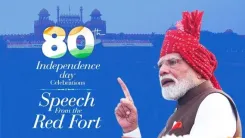
CM Dhami: Partition split culture, not just borders
Synopsis
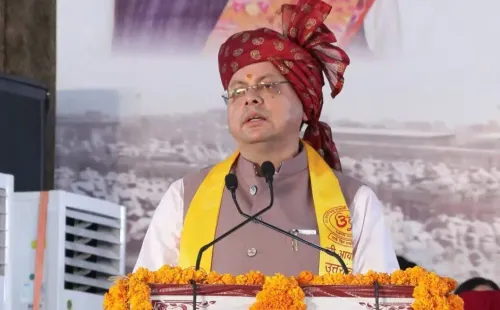
On Independence Day 2026, Uttarakhand CM Pushkar Singh Dhami said the 1947 Partition fractured culture alongside geography — a pointed reminder that the subcontinent's division cost more than territory.
Key Takeaways
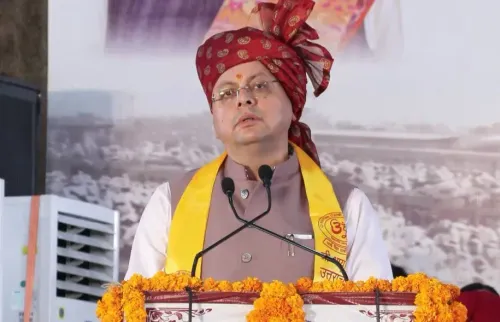
Pushkar Singh Dhami , Chief Minister of Uttarakhand, made the remark on 15 August 2026 , Independence Day.
He stated that the 1947 Partition divided not just geographical boundaries but culture itself.
The Partition displaced an estimated 14–18 million people and severed shared languages, traditions, and familial ties across the subcontinent.
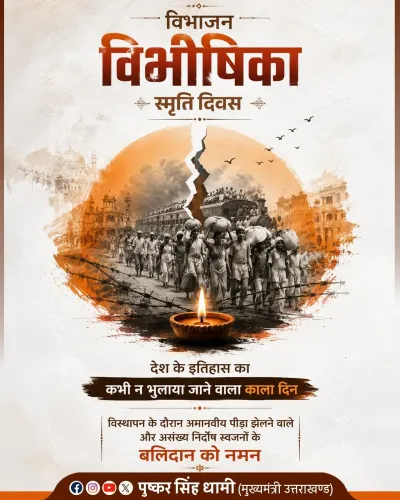
India observes Partition Horrors Remembrance Day on 14 August , institutionalising reflection on the human and cultural cost of 1947.
Dhami's statement reflects a broader trend of state leaders using Independence Day to foreground the cultural, not merely territorial, legacy of Partition.
On Independence Day, 15 August 2026, Uttarakhand Chief Minister Pushkar Singh Dhami delivered a pointed reflection on the cost of the 1947 Partition — one that went far beyond maps and boundary lines. Culture itself, he said, was torn apart.
Dhami's remark — 'भौगोलिक सीमाओं का ही नहीं संस्कृति का भी हुआ विभाजन' ('It was not just geographical boundaries that were divided — culture was divided too') — cuts to a wound that 79 years have not fully closed. The Partition of British India in August 1947 drew a line through the subcontinent along religious lines, but it also severed shared languages, folk traditions, familial bonds, and centuries of composite heritage across the northern plains and beyond.
What the territorial account leaves out
Standard histories of Partition count the staggering human toll: roughly 14 to 18 million displaced, hundreds of thousands killed in communal violence. What the territorial account often leaves out is the cultural dislocation — the poets whose audiences ended up across a border, the shrines split from their pilgrims, the dialects that lost half their speakers overnight. Dhami's Independence Day framing brings that invisible ledger back into view.
For Uttarakhand, a state with deep roots in Garhwali and Kumaoni heritage and strong ties to the broader Himalayan cultural belt, the remark carries particular resonance. Communities in the region share linguistic and devotional threads with areas now in Pakistan — threads that Partition frayed without fully breaking.
A pattern of Independence Day cultural reckoning
Dhami's statement fits a wider pattern: Indian state leaders increasingly use Independence Day not just to celebrate sovereignty but to reckon with what was lost in its making. The Partition Horrors Remembrance Day, observed on 14 August since 2021, formalised this impulse at the national level. State-level voices like Dhami's amplify it, keeping the cultural dimension of Partition in public discourse rather than leaving it to academic archives.
The kicker is simple and sharp: borders can be drawn in an afternoon; the cultural fractures they create take generations to even name.
Point of View
Not merely a territorial settlement, aligns with a deliberate political effort since 2021 to embed Partition memory into India's national identity calendar. By invoking cultural division on Independence Day, he positions Uttarakhand's heritage politics within a broader national narrative that treats 1947 as an ongoing wound rather than a closed chapter. The move is low-risk but high-signal: it energises cultural-nationalist sentiment without requiring specific policy commitments. Watch for whether it translates into state-level Partition heritage programmes or curriculum changes in Uttarakhand.
NationPress
15 Aug 2026
Frequently Asked Questions
What did CM Pushkar Singh Dhami say about Partition on Independence Day 2026?
Dhami said that the 1947 Partition divided not just geographical boundaries but culture itself, highlighting the non-territorial cost of the subcontinent's division.
What is Partition Horrors Remembrance Day in India?
Partition Horrors Remembrance Day is observed on 14 August every year, instituted in 2021 , to remember the human suffering and cultural loss caused by the 1947 division of British India.
How did the 1947 Partition affect culture in northern India?
The Partition severed shared languages, folk traditions, devotional practices, and familial bonds across communities in northern India, creating cultural fractures that persist decades later.
Who is Pushkar Singh Dhami?
Pushkar Singh Dhami has served as Chief Minister of Uttarakhand since 2021 and frequently engages with themes of state identity, culture, and historical memory.
Why do Indian leaders talk about Partition on Independence Day?
Independence Day marks the moment of both freedom and Partition in 1947, making it a natural occasion for leaders to reflect on the territorial and cultural costs of that simultaneous rupture.