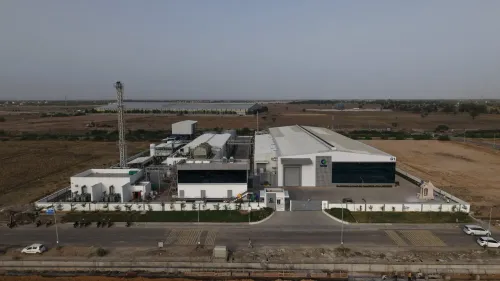
CM Dhami Shares Live PM Modi Inauguration of Sanand Semiconductor Unit

Synopsis
Uttarakhand CM Pushkar Singh Dhami shared a live broadcast of PM Narendra Modi inaugurating the CG Semi OSAT semiconductor facility in Sanand, Gujarat on 4 July 2026, spotlighting India's Rs 76,000-crore semiconductor mission gaining operational momentum.
Key Takeaways
Uttarakhand CM Pushkar Singh Dhami shared the live inauguration of the CG Semi OSAT facility in Sanand, Gujarat on 4 July 2026 .
Prime Minister Narendra Modi performed the inauguration, underscoring the Centre's direct involvement in semiconductor capacity-building.
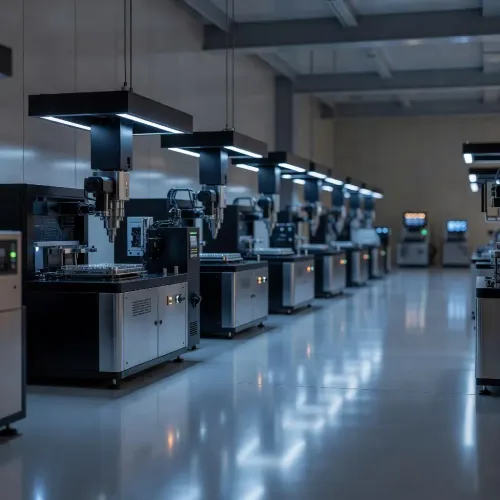
The facility is an OSAT (Outsourced Semiconductor Assembly and Test) unit, handling chip packaging and testing — a critical downstream segment.
The project falls under the India Semiconductor Mission , backed by a Union Cabinet-approved outlay of Rs 76,000 crore since 2021 .
Sanand, Gujarat has become a key hub for India's semiconductor and electronics manufacturing investments owing to its industrial infrastructure.
The inauguration adds to growing momentum under #SemiconHubBharat , with multiple other approved semiconductor units at various stages of completion.
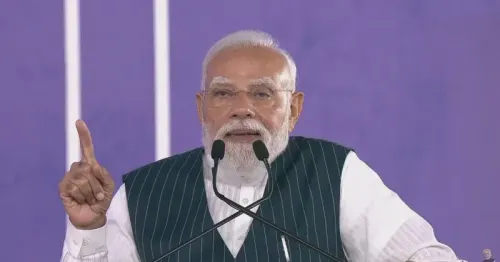
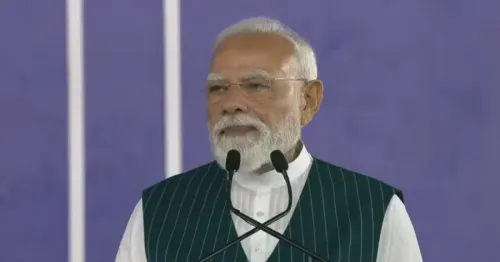
Uttarakhand Chief Minister Pushkar Singh Dhami shared a live broadcast on Saturday, 4 July 2026, as Prime Minister Narendra Modi inaugurated the CG Semi OSAT facility in Sanand, Gujarat, marking a significant milestone in India's push to build domestic semiconductor manufacturing capacity.
Context
Dhami posted the live stream link on X with the caption: 'LIVE: Hon`ble PM Shri @NarendraModi ji inaugurates the CG Semi OSAT facility in Sanand, Gujarat #SemiconHubBharat' — signalling broad political solidarity across BJP-governed states for the Centre's semiconductor agenda. OSAT stands for Outsourced Semiconductor Assembly and Test, a critical downstream segment of the chip manufacturing supply chain that handles packaging, assembly, and testing of semiconductor chips after fabrication.
The inauguration was conducted by Prime Minister Modi, whose government has made semiconductor self-reliance a centrepiece of its industrial policy. The event drew attention from leaders beyond Gujarat, with Dhami's post reflecting the national character of the initiative.
Policy Backdrop
The India Semiconductor Mission (ISM), approved by the Union Cabinet in 2021 with a financial outlay of Rs 76,000 crore, forms the policy foundation for projects such as the one inaugurated at Sanand. The mission aims to build end-to-end domestic capability spanning semiconductor design, fabrication, and assembly and test operations.
Sanand in Gujarat has emerged as a preferred destination for approved semiconductor and electronics investments, backed by the state's established industrial corridors, logistics connectivity, and reliable power infrastructure. The area already hosts significant electronics manufacturing activity, making it a natural anchor for India's semiconductor cluster ambitions.
The broader strategy mirrors initiatives in the United States, the European Union, and East Asia to reduce dependence on imported chips and embed critical technology supply chains within national borders. India's approach combines central fiscal incentives with state-level infrastructure support to attract both global and domestic players.
Stakeholders and Impact
The commissioning of an OSAT facility in Sanand is expected to benefit Gujarat's industrial workforce, creating direct and indirect employment in semiconductor assembly and testing operations. Electronics manufacturers across India stand to gain from reduced turnaround times and costs associated with domestic chip packaging, which has historically required overseas processing.
For the wider #SemiconHubBharat ecosystem — the hashtag used by Dhami and other leaders to frame India's semiconductor ambitions — each operational facility strengthens the case for further upstream investment in wafer fabrication and chip design infrastructure.
What's Next
Attention will now turn to commissioning timelines and employment generation figures for other approved semiconductor units under the India Semiconductor Mission. Several OSAT and assembly projects cleared in 2023 are at varying stages of construction and equipment installation across multiple states.
The Sanand inauguration sets a reference point for the pace at which India's semiconductor pipeline can move from policy approval to operational reality, a metric that investors and global chip industry partners will watch closely in the months ahead.
Point of View
A shift that carries electoral as well as economic weight. Each operational facility strengthens the government's 'Viksit Bharat' narrative ahead of the next electoral cycle, while also generating tangible benchmarks — jobs, capacity, export potential — against which the Rs 76,000-crore mission will ultimately be judged. The cross-state political visibility given to the Sanand event reflects a coordinated effort to nationalise the semiconductor success story.
NationPress
4 Jul 2026
Frequently Asked Questions
What is the CG Semi OSAT facility in Sanand?
The CG Semi OSAT facility in Sanand, Gujarat is an Outsourced Semiconductor Assembly and Test plant inaugurated by Prime Minister Narendra Modi on 4 July 2026. OSAT facilities handle the packaging, assembly, and testing of semiconductor chips after the fabrication stage.
What is the India Semiconductor Mission?
The India Semiconductor Mission is a central government scheme approved in 2021 with an outlay of Rs 76,000 crore to develop domestic semiconductor design, fabrication, and assembly and test capacity, reducing India's dependence on imported chips.
Why is Sanand, Gujarat important for India's semiconductor plans?
Sanand is a well-established industrial area in Gujarat with strong logistics connectivity, power infrastructure, and existing electronics manufacturing activity, making it a preferred location for semiconductor and electronics investment under the India Semiconductor Mission.
Why did Uttarakhand CM Dhami post about a Gujarat semiconductor inauguration?
CM Pushkar Singh Dhami shared the live broadcast to highlight Prime Minister Modi's inauguration of the CG Semi OSAT facility, reflecting broad political support across BJP-governed states for the Centre's semiconductor self-reliance agenda under the #SemiconHubBharat initiative.
What does OSAT mean in semiconductor manufacturing?
OSAT stands for Outsourced Semiconductor Assembly and Test. These facilities receive fabricated semiconductor wafers and perform the downstream processes of chip packaging, assembly, and quality testing before the chips are supplied to electronics manufacturers.