CM Dhami Spotlights Champawat's Ancient Baleshwar Temple
Synopsis
Uttarakhand CM Pushkar Singh Dhami has spotlighted the ancient Baleshwar Shiva temple in Champawat, calling it a vital religious and cultural heritage site with unparalleled 11th-12th century stone architecture, and urging pilgrims to visit.
Key Takeaways
CM Pushkar Singh Dhami posted on 16 November 2026 promoting the Baleshwar Temple in Champawat district.
The temple is dedicated to Lord Shiva and dates to the 11th-12th century , renowned for its Kumaoni stone architecture.
Champawat borders Nepal and is considered a secondary religious tourism destination in Uttarakhand.
Dhami described the site as an 'important religious and cultural heritage' offering visitors both spiritual and historical experience.
Uttarakhand's leadership has a consistent strategy of using social media to promote lesser-known temples beyond the Char Dham circuit.
Tucked into the hills of Champawat district near the Nepal border, the Baleshwar Temple has stood as a testament to Uttarakhand's stone-craft heritage for nearly a thousand years — and Uttarakhand Chief Minister Pushkar Singh Dhami wants more people to know it exists.
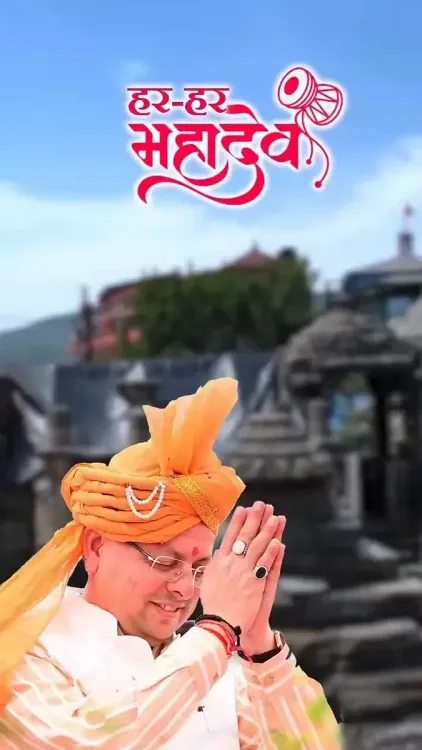
On Monday, 16 November 2026, Dhami posted on X, describing the ancient Shiva temple as 'ek mahatvapurn dharmik evam sanskritik dharohar' — 'an important religious and cultural heritage' — and urged visitors to make time for the shrine on any trip to Champawat. 'Its unparalleled architectural style and craftsmanship offer devotees a direct experience of both spirituality and history,' he wrote.
A Temple That History Built in Stone
The Baleshwar Temple complex, dedicated to Lord Shiva, is widely regarded as one of the finest examples of 11th-12th century Kumaoni stone architecture in the region. Its carved sandstone panels and shikhara-style spires reflect a tradition of craftsmanship that flourished in the central Himalayan foothills long before modern pilgrimage infrastructure arrived. The temple sits on the sacred soil of Champawat, a district the CM himself described as 'paavan dharti' — holy ground.
Champawat's Quiet Place in Uttarakhand's Pilgrimage Map
Champawat rarely commands the footfall of Char Dham shrines like Kedarnath or Badrinath, yet it carries deep religious and historical weight. Uttarakhand's leaders have made a consistent practice of amplifying lesser-known heritage sites on social media — a deliberate strategy to spread pilgrimage and tourism revenue beyond the state's saturated primary circuits. Dhami has been among the most active voices in this effort since taking office in 2021.
Watchers of Uttarakhand's heritage policy will note whether this renewed spotlight on Baleshwar translates into concrete state action — conservation funding, improved approach roads, or formal inclusion in a district tourism circuit for Champawat.
Point of View
Official visibility can meaningfully shift tourist footfall and local livelihoods. The question is whether these posts remain promotional gestures or become the leading edge of structured conservation and connectivity investment.
NationPress
16 Nov 2026
Frequently Asked Questions
Where is Baleshwar Temple located?
Baleshwar Temple is located in Champawat district , Uttarakhand, near the Nepal border. It is one of the most significant ancient Shiva temples in the Kumaon region.
How old is Baleshwar Temple in Champawat?
The Baleshwar Temple complex is widely dated to the 11th-12th century , making it roughly 900-1,000 years old. It is noted for its distinctive Kumaoni stone architecture and carved craftsmanship.
Why did CM Dhami post about Baleshwar Temple?
CM Pushkar Singh Dhami posted about the temple on 16 November 2026 to promote Champawat as a religious and cultural tourism destination, urging visitors to the district to include the temple in their itinerary.
Is Baleshwar Temple part of the Char Dham circuit?
No, Baleshwar Temple is not part of the Char Dham circuit. It is an independent heritage shrine in Champawat , which Uttarakhand authorities are promoting as a secondary pilgrimage and heritage tourism destination.
What is Champawat known for in Uttarakhand?
Champawat is a district in Uttarakhand bordering Nepal, known for its ancient temples, historical significance, and status as an emerging religious tourism destination beyond the main Char Dham route.