CM Dhami: Tourism policies creating rural jobs, curbing migration
Synopsis
Uttarakhand CM Pushkar Singh Dhami says state tourism and self-employment policies are creating rural jobs, giving hill-district youth local livelihoods and putting a check on the state's chronic out-migration problem.
Key Takeaways
CM Pushkar Singh Dhami stated on 15 July 2026 that tourism and self-employment policies are generating new jobs in rural Uttarakhand .
The government claims local youth are now finding livelihoods within their own regions, reducing the need to migrate to cities.
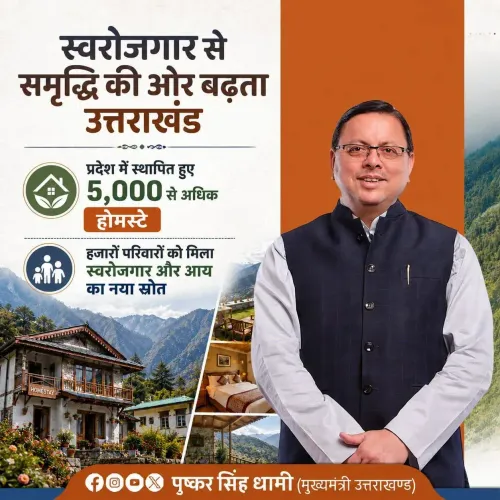
Uttarakhand's 2022 tourism policy had prioritised rural homestays and eco-tourism circuits to channel spending into hill communities.
The approach aligns with the national Atmanirbhar Bharat framework emphasising local self-reliance and job creation.
Official migration and employment data will be the key metric to verify whether the policy impact is statistically significant.
Future budget provisions for rural tourism infrastructure will indicate the government's commitment to scaling this model.
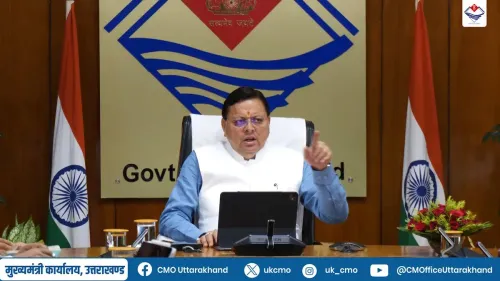
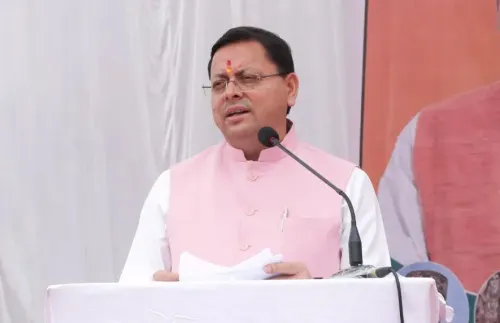
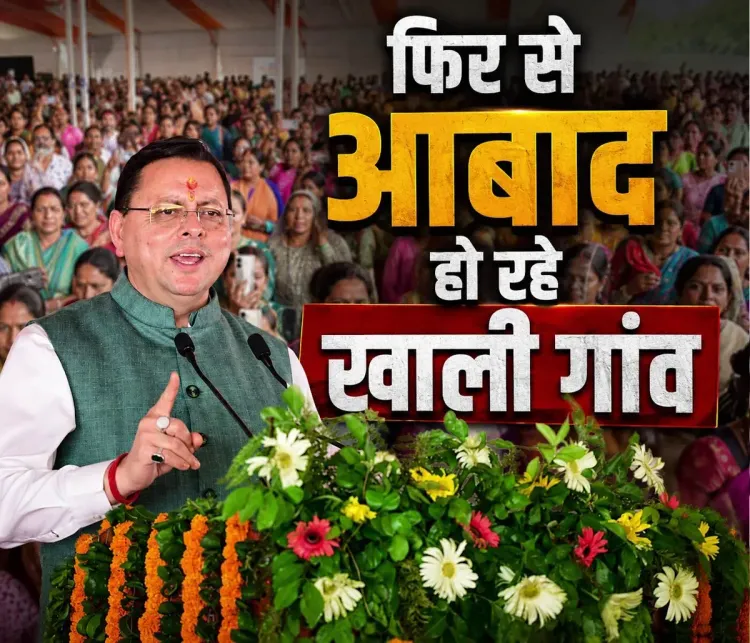
Uttarakhand Chief Minister Pushkar Singh Dhami on Wednesday, 15 July 2026, stated that policies designed to promote tourism and self-employment are now generating new livelihood opportunities in rural areas, enabling local youth to earn within their own regions and effectively checking the long-standing trend of out-migration from the state's hill districts.
Posting on X, CM Dhami wrote: 'पर्यटन और स्वरोजगार को बढ़ावा देने के लिए बनाई गई नीतियों से अब ग्रामीण क्षेत्रों में भी रोजगार के नए अवसर सृजित हो रहे हैं' — 'Policies made to promote tourism and self-employment are now creating new employment opportunities even in rural areas, providing better means of livelihood to local youth within their own region and putting an effective check on migration.'
Context
Uttarakhand has historically recorded among the highest rates of rural out-migration of any Himalayan state in India, with hill communities leaving for the plains and larger cities in search of work. The absence of local livelihoods has long depopulated entire villages across districts such as Pauri Garhwal, Almora, and Chamoli. Successive state administrations have identified this demographic drain as one of the most pressing governance challenges.
CM Dhami's post signals that the current government views its tourism and self-employment framework as producing measurable results on this front, with rural youth increasingly able to sustain themselves without relocating.
Policy Backdrop
In 2022, Uttarakhand unveiled a revised tourism policy that placed particular emphasis on rural homestays and eco-tourism circuits, aiming to channel visitor spending directly into hill communities. The framework was designed to complement national-level initiatives under Atmanirbhar Bharat, which stress local job creation and self-reliance.
Self-employment schemes tied to tourism — covering homestay registration, local guide certification, and handicraft promotion — have been positioned as structural alternatives to migration. The state government has also linked these efforts to broader rural infrastructure investment to make hill destinations more accessible to domestic tourists.
Stakeholders and Impact
Rural youth and hill communities across Uttarakhand's mountain districts are the primary beneficiaries cited in this policy approach. For families dependent on remittances from migrant members, local livelihood creation represents both an economic and a social shift — keeping younger generations rooted in their villages.
The tourism sector also benefits local women entrepreneurs who run homestays and sell locally produced goods. Eco-tourism circuits, when functional, distribute economic activity across multiple villages rather than concentrating it in established pilgrimage towns such as Haridwar or Rishikesh.
What's Next
The credibility of these claims will be tested when the state releases its next round of official migration or employment data, which would offer quantifiable evidence of whether rural job creation has translated into a statistically significant reduction in out-migration. Observers will also watch for supplementary budget provisions directed at rural tourism infrastructure in the coming fiscal cycle.
Any expansion of the homestay scheme or announcement of new eco-tourism corridors would signal that the government is doubling down on this model as its primary answer to Uttarakhand's migration challenge.
Point of View
The Chief Minister is framing an economic argument as a cultural one, appealing to hill communities' strong attachment to their ancestral villages. The claim, however, remains assertion until backed by hard migration data, and the government's willingness to release such figures transparently will determine whether this narrative holds. More broadly, the post fits a wider pattern among Himalayan state governments of using tourism as a proxy for rural development, a model whose long-term sustainability depends heavily on consistent infrastructure investment and climate resilience.
NationPress
15 Jul 2026
Frequently Asked Questions
What has CM Pushkar Singh Dhami said about rural employment in Uttarakhand?
CM Dhami stated on 15 July 2026 that tourism and self-employment policies are creating new livelihood opportunities in rural Uttarakhand, enabling local youth to earn within their own regions and reducing out-migration.
How is Uttarakhand trying to stop migration from hill districts?
Uttarakhand has promoted rural homestays, eco-tourism circuits, and self-employment schemes tied to tourism to give hill-district youth viable local livelihoods as an alternative to migrating to cities.
What is Uttarakhand's tourism policy for rural areas?
In 2022, Uttarakhand unveiled a revised tourism policy emphasising rural homestays and eco-tourism circuits designed to channel visitor spending directly into hill communities and support local self-employment.
Is migration from Uttarakhand hill districts decreasing?
CM Dhami's government claims its policies are putting an effective check on migration, but independent verification requires fresh official state migration and employment data, which has not yet been publicly released.
How does Uttarakhand's rural tourism policy connect to Atmanirbhar Bharat?
Uttarakhand's focus on local self-employment through tourism aligns with the national Atmanirbhar Bharat framework, which emphasises creating jobs at the local level to reduce dependence on distant urban centres.