CM Dhami's Ganga Clean-Up Push Earns Global Notice

Synopsis
The Uttarakhand CMO says the Ganga at Haridwar is visibly cleaner thanks to 22 nala interceptions, five 145-MLD STPs, and a Ganga Bandi drive that cleared over 100 tonnes of waste — with CM Dhami calling river purity the government's top priority.
Key Takeaways
The Uttarakhand CMO on 15 November 2026 announced that the Ganga at Haridwar is now drawing positive national and international attention for its visible clarity.
Uttarakhand Peyjal Nigam has tapped all 22 nalas previously discharging into the Ganga, connecting them to five STPs with a combined capacity of 145 MLD .
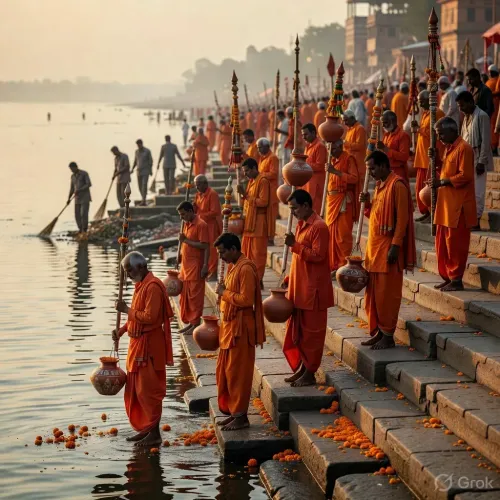
A Ganga Bandi clean-up drive in Haridwar collected more than 100 tonnes of waste , involving government departments, religious bodies, NGOs, and trade organisations.
On Diwali night , the Ganga returned in full flow to Har Ki Pauri , described as visibly pure by those present.
An additional STP at Shivalik Nagar and eight new sewerage pumping stations are under construction to further strengthen infrastructure.
CM Pushkar Singh Dhami has pledged continuous efforts to maintain the Ganga's purity, with ongoing pilgrim-awareness work now a permanent programme.
The water flowing past Har Ki Pauri in Haridwar is turning heads — and not for the wrong reasons. For the first time in years, the Ganga's current through the holy city is being described in deep blue, clear terms, a contrast sharp enough to draw positive attention both within India and abroad. The Chief Minister's Office of Uttarakhand on Sunday, 15 November 2026, credited the transformation to a sustained, two-track effort under Chief Minister Pushkar Singh Dhami — heavy sewage infrastructure on one hand, and a mass-mobilisation cleaning blitz on the other.
How 22 Drains and Five Treatment Plants Changed Haridwar's River
The backbone of the clean-up is infrastructure. The Uttarakhand Peyjal Nigam has intercepted all 22 nalas (drains) that previously discharged directly into the Ganga along Haridwar's riverfront, rerouting their flow into sewage treatment plants. Five STPs with a combined capacity of 145 MLD (million litres per day) now operate around the clock in Haridwar alone. The post notes that work on an additional STP at Shivalik Nagar and eight new sewerage pumping stations at various locations is currently under way — signalling the state is not treating this as a finished project.
These capital works sit within the broader architecture of the Namami Gange programme, the central government's flagship Ganga rejuvenation mission launched in 2014. Under that scheme, Uttarakhand has been building out nala-tapping networks and STP capacity across towns that line the river and its tributaries — but the CMO's post argues that CM Dhami's tenure accelerated that construction on a 'war footing.'
The Ganga Bandi Blitz: 100 Tonnes of Waste, One Night of Return
Infrastructure alone does not explain the visible clarity. Enter Ganga Bandi — the periodic ritual closure when river flow is briefly paused, exposing the riverbed and allowing a thorough clean-up of the ghats. This year's drive in Haridwar saw government departments, religious institutions, voluntary organisations, and trade bodies all working in tandem. The combined effort reportedly yielded more than 100 tonnes of waste, clearing not just surface litter from the ghats but also years of accumulated plastic, residual puja materials, and cloth offerings from the riverbed.
The payoff came on Diwali night. When the Ganga's full flow was restored to the sacred precinct of Har Ki Pauri, pilgrims and locals described witnessing the river in what the administration called its 'divya swaroop' — its divine form. The image of a surging, visibly clean Ganga on one of Hinduism's most auspicious nights carries enormous symbolic weight in a city that hosts millions of pilgrims each year.
Dhami's Pledge and the Pilgrims Still to Come
CM Pushkar Singh Dhami framed the effort in cultural and spiritual terms: 'Maa Ganga hamari aastha, sanskriti aur jeevandayini dharohar hain' — 'Mother Ganga is our faith, our culture, and our life-giving heritage. Maintaining her purity and free flow is the highest priority of our government.' He added that community participation during Ganga Bandi was 'commendable,' and committed to continuous, effective efforts to preserve the river's cleanliness and sanctity.
The administration says awareness work among pilgrims is now a permanent feature — not a one-off campaign. With Haridwar serving as the gateway to Char Dham pilgrimage routes and drawing tens of millions of visitors annually, sustaining water quality under that footfall is the real test. The next data point to watch: water-quality monitoring reports from state authorities and the Central Pollution Control Board that will confirm whether the visible improvement holds across seasons and surge periods.
A river once synonymous with pollution is now being cited as a turnaround story. The question is whether the pipes, the plants, and the pledges can keep it that way.
Point of View
The CMO is making a cultural and political argument simultaneously. The real accountability test, however, lies in independent water-quality data: visible clarity can reflect seasonal low-flow conditions as much as structural improvement, and sustained compliance during peak pilgrimage surges will determine whether this claim ages well. Watch for CPCB monitoring reports and the operational performance of the new pumping stations as the genuine scoreboard.
NationPress
15 Nov 2026
Frequently Asked Questions
Why is the Ganga at Haridwar cleaner now?
According to the Uttarakhand CMO, the improvement stems from two parallel efforts: the construction of five sewage treatment plants with 145 MLD capacity and the tapping of 22 drains under the Namami Gange programme, combined with a large-scale Ganga Bandi cleaning drive that removed over 100 tonnes of waste from the riverfront.
What is Ganga Bandi and why does it matter for clean-up?
Ganga Bandi is a periodic ritual closure of water flow to the ghats, which temporarily exposes the riverbed and allows thorough cleaning of accumulated waste, plastic, and puja materials. During this year's Ganga Bandi in Haridwar, over 100 tonnes of waste were reportedly collected.
What is the Namami Gange programme?
Namami Gange is the Government of India's flagship integrated mission for Ganga rejuvenation, launched in 2014. It focuses on building sewage treatment plants, intercepting drains, surface cleaning, and biodiversity restoration across all Ganga basin states including Uttarakhand.
What is Uttarakhand Peyjal Nigam's role in Ganga clean-up?
The Uttarakhand Peyjal Nigam is the state water and sewerage corporation that has built and operates the STPs and nala-tapping infrastructure in Haridwar. According to the CMO's post, the Nigam has connected all 22 drains to treatment plants and is building additional pumping stations.
What did CM Pushkar Singh Dhami say about Ganga cleanliness?
CM Dhami said that 'Mother Ganga is our faith, our culture, and our life-giving heritage,' and declared that maintaining her purity and free flow is the highest priority of his government. He also praised community participation during Ganga Bandi and committed to continuous clean-up efforts.