Ganga in Haridwar visibly cleaner as Namami Gange drives results in 2026
Synopsis
Haridwar's Ganga looks cleaner than it has in years — and it is not by accident. With all 22 drains tapped, five operational STPs handling 145 million litres a day, and 100-plus tonnes of waste pulled from the riverbed during Ganga Bandi, the Namami Gange programme is producing visible results that are drawing attention well beyond Uttarakhand.
Key Takeaways
The Ganga in Haridwar is visibly cleaner, drawing praise nationally and internationally following sustained efforts under the Namami Gange project.
All 22 drains that previously discharged into the Ganga in the Haridwar stretch have been tapped and diverted to treatment plants, according to the Uttarakhand Peyjal Nigam .
Five Sewage Treatment Plants with a combined capacity of 145 million litres per day are operational in Haridwar.
A Ganga Bandi cleanliness drive removed more than 100 tonnes of waste — including plastic and ritual remnants — from the riverbed and banks.
An additional STP in Shivalik Nagar and eight sewage pumping stations are under construction to further upgrade the system.
Chief Minister Pushkar Singh Dhami reaffirmed the government's commitment to maintaining the Ganga's cleanliness and uninterrupted flow.
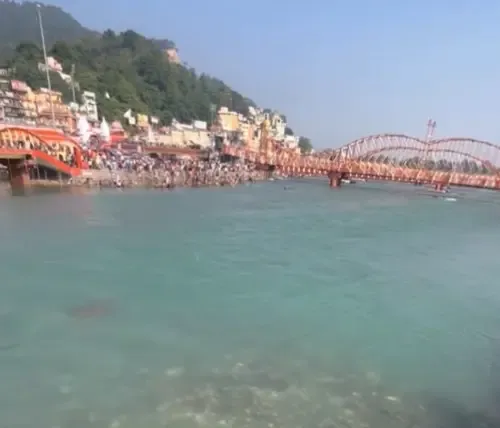
The Ganga river flowing through Haridwar is drawing nationwide and international appreciation for its visibly cleaner, deep-blue waters — a marked turnaround from the pollution levels that had long clouded the river's reputation. Officials attribute the transformation to sustained infrastructure investment under the Namami Gange programme and an intensive cleanliness campaign conducted under the Uttarakhand state government.
Infrastructure overhaul behind the change
According to the Uttarakhand Peyjal Nigam, all 22 drains that previously discharged into the Ganga along the Haridwar stretch have now been tapped and their flow diverted to sewage treatment plants. Five STPs with a combined daily capacity of 145 million litres are already operational in the city. An additional STP is under construction in Shivalik Nagar, and eight sewage pumping stations are being developed at various locations to further strengthen the network.
During Chief Minister Pushkar Singh Dhami's tenure, construction of Sewage Treatment Plants in towns along the Ganga and its tributaries has been accelerated, while drains from smaller settlements that once discharged untreated water directly into the river have been systematically intercepted.
The Ganga Bandi drive: more than 100 tonnes of waste removed
A significant boost came during the recent Ganga Bandi period, when the river's flow was temporarily diverted for maintenance. The Haridwar administration led a sweeping cleanliness drive that brought together government departments, religious institutions, voluntary organisations, and trade associations.
Workers removed more than 100 tonnes of waste — including long-accumulated plastic, remnants of ritual offerings, and discarded clothing — from the riverbed and banks, going well beyond routine ghat cleaning. When water returned to Har Ki Pauri with full force on the night of Diwali, the river's strikingly pure appearance drew wide appreciation from pilgrims and observers alike.
What the government said
Chief Minister Dhami underscored the administration's commitment, stating: 'Mother Ganga is central to our faith, culture and life-sustaining heritage. Preserving her purity and ensuring her continuous, uninterrupted flow remains the top priority of our government. Under the Namami Gange project, the construction of sewage treatment plants, the tapping of drains and extensive cleanliness campaigns have given fresh momentum to the mission of cleaning the Ganga. The cleanliness drive carried out with active public participation during the Ganga Bandi period is especially commendable. It is our firm resolve to continue effective and sustained efforts to maintain the cleanliness and sanctity of Mother Ganga.'
What comes next
Authorities continue to work with pilgrims and local residents to sustain the gains. The combination of permanent infrastructure under Namami Gange and large-scale public participation during the Ganga Bandi period is being cited as a model for the broader Nirmal Ganga mission. With the Shivalik Nagar STP and eight new pumping stations still in progress, the full capacity of the upgraded system is yet to come online — suggesting further improvement in water quality is possible in the months ahead.
Point of View
Yet India's river-cleaning history is littered with infrastructure that worked in commissioning and degraded within years due to power supply failures, maintenance gaps, and unregulated industrial discharge. The Ganga Bandi drive was a one-time intervention; the test is whether municipal bodies and industrial clusters along the Haridwar stretch sustain compliance once public attention moves on. Namami Gange has spent over a decade and substantial public funds — independent, third-party water-quality monitoring with published data, rather than visual assessments, is the accountability instrument that is still missing from the narrative.
NationPress
15 Nov 2026
Frequently Asked Questions
Why is the Ganga in Haridwar looking cleaner in 2026?
The improvement is attributed to two converging efforts: permanent infrastructure built under the Namami Gange programme — including five operational STPs with 145 million litres per day capacity and the tapping of all 22 drains — and a large-scale Ganga Bandi cleanliness drive that removed more than 100 tonnes of waste from the riverbed and banks.
What is the Ganga Bandi period and why does it matter for river cleaning?
Ganga Bandi refers to a temporary diversion of the river's flow for maintenance purposes. During this period in 2026, the Haridwar administration coordinated a comprehensive clean-up involving government departments, religious institutions, voluntary groups, and trade bodies, clearing accumulated plastic, ritual remnants, and discarded material from areas normally submerged.
How many sewage treatment plants are operational in Haridwar?
Five STPs with a combined capacity of 145 million litres per day are currently operational in Haridwar, according to the Uttarakhand Peyjal Nigam. An additional STP is under construction in Shivalik Nagar, and eight sewage pumping stations are being developed to strengthen the network further.
What has Chief Minister Pushkar Singh Dhami said about cleaning the Ganga?
Chief Minister Dhami described the Ganga as central to India's faith, culture, and heritage, and reaffirmed that preserving its purity and uninterrupted flow is the top priority of his government. He credited the Namami Gange project, STP construction, drain-tapping, and public participation during Ganga Bandi for the visible improvement.
What is the Namami Gange programme?
Namami Gange is a flagship Central government programme aimed at cleaning and rejuvenating the Ganga river through sewage treatment infrastructure, industrial effluent control, riverfront development, and public awareness campaigns. In Haridwar, its investments include multiple STPs, drain interception works, and ongoing pumping station construction.