CM Dhami's Green Char Dham Drive Collects 798 Tonnes of Waste

Synopsis
Uttarakhand CM Pushkar Singh Dhami's clean Char Dham campaign has collected 798 tonnes of waste this yatra season. Badrinath leads with 393 tonnes, while Gangotri has recycled plastic to earn ₹55,000 in revenue. Sulabh International removed 270 tonnes along the Kedarnath trek route.
Key Takeaways
798 tonnes of solid waste collected across all four Char Dham sites during the 2026 yatra season.
Badrinath accounts for the largest share at 393 tonnes , with 24 tonnes of plastic separated for auction.
Sulabh International collected 270 tonnes on the Kedarnath trekking route, recycling 6.5 tonnes of plastic.
Gangotri Nagar Panchayat earned ₹55,000 by recycling 22 tonnes of plastic and produced 2.5 tonnes of compost from organic waste.
Yamunotri collected 4.85 tonnes of plastic waste across the Janakichatti corridor, managed by the Zila Panchayat .
An additional compactor machine was deployed at Kedarnath by the Urban Development Department to handle rising waste volumes.
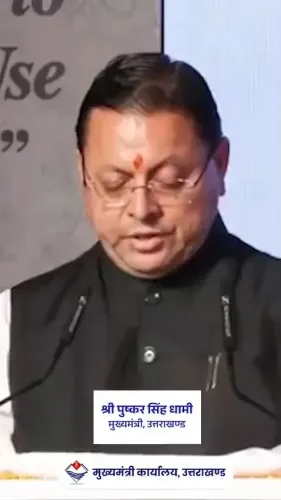
Nearly 800 tonnes of waste have been lifted from the sacred corridors of the Char Dham — and the season is not over yet. The Chief Minister's Office of Uttarakhand announced on Saturday, 26 September 2026 that Chief Minister Pushkar Singh Dhami's campaign to make the Char Dham Yatra clean and eco-friendly has produced measurable results, with 798 tonnes of solid waste collected across the four pilgrimage sites this travel season.
Where the 798 Tonnes Come From
Badrinath leads the count by a significant margin. The Badrinath Nagar Panchayat has collected a total of 393 tonnes of waste this season, of which 161 tonnes is dry waste. On-site compaction has allowed the panchayat to separate roughly 24 tonnes of plastic waste — with single-use water bottles making up the largest share — now being readied for auction.
Kedarnath presents a split-responsibility model. The Kedarnath Nagar Panchayat has collected 32 tonnes of solid waste, including 20 tonnes of plastic, which is being transported down to Gaurikund for disposal and auction. Separately, Sulabh International — the NGO managing the Kedarnath pedestrian trekking route — has gathered a further 270 tonnes of solid waste along the trail, of which 6.5 tonnes of plastic have already been dispatched for recycling. The Urban Development Department has deployed an additional compactor machine at Kedarnath this season to handle the volume.
Gangotri Nagar Panchayat has collected 98 tonnes of waste and turned recycling into a revenue stream: 22 tonnes of plastic waste have been recycled, generating ₹55,000 in income for the panchayat. An additional 2.5 tonnes of compost have been produced from organic waste — a circular-economy model that the state is watching closely.
At Yamunotri, where cleanliness responsibilities rest with the Zila Panchayat rather than a nagar panchayat, 4.85 tonnes of plastic waste have been collected and safely disposed of. Of this, 1,790 kg came from the stretch between Janakichatti Bazaar and Damta rural market, and 3,060 kg from the Janakichatti–Kharsali corridor.
Dhami's Call: Faith and Ecology Together
CM Dhami framed the campaign in terms that go beyond municipal housekeeping. 'Char Dham hamari aastha aur sanskriti ke saath-saath Himalaya ki samvedansheel paristhitiki ka bhi hissa hai' ('The Char Dham are part of our faith and culture, as well as the fragile ecology of the Himalayas'), he said, calling for scientific waste disposal, aggressive plastic recycling, and active participation from pilgrims, local communities, and traders.
The push aligns with the national Swachh Bharat Mission, launched in 2014, which earmarked high-volume religious sites as priority zones for cleanliness infrastructure. Uttarakhand has sought to operationalise that mandate at one of India's most ecologically sensitive pilgrimage corridors, where millions of pilgrims each season pass through high-altitude terrain with limited waste-processing infrastructure.
Revenue From Rubbish — A Model Worth Watching
The ₹55,000 earned by Gangotri from plastic recycling is a small number with a large signal: pilgrim-site waste can be a resource, not just a liability. The auction model being piloted at Kedarnath and Badrinath — where compacted plastic is sold to the highest bidder — could, if scaled, offset some of the cost of running daily sanitation drives. Whether this model gets formalised into state policy will be the key question as the yatra season draws to a close.
The Himalayas do not forgive neglect quietly. A campaign that turns 798 tonnes of waste into data, compost, and auction lots is a start — but the real test arrives with next season's pilgrim numbers.
Point of View
Departmentally accountable operations. The Gangotri recycling-revenue model is the most politically replicable element: converting waste into income gives municipal bodies a financial incentive to sustain the effort beyond a single season. The split between Nagar Panchayats, Sulabh International, and Zila Panchayat across the four dhams also reflects an unresolved coordination question — whether a unified waste-management authority for the entire Char Dham corridor would produce better outcomes than the current patchwork. As pilgrim numbers grow year on year, the Dhami government's ability to formalise and scale this model before the next season opens will define whether 2026 is remembered as a turning point or a one-season spike.
NationPress
26 Sept 2026
Frequently Asked Questions
How much waste has been collected during Char Dham Yatra 2026?
A total of 798 tonnes of solid waste has been collected across all four Char Dham sites — Kedarnath, Badrinath, Gangotri, and Yamunotri — during the 2026 yatra season, according to the Chief Minister's Office of Uttarakhand.
Which Char Dham site produced the most waste this season?
Badrinath generated the most waste, with 393 tonnes collected so far this season, including 161 tonnes of dry waste and approximately 24 tonnes of separated plastic waste being prepared for auction.
How is Gangotri earning money from pilgrimage waste?
Gangotri Nagar Panchayat recycled 22 tonnes of plastic waste, earning ₹55,000 in revenue. The panchayat also produced 2.5 tonnes of compost from organic waste collected during the season.
Who manages waste collection on the Kedarnath trekking route?
Sulabh International , a national NGO, is responsible for sanitation and waste management along the Kedarnath pedestrian route. It has collected 270 tonnes of solid waste this season and sent 6.5 tonnes of plastic for recycling.
What is CM Dhami's goal for the Char Dham plastic-free campaign?
CM Pushkar Singh Dhami has called for scientific disposal and recycling of plastic waste to make all four dhams plastic-free, emphasising that pilgrim participation alongside government action is essential to protect the fragile Himalayan ecosystem.