CM Fadnavis: 10 Lakh Farmers Adopted Solar Pumps in 3 Years
Synopsis
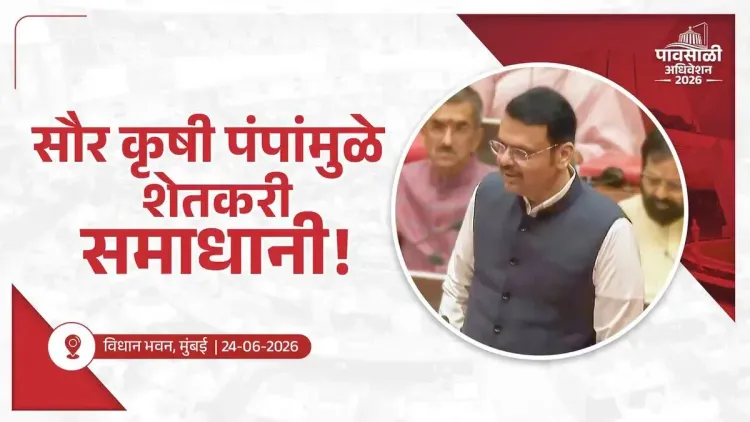
Maharashtra Chief Minister Devendra Fadnavis announced in the Vidhan Parishad on 24 June 2026 that a record 10 lakh farmers have adopted solar agricultural pumps over three years, citing higher farmer satisfaction as a key outcome of the state's clean-energy irrigation drive.
Key Takeaways
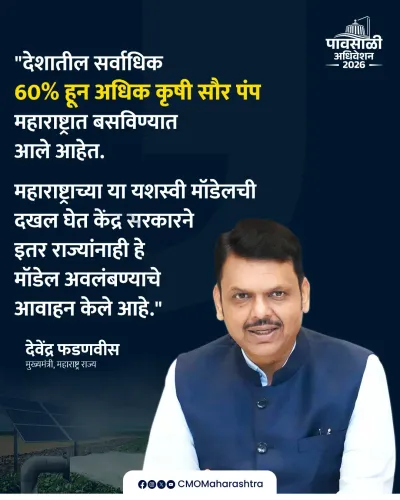
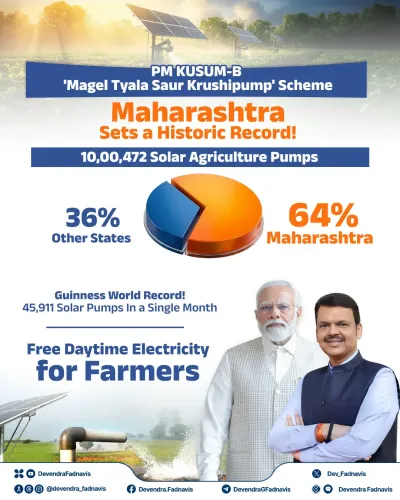
10 lakh farmers in Maharashtra have adopted solar agricultural pumps over the past three years , according to CM Fadnavis.
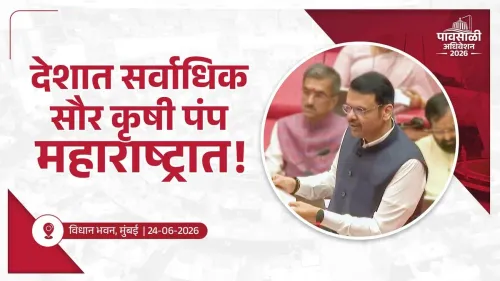
The announcement was made on the floor of the Maharashtra Legislative Council in Mumbai on 24 June 2026 during the Monsoon Session.
The solar pump drive is linked to the PM-KUSUM scheme , launched by the Government of India in 2019 to subsidise off-grid solar irrigation pumps.
Fadnavis cited higher farmer satisfaction as a key outcome, framing the milestone as a welfare gain alongside an energy transition.
Maharashtra's progress is part of a nationwide rollout also active in Rajasthan and Madhya Pradesh , aimed at cutting diesel use in agriculture.
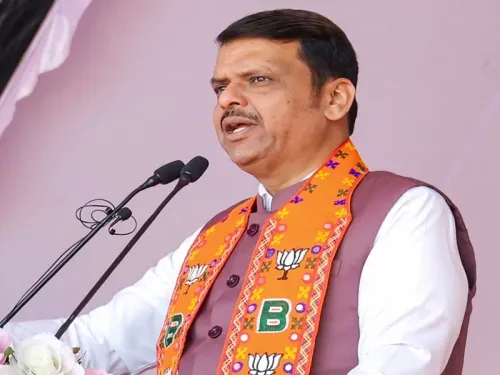
Maharashtra Chief Minister Devendra Fadnavis announced on Wednesday, 24 June 2026 that a record 10 lakh farmers across the state have adopted solar agricultural pumps over the past three years, describing the milestone as a sign of higher farmer satisfaction. The statement was made on the floor of the Maharashtra Legislative Council (Vidhan Parishad) in Mumbai during the ongoing Monsoon Session 2026.
Context
Fadnavis told the upper house of the state legislature that adoption of solar-powered irrigation pumps had reached a record level, with the Marathi portion of his post reading: 'गेल्या तीन वर्षांत विक्रमी 10 लाख शेतकऱ्यांनी सौर कृषी पंप बसविले असून, त्यामुळे शेतकरी समाधानी आहेत' — meaning 'In the last three years, a record 10 lakh farmers have installed solar agricultural pumps, and as a result, farmers are satisfied.' The statement was framed as evidence of a tangible welfare outcome, not merely an installation statistic.
The announcement came during a session of the Vidhan Parishad, Maharashtra's upper legislative chamber, where the government is expected to face questions on agricultural welfare and energy subsidies. By citing farmer satisfaction alongside the adoption figure, the Chief Minister positioned the programme as a quality-of-life gain rather than a purely administrative achievement.
Policy Backdrop
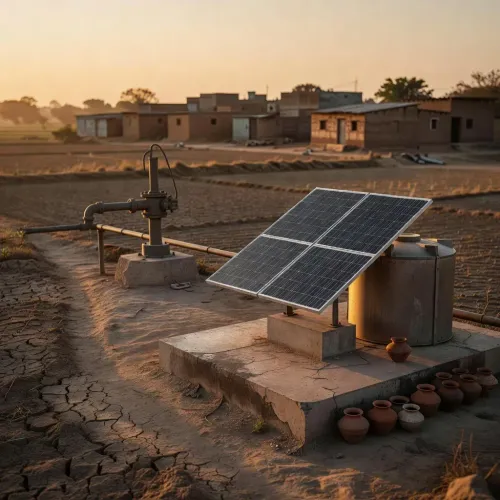
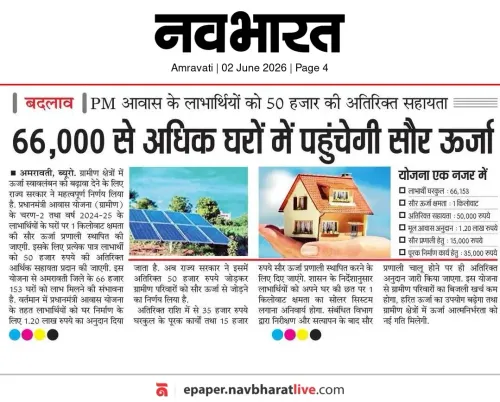
The solar pump drive in Maharashtra is rooted in the PM-KUSUM scheme (Pradhan Mantri Kisan Urja Suraksha evam Uttham Mahabhiyan), launched by the Government of India in 2019 to subsidise off-grid solar pumps for farmers and reduce dependence on diesel-powered irrigation. The scheme provides central and state government subsidies, with farmers typically bearing a fraction of the total installation cost.
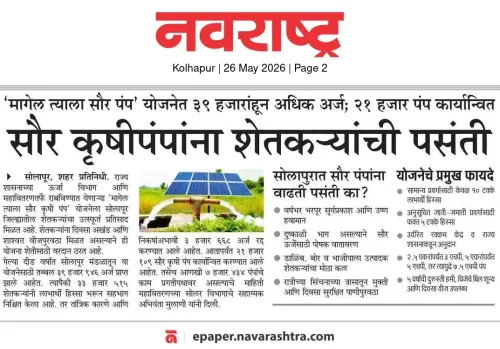
Solar agricultural pumps lower recurring operational costs by eliminating diesel expenditure and reduce the burden caused by erratic grid electricity supply — a persistent problem in rural Maharashtra. The policy also aligns with India's broader renewable energy targets by expanding decentralised solar capacity in the agricultural sector.
Maharashtra has been among the states actively participating in PM-KUSUM alongside Rajasthan, Madhya Pradesh, and other agrarian states that have reported significant adoption under central funding and state-level subsidy top-ups. The emphasis on measuring farmer satisfaction reflects a wider shift in clean-energy welfare programmes toward outcome-based metrics rather than purely input-based targets.
Stakeholders and Impact
The primary beneficiaries are the 10 lakh farming households that have installed the pumps, who stand to gain from reduced irrigation costs, more reliable water access, and insulation from diesel price volatility. For smallholder and marginal farmers — who make up a substantial share of Maharashtra's agrarian population — the cost savings can be significant relative to their income.
The state government benefits politically and administratively from demonstrating a measurable welfare outcome ahead of future budget cycles and legislative scrutiny. The Monsoon Session timing is also significant: kharif sowing is underway, making irrigation infrastructure a live concern for lawmakers representing rural constituencies.
What's Next
Further details on installation targets, pending subsidy releases, and district-wise distribution of the 10 lakh pumps are expected to emerge as the Monsoon Session 2026 progresses. Legislators from agrarian districts are likely to press the government on whether the remaining eligible farmers on waiting lists will be covered in the current financial year. The trajectory of Maharashtra's solar pump programme will also be watched as a benchmark for other states scaling up their own PM-KUSUM implementation.
Point of View
The government is attempting to shift the welfare narrative from inputs to outcomes — a more defensible position under legislative scrutiny. The choice of the upper house and the kharif season timing suggests the announcement is calibrated to pre-empt opposition questions on agrarian distress. Maharashtra's 10-lakh milestone, if sustained under audit, would represent one of the stronger state-level PM-KUSUM performances nationally, giving the BJP-led government a concrete data point in its agricultural welfare argument. The broader pattern — multiple states racing to report adoption numbers under central scheme funding — also reflects a competitive federalism dynamic in clean-energy policy.
NationPress
24 Jun 2026
Frequently Asked Questions
How many farmers in Maharashtra have adopted solar agricultural pumps?
According to CM Devendra Fadnavis, a record 10 lakh farmers in Maharashtra have adopted solar agricultural pumps over the past three years, as stated in the Vidhan Parishad on 24 June 2026.
What is the PM-KUSUM scheme and how does it help farmers?
PM-KUSUM (Pradhan Mantri Kisan Urja Suraksha evam Uttham Mahabhiyan) is a central government scheme launched in 2019 that subsidises off-grid solar-powered irrigation pumps for farmers, reducing their dependence on diesel and unreliable grid electricity.
Where did Devendra Fadnavis announce the solar pump milestone?
Fadnavis made the announcement on the floor of the Maharashtra Legislative Council (Vidhan Parishad) in Mumbai during the Monsoon Session 2026 on 24 June 2026 .
What are the benefits of solar agricultural pumps for farmers?
Solar agricultural pumps eliminate recurring diesel costs, provide more reliable irrigation water access, and insulate farmers from fuel price volatility — lowering overall cultivation expenses, particularly for smallholder farmers.
Which other states are implementing solar pump schemes for farmers?
Alongside Maharashtra, states including Rajasthan and Madhya Pradesh have been active in rolling out solar irrigation pumps under the PM-KUSUM scheme with central funding and state-level subsidy support.