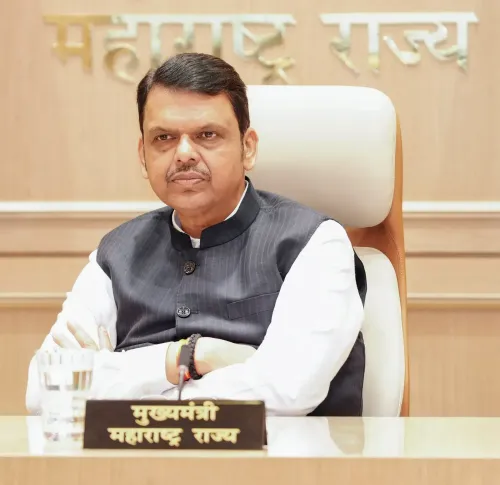
CM Fadnavis Champions Maharashtra Women Farmers Act 2026
Synopsis
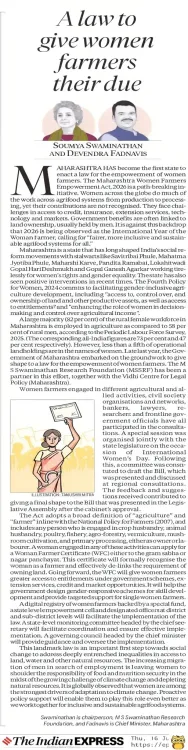
Maharashtra CM Devendra Fadnavis and MSSRF Chairperson Dr. Soumya Swaminathan co-authored a piece on 16 July 2026 advocating the Maharashtra Women Farmers Empowerment Act, 2026, calling for formal legal recognition of women's foundational role in Indian agriculture.
Key Takeaways
CM Devendra Fadnavis publicly backed the Maharashtra Women Farmers Empowerment Act, 2026 on 16 July 2026 , co-authoring an opinion piece with Dr.
Soumya Swaminathan of MSSRF .
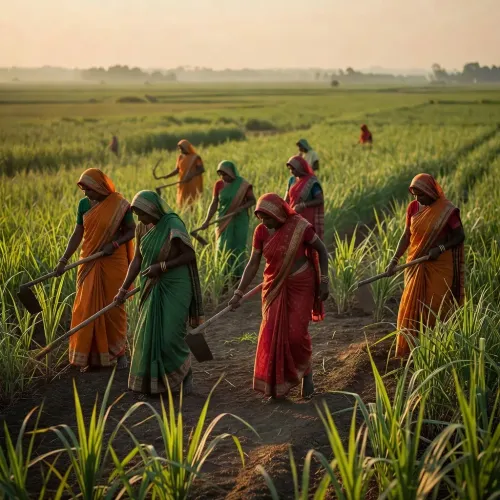
Women perform over 40 percent of India's farm labour but own far less agricultural land and are frequently excluded from cultivator-linked government schemes.
The Act seeks to formally recognise women as farmers in law, potentially unlocking access to crop insurance, credit, and state subsidies.
The policy builds on the National Commission on Farmers (2004–2006) recommendations and the central Mahila Kisan Sashaktikaran Pariyojana launched in 2011 .
MSSRF , founded by agricultural scientist M.
Swaminathan , has long championed gender equity and rural livelihoods in Indian farming.
Implementation rules, budget allocations, and the Act's assent timeline remain key milestones to watch.
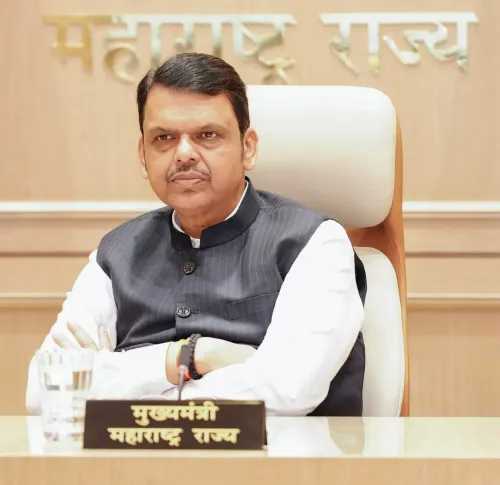
Maharashtra Chief Minister Devendra Fadnavis on Thursday, 16 July 2026, called for formal legal recognition of women's contributions to Indian agriculture, sharing a co-authored opinion piece on the Maharashtra Women Farmers Empowerment Act, 2026 — legislation he described as a landmark step toward closing the long-standing gap between women's role in farming and their rights under law.
Writing alongside Dr. Soumya Swaminathan, Chairperson of the M. S. Swaminathan Research Foundation (MSSRF), Fadnavis argued that 'women farmers have always been the driving force behind our agriculture and it is time our laws recognise their invaluable contribution.' The joint authorship signals a deliberate alignment between state policy and one of India's most respected agricultural research institutions.
Context
Women account for more than 40 percent of India's farm labour yet own a disproportionately small share of agricultural land and are frequently excluded from government schemes that require land titles in the cultivator's name. Maharashtra, a state with a large and diverse agricultural workforce, has long reflected this national imbalance — women perform significant cultivation work but are rarely recorded as primary farmers in revenue records.
The proposed Maharashtra Women Farmers Empowerment Act, 2026 aims to address this structural gap through formal legal recognition. While the precise provisions of the Act are subject to legislative process and official notification, the Chief Minister's public advocacy signals strong executive intent behind the measure.
Policy Backdrop
The push for gender-sensitive agrarian reform has deep roots in national policy. The National Commission on Farmers (2004–2006), chaired by agricultural scientist M. S. Swaminathan — founder of the MSSRF — explicitly recommended joint land titles and targeted support for women cultivators. The central government's Mahila Kisan Sashaktikaran Pariyojana, launched in 2011, further sought to strengthen women farmers through training, credit access, and resource support.
Maharashtra's proposed legislation follows a broader pattern of state-level action — including moves toward joint land pattas and reformed inheritance rules — that seeks to translate women's on-ground agricultural role into enforceable legal entitlements. The involvement of MSSRF, a Chennai-based non-profit with decades of work on rural livelihoods and gender equity, lends the initiative added institutional credibility.
Stakeholders and Impact
Dr. Soumya Swaminathan, a public health expert and former WHO Chief Scientist, brings a cross-disciplinary lens to the debate, connecting women's land rights to nutrition outcomes and sustainable farming. Her co-authorship with the Chief Minister is unusual and underscores the policy's intent to draw on scientific and public-health frameworks, not just legal reform.
For Maharashtra's women farmers, formal recognition could mean improved access to crop insurance, institutional credit, government subsidies, and disaster relief — all of which are typically routed through official cultivator records. Advocacy groups have long argued that until revenue codes are updated to reflect women's actual roles, welfare schemes will continue to bypass them.
What's Next
Attention will now turn to the Act's subordinate rules, budget allocations, and implementation timelines once it receives formal assent. The model could spark debate in other state assemblies looking to update their own revenue and agriculture codes. Simultaneously, the national conversation around redefining 'farmer' in census and scheme frameworks is likely to gain renewed momentum as Maharashtra moves toward operationalising the law.
Point of View
Positioning the Act as evidence-based reform rather than electoral outreach. It also signals Maharashtra's intent to lead on agrarian gender equity at a moment when national farm policy discussions remain contentious. The BJP's association with a law carrying the Swaminathan name is politically significant, given the National Commission on Farmers' legacy in rural discourse. Whether the Act's implementation matches its ambition will determine whether it becomes a genuine policy benchmark or remains largely symbolic.
NationPress
16 Jul 2026
Frequently Asked Questions
What is the Maharashtra Women Farmers Empowerment Act 2026?
The Maharashtra Women Farmers Empowerment Act, 2026 is a proposed state law aimed at formally recognising women as farmers in legal and revenue records, potentially improving their access to government schemes, credit, and crop insurance. CM Devendra Fadnavis has publicly championed the legislation.
Who is Dr. Soumya Swaminathan and why did she co-author this piece?
Dr. Soumya Swaminathan is the Chairperson of the M. S. Swaminathan Research Foundation (MSSRF) and a former WHO Chief Scientist. She co-authored the opinion piece with CM Fadnavis, bringing scientific and public-health perspectives to the case for legal recognition of women farmers.
What is the M. S. Swaminathan Research Foundation?
MSSRF is a Chennai-based non-profit founded by agricultural scientist M. S. Swaminathan. It focuses on rural livelihoods, gender equity in farming, and sustainable agriculture, and has long advocated for women's land rights in India.
Why do women farmers in India lack legal recognition?
Women perform over 40 percent of India's farm labour but are rarely recorded as primary cultivators in revenue records, which means they are often excluded from land-linked government schemes, crop insurance, and institutional credit. Existing laws have historically recorded male household heads as the default farmer.
What happens after the Maharashtra Women Farmers Empowerment Act receives assent?
After assent, the focus shifts to framing subordinate rules, announcing budget allocations, and setting implementation timelines. The law could also serve as a model for other states reviewing their own revenue codes and agricultural welfare frameworks.