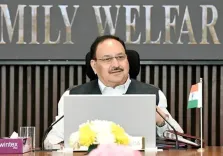
CM Fadnavis Hails 11 Years of Digital India Under PM Modi

Synopsis
Maharashtra CM Devendra Fadnavis on 1 July 2026 marked Digital India's 11th anniversary, crediting PM Modi for a transformation evidenced by 103 crore internet connections, 2.2 lakh BharatNet gram panchayats, 7.6 lakh UPI transactions per second, and 4.74 lakh 5G towers across India.
Key Takeaways
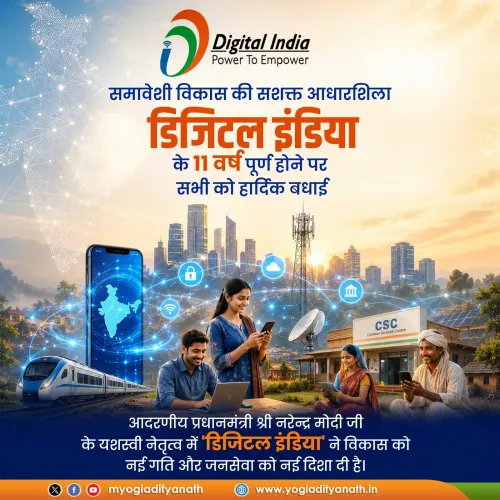
CM Devendra Fadnavis posted on 1 July 2026 to mark 11 years of Digital India , launched by PM Narendra Modi on 1 July 2015 .
India now has nearly 103 crore internet connections , according to figures cited in the post.
BharatNet has reached 2.2 lakh Gram Panchayats , extending broadband to rural India.
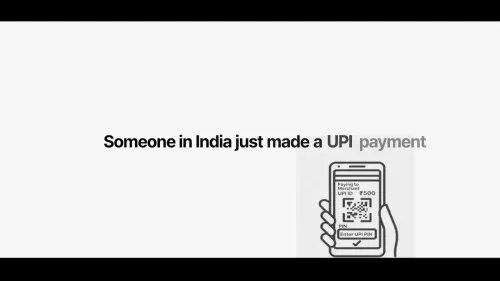
7.6 lakh UPI transactions are processed every second, reflecting the scale of India's digital payments ecosystem.
850 crore documents are securely stored on DigiLocker , enabling paperless citizen services.
4.74 lakh 5G towers now provide nearly 100 per cent district coverage across India.
Maharashtra Chief Minister Devendra Fadnavis on Wednesday, 1 July 2026 marked the 11th anniversary of Digital India with a post on X crediting Prime Minister Narendra Modi for transforming the programme into what he called a 'people-powered revolution' reshaping how Bharat connects, learns, works and grows.
Context
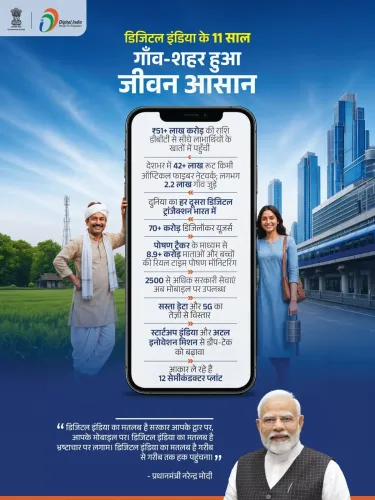
The Digital India programme was formally launched on 1 July 2015 by Prime Minister Narendra Modi with the goal of building digital infrastructure, delivering government services electronically, and expanding internet access to every citizen. Eleven years on, CM Fadnavis cited a set of headline figures to underscore the programme's reach: nearly 103 crore internet connections, 7.6 lakh UPI transactions processed every second, and 850 crore documents securely stored on DigiLocker.
Fadnavis also pointed to BharatNet having reached 2.2 lakh Gram Panchayats and a nationwide rollout of 4.74 lakh 5G towers providing nearly 100 per cent district coverage, framing these as evidence that digital access has moved from urban centres to the grassroots.
Policy Backdrop
Digital India sits at the apex of a decade-long push to build what policymakers describe as a digital public infrastructure stack. Its foundations include Aadhaar, the biometric identity system that predates the programme, and the Unified Payments Interface (UPI), developed by the National Payments Corporation of India and now one of the world's largest real-time payment networks.
BharatNet, the rural broadband backbone, has been a centrepiece of the connectivity agenda, aiming to bring high-speed internet to gram panchayats that were previously unserved. DigiLocker complements this by allowing citizens to store and share government-issued documents — from driving licences to academic certificates — without physical paperwork.
CM Fadnavis highlighted an accessibility milestone that has become a standard talking point for the programme's advocates: the cost of 1 GB of mobile data falling to less than the price of a cup of chai, a shorthand for how dramatically data tariffs have dropped since the entry of low-cost carriers into the Indian market after 2016.
Stakeholders and Impact
The beneficiaries of Digital India's expansion span a wide spectrum — rural farmers accessing market prices and weather data, students attending online classes, small traders using UPI for cashless payments, and citizens retrieving official documents via DigiLocker without visiting a government office. The hashtag #Maharashtra in Fadnavis's post signals an intent to connect the national programme's gains to his state's own governance priorities.
Maharashtra is among India's most digitally active states, with a large urban internet user base in Mumbai and Pune alongside a substantial rural population that stands to gain most from BharatNet and 5G expansion. The Chief Minister's post aligns state messaging with the Centre's anniversary communications, reinforcing the BJP's political investment in the Digital India narrative ahead of upcoming budget cycles.
What's Next
Analysts watching the space will track how Maharashtra integrates 5G infrastructure and DigiLocker services with the state's own e-governance portals in the next budget cycle. The push toward paperless, app-based citizen services at the state level is expected to accelerate as 5G coverage deepens in semi-urban and rural districts.
With the Centre doubling down on digital public infrastructure as a model for other emerging economies, the 11th anniversary of Digital India is likely to be a launchpad for new scheme extensions or targets — and state governments like Maharashtra will be under pressure to demonstrate measurable adoption gains on the ground.
Point of View
Timed precisely to the programme's anniversary. By foregrounding citizen-facing metrics — data costs, UPI speed, DigiLocker scale — rather than infrastructure spending, the messaging frames Digital India as a lived experience rather than a budget line. The inclusion of the Maharashtra hashtag suggests an intent to claim state-level credit within a centrally driven success story. This fits a broader pattern where state BJP leaders amplify Centre-led flagship schemes to reinforce shared political identity ahead of electoral and budgetary cycles.
NationPress
1 Jul 2026
Frequently Asked Questions
What is Digital India and when was it launched?
Digital India is the central government's flagship programme to build digital infrastructure and deliver government services electronically. It was formally launched by Prime Minister Narendra Modi on 1 July 2015.
What did CM Devendra Fadnavis say about Digital India on its 11th anniversary?
CM Fadnavis posted on X on 1 July 2026 crediting PM Modi for turning Digital India into a 'people-powered revolution', citing figures including 103 crore internet connections, 7.6 lakh UPI transactions per second, and BharatNet reaching 2.2 lakh Gram Panchayats.
How many UPI transactions happen per second in India?
According to the figures cited by CM Fadnavis in his anniversary post, India processes 7.6 lakh UPI transactions every second.
What is BharatNet and how many gram panchayats does it cover?
BharatNet is a government project to provide high-speed broadband connectivity to rural India. As cited in CM Fadnavis's post, it has reached 2.2 lakh Gram Panchayats.
How many 5G towers are there in India in 2026?
CM Fadnavis's post cites 4.74 lakh 5G towers providing nearly 100 per cent district coverage across India as of the Digital India anniversary in July 2026.