CM Fadnavis: Kunbi Caste Cert Verification Follows SC Orders
Synopsis
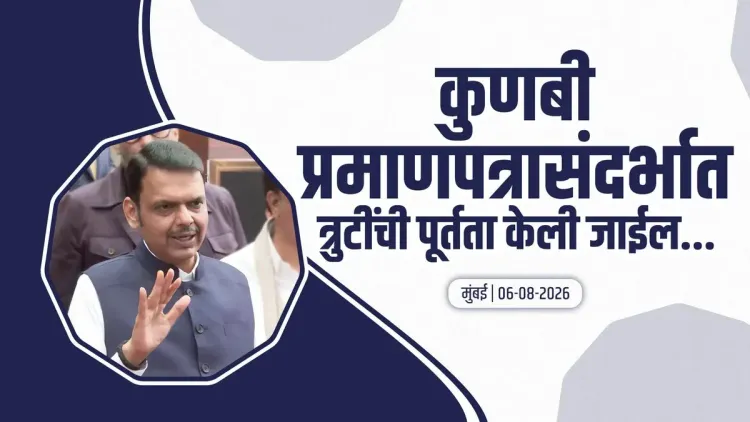
Maharashtra CM Devendra Fadnavis clarified on 6 August 2026 that Kunbi caste certificate verification is handled by the state's Caste Certificate Verification Committee strictly in accordance with Supreme Court directives, reaffirming the judicial foundation of the state's reservation compliance process.
Key Takeaways
CM Devendra Fadnavis responded on 6 August 2026 clarifying the Kunbi caste certificate verification process in Maharashtra.
Verification is conducted by the Caste Certificate Verification Committee , not at executive discretion.
The committee operates under explicit Supreme Court of India directives on caste certificate scrutiny.
The statement was issued bilingually in Marathi and Hindi , signalling broad public reach.
Maharashtra has maintained dedicated caste scrutiny committees since the 1990s to implement constitutional reservation provisions.
The Kunbi community, a significant OBC group, has been a recurring subject of caste certificate verification disputes in the state.
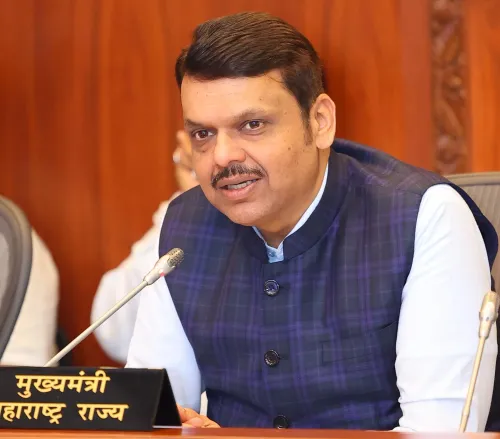
In Maharashtra's long-running debate over reservation eligibility, a clarification has cut through the noise. Maharashtra Chief Minister Devendra Fadnavis, responding to a query on 6 August 2026, stated plainly that Kunbi caste certificate verification is conducted by the Caste Certificate Verification Committee — and that it operates strictly under directives from the Supreme Court of India.
The post, written in both Marathi and Hindi, reads: 'कुणबी प्रमाणपत्रांची पडताळणी सर्वोच्च न्यायालयाच्या निर्देशांनुसार जात प्रमाणपत्र पडताळणी समितीकडून केली जाते' — 'Kunbi certificate verification is carried out by the Caste Certificate Verification Committee as per Supreme Court directions.' The bilingual framing signals a message meant for a wide audience across Maharashtra and beyond.
A Committee Born from Constitutional Mandate
Maharashtra established dedicated caste certificate scrutiny committees in the 1990s to operationalise constitutional reservation provisions and resolve verification disputes. These bodies sit at the intersection of judicial oversight and administrative delivery — tasked with ensuring that caste claims are genuine without shutting the door on eligible applicants from communities like the Kunbi, a significant OBC group in the state.
The Supreme Court has repeatedly stepped in to shape how states handle caste certificate processes, insisting on verification rigour to prevent misuse while protecting the rights of genuinely eligible beneficiaries. Fadnavis's clarification is a direct echo of that judicial framework — the state is not acting on its own discretion, but on the apex court's instructions.
Why This Clarification Matters Now
Caste certificate disputes in Maharashtra are not abstract bureaucratic matters. They determine access to government jobs, educational seats, and welfare schemes for millions. The Kunbi community, in particular, has been at the centre of verification controversies — with questions about certificate authenticity surfacing repeatedly in litigation and public discourse.
By anchoring the state's verification process explicitly to Supreme Court directives, Fadnavis is doing two things at once: reassuring applicants that the process has legal backing, and deflecting political pressure by pointing to judicial authority rather than executive discretion. It is a careful, legally grounded response to what is often a charged issue.
Pending Supreme Court proceedings on related verification petitions, and any follow-up government circulars refining committee procedures, will determine whether this clarification translates into smoother outcomes on the ground for OBC applicants.
Point of View
The state government insulates itself from accusations of political interference in Kunbi certificate decisions. This fits a broader pattern in Maharashtra where reservation disputes are increasingly fought through courts rather than administrative orders, with the state positioning itself as a neutral implementer of judicial mandates. For OBC communities, the assurance of apex-court oversight cuts both ways: it lends credibility to the process but also means grievance redress runs through slower judicial channels. The clarification, while procedurally sound, leaves open the question of whether the committee's on-ground functioning matches its constitutional mandate.
NationPress
6 Aug 2026
Frequently Asked Questions
Who verifies Kunbi caste certificates in Maharashtra?
Kunbi caste certificates in Maharashtra are verified by the Caste Certificate Verification Committee, which operates under directives from the Supreme Court of India.
What is the role of the Supreme Court in Maharashtra caste certificate verification?
The Supreme Court of India has issued directives that govern how Maharashtra's Caste Certificate Verification Committee conducts its scrutiny, ensuring both rigour against misuse and protection of eligible applicants' rights.
Why is Kunbi caste certificate verification a sensitive issue in Maharashtra?
Kunbi caste certificates determine eligibility for OBC reservations in government jobs and education. Disputes over their authenticity have repeatedly led to litigation, making verification a politically and legally charged process.
What did CM Devendra Fadnavis say about Kunbi certificates?
On 6 August 2026, CM Fadnavis stated that Kunbi caste certificate verification is carried out by the Caste Certificate Verification Committee strictly as per Supreme Court directions, in both Marathi and Hindi.
When were Maharashtra's caste scrutiny committees established?
Maharashtra established dedicated caste certificate scrutiny committees in the 1990s to implement constitutional reservation provisions and resolve verification disputes.