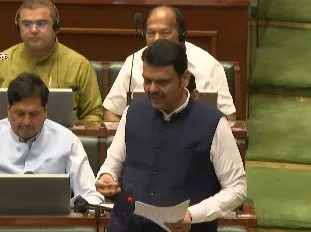
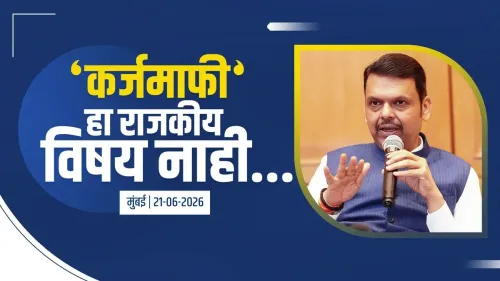
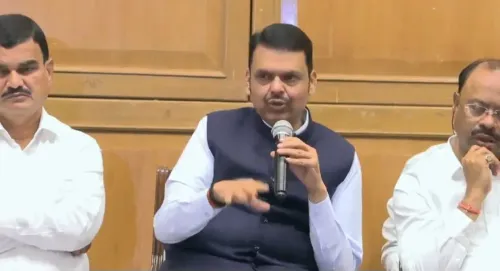
CM Fadnavis: Maharashtra Cabinet clears farm loan waiver changes
Synopsis
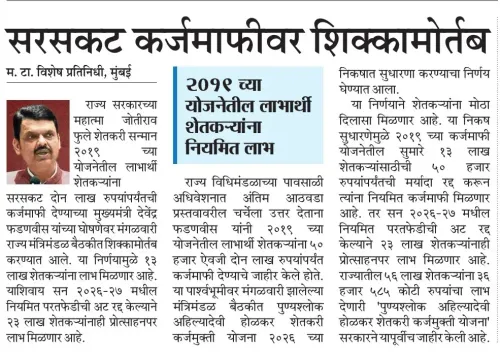
The Maharashtra Cabinet cleared changes to the state's farm loan waiver scheme on 15 July 2026. Chief Minister Devendra Fadnavis said around 56 lakh farmers would benefit. The move extends Maharashtra's long-running effort to address agrarian indebtedness through periodic revisions to debt-relief programmes.
Key Takeaways
The Maharashtra Cabinet approved modifications to the state's farm loan waiver scheme on 15 July 2026 .
CM Devendra Fadnavis stated that approximately 56 lakh farmers are expected to benefit from the revised programme.
Maharashtra has a documented history of farm loan relief, including a 2017 waiver covering debts up to Rs 1.5 lakh for small and marginal farmers.
Key institutional stakeholders include cooperative banks and district credit societies whose recovery ratios are directly affected by waiver decisions.
The scheme operates alongside central programmes such as PM-KISAN , which provides direct income support to eligible farm households.
Detailed eligibility criteria, fiscal outlay, and disbursement timelines are awaited in a formal government resolution.
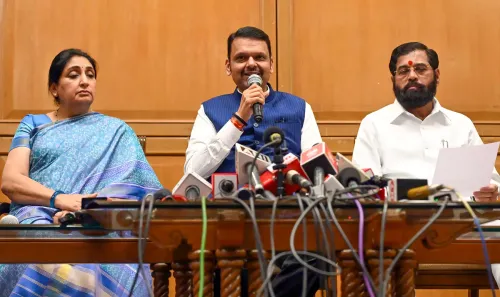
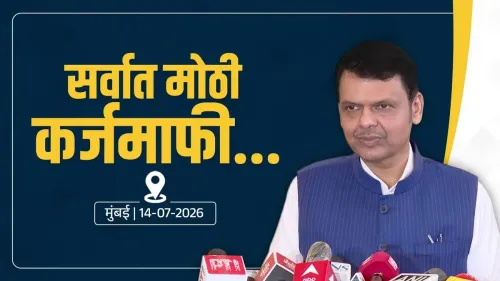
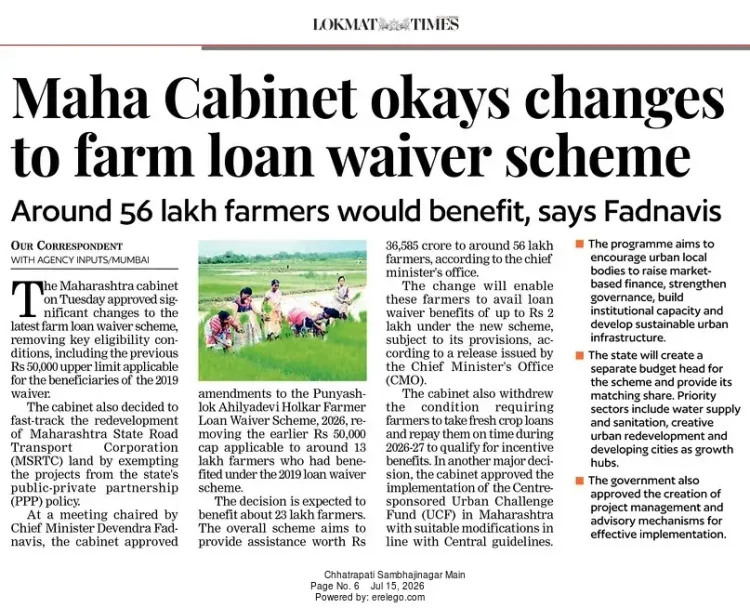
The Chief Minister's Office of Maharashtra announced on Wednesday, 15 July 2026 that the Maharashtra Cabinet has approved modifications to the state's farm loan waiver scheme, with Chief Minister Devendra Fadnavis stating that around 56 lakh farmers stand to benefit from the revised programme.
Context
The cabinet decision, shared by the official Chief Minister's Office handle on X, quotes CM Fadnavis directly on the projected beneficiary count. The announcement comes amid persistent agrarian distress in Maharashtra, a state with one of the largest farming populations in the country and a long history of indebtedness among cultivators dependent on rain-fed agriculture.
The post reads: 'Maharashtra Cabinet okays changes to farm loan waiver scheme — around 56 lakh farmers would benefit, says CM Devendra Fadnavis.' No further breakdown of the specific amendments was provided in the official communication.
Policy Backdrop
Maharashtra's engagement with farm loan relief has a documented lineage. In 2017, the state government under Devendra Fadnavis — then in his first term as Chief Minister — announced a comprehensive farm loan waiver covering debts up to Rs 1.5 lakh for small and marginal farmers. Subsequent state budgets periodically expanded eligibility criteria and released fresh allocations to clear pending waiver instalments.
Across India, state governments have repeatedly deployed loan waiver programmes as a direct response to agrarian distress and pressure from farmer organisations. In Maharashtra, these interventions have alternated between full waivers and targeted modifications depending on available fiscal space. They typically operate alongside central programmes such as interest subvention and the PM-KISAN income-support scheme, which provides direct transfers to eligible farm households.
Stakeholders and Impact
The primary beneficiaries of any farm loan waiver revision are indebted cultivators — particularly small and marginal farmers who borrow from cooperative banks and district central cooperative credit societies. These institutions are also key stakeholders, as waivers affect their balance sheets and recovery ratios until the state government reimburses the written-off amounts.
If the 56 lakh figure cited by CM Fadnavis is realised, the scheme would represent one of the larger farmer-relief exercises in the state's recent history. The actual fiscal outlay and disbursement mechanism through the cooperative banking network will be critical to how quickly relief reaches beneficiaries on the ground.
What's Next
Attention will now turn to the state budget provisions earmarked for the revised scheme and the timelines the government sets for actual disbursement through cooperative banks. Legal or procedural challenges from banking institutions, as have occurred with past waiver programmes in other states, remain a variable to watch.
The Maharashtra government is expected to release a detailed government resolution outlining eligibility criteria, the nature of the approved changes, and the implementation roadmap in the days following the cabinet decision.
Point of View
The move suggests the administration is responding to sustained pressure from farmer organisations and cooperative credit institutions rather than immediate poll arithmetic. The 56 lakh beneficiary figure, if it holds through implementation, would mark a significant expansion of the state's relief footprint and set a benchmark against which disbursement performance will be judged. The broader pattern — state governments periodically recalibrating waiver parameters to match fiscal capacity and agrarian ground realities — positions this decision within a well-established but often contested model of farm-sector intervention in India.
NationPress
15 Jul 2026
Frequently Asked Questions
What changes did the Maharashtra Cabinet approve to the farm loan waiver scheme?
The Maharashtra Cabinet approved modifications to the existing farm loan waiver scheme on 15 July 2026. The specific nature of the changes — such as revised eligibility criteria or enhanced coverage — had not been detailed in the official announcement at the time of publication.
How many farmers will benefit from the revised Maharashtra farm loan waiver?
Chief Minister Devendra Fadnavis stated that around 56 lakh farmers would benefit from the cabinet-approved changes to the scheme.
What is the history of farm loan waivers in Maharashtra?
Maharashtra has a documented history of farm loan relief. In 2017, the state government under Devendra Fadnavis announced a comprehensive waiver covering debts up to Rs 1.5 lakh for small and marginal farmers, with subsequent budgets expanding eligibility and releasing fresh allocations for pending instalments.
Who are the main beneficiaries of the Maharashtra farm loan waiver scheme?
The primary beneficiaries are small and marginal farmers in Maharashtra who have borrowed from cooperative banks and district central cooperative credit societies and are unable to repay their agricultural loans.
When will Maharashtra farmers receive the benefit of the revised loan waiver?
No specific disbursement timeline was announced alongside the cabinet decision. The government is expected to release a detailed government resolution outlining the implementation roadmap in the days following the approval.