CM Fadnavis to Set Up Tasar Silk Project in Gadchiroli
Synopsis
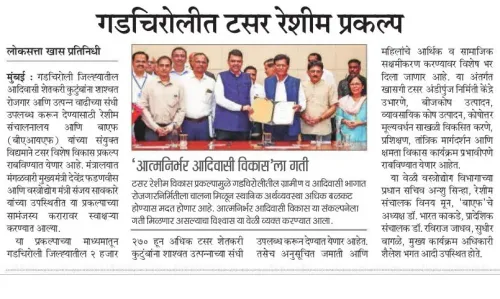
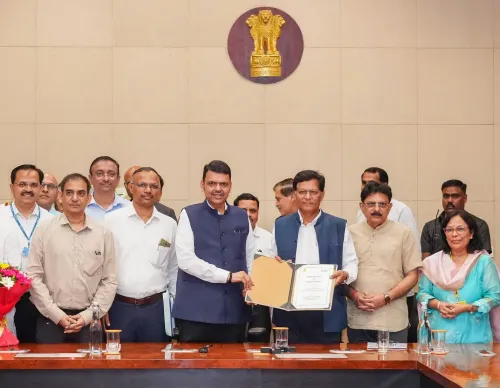
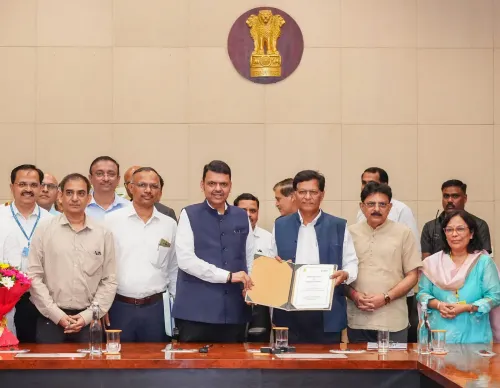
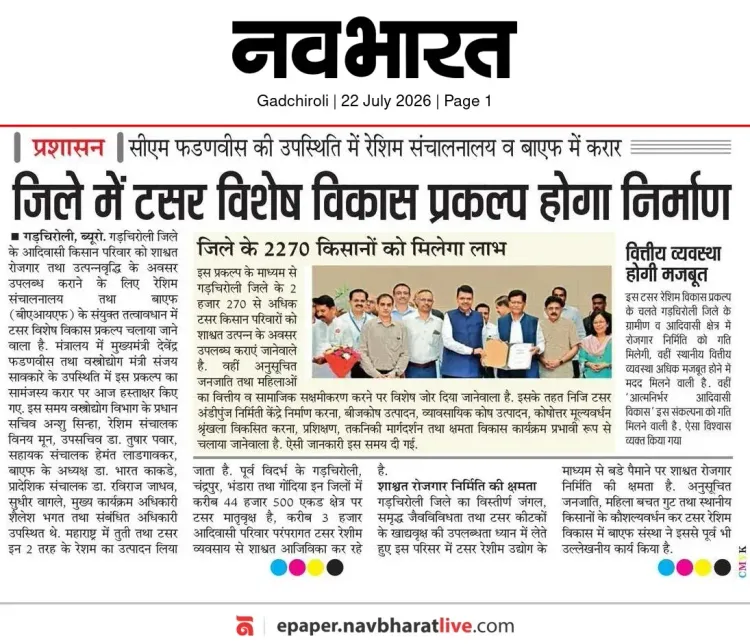
The Chief Minister's Office of Maharashtra announced on 22 July 2026 that a Tasar Special Development Project will be set up in Gadchiroli district. The initiative aims to harness the region's natural forest resources for tasar silk production, creating livelihoods for tribal communities in one of the state's most remote areas.
Key Takeaways
The Chief Minister's Office of Maharashtra announced a Tasar Special Development Project for Gadchiroli district on 22 July 2026 .
The project is addressed to Chief Minister Devendra Fadnavis and targets forest-based tasar silk production.
Gadchiroli is a predominantly tribal district in eastern Maharashtra whose sal and arjun forests are naturally suited to tasar silkworm rearing.
The announcement continues a policy lineage of agro-forestry and non-timber forest produce value-chain development in Maharashtra's Scheduled Areas since the early 2000s .
Primary beneficiaries are tribal households and sericulture farmers ; downstream weaving and processing units could add further employment.
Exact funding, timeline, scope, and implementing agency have not yet been confirmed.
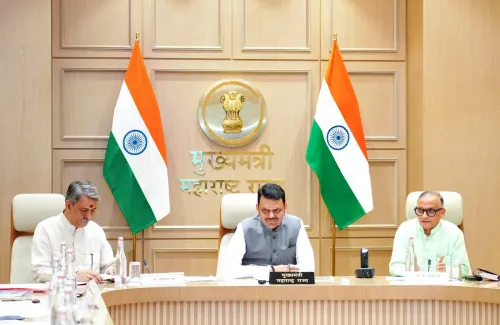
The Chief Minister's Office of Maharashtra announced on Wednesday, 22 July 2026 that a Tasar Special Development Project will be established in Gadchiroli district, signalling a renewed push to build forest-based livelihoods in one of the state's most remote tribal regions.
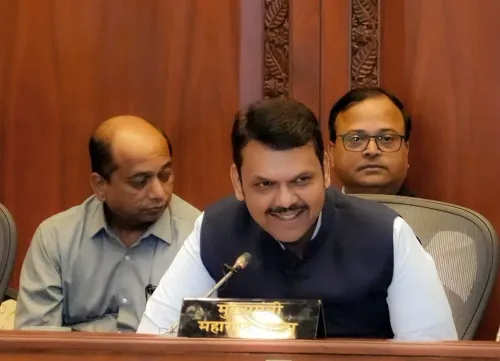
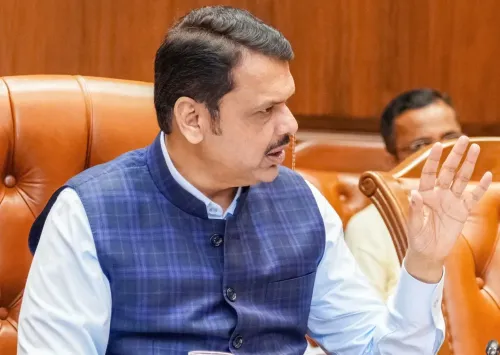
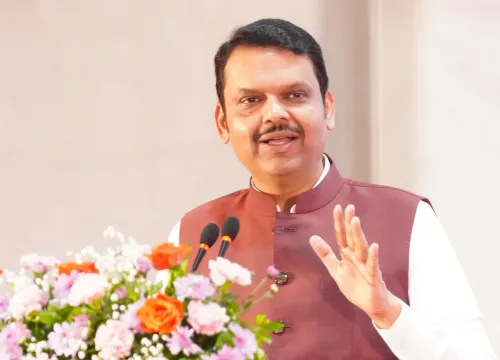
The post, addressed to Chief Minister Devendra Fadnavis, states: 'Gadchiroli jile mein Tasar Vishesh Vikas Prakalp hoga nirmaan' ('A Tasar Special Development Project will be constructed in Gadchiroli district'). The announcement positions tasar silk production as a vehicle for economic inclusion in a district long associated with socio-economic challenges.
Context
Gadchiroli is a predominantly tribal, forested district in eastern Maharashtra bordering Chhattisgarh. Its ecology — dense sal and arjun forests — is naturally suited to tasar silkworm rearing, which depends on these host trees rather than irrigated mulberry cultivation. The district has historically been a focus of state welfare and livelihood interventions aimed at improving conditions for its large Scheduled Tribe population. Tasar silk is a wild variety produced from Antheraea mylitta silkworms and is distinct from the mulberry silk more common in southern India. It commands a premium in domestic and export markets and can be harvested with relatively low capital investment, making it well-suited to forest-dwelling communities.Policy Backdrop
Maharashtra governments have promoted sericulture expansion in tribal districts under state tribal sub-plans and rural livelihood missions since the early 2000s. The Tasar Special Development Project fits squarely within this lineage, extending a pattern of agro-forestry and non-timber forest produce value-chain development across Gadchiroli and other Scheduled Areas of the state. At the central level, the Silk Samagra programme run by the Central Silk Board has supported tasar development across tribal belts in states such as Jharkhand, Chhattisgarh, and Odisha. Whether the proposed Gadchiroli project will be integrated with or co-funded under such central schemes remains to be confirmed. Successive administrations have framed such projects as instruments for both economic inclusion and broader stabilisation of remote districts, recognising that sustainable livelihoods can complement other development efforts in the region.Stakeholders and Impact
The primary beneficiaries of the project are expected to be tribal households and sericulture farmers in Gadchiroli. Tasar rearing fits naturally into forest-based livelihoods without requiring large-scale land diversion, meaning communities can pursue it alongside existing activities such as collection of minor forest produce. For Devendra Fadnavis, the announcement reinforces a focus on eastern Maharashtra's tribal belt, an area he has repeatedly cited in development addresses. A functional tasar cluster could also attract downstream processing and weaving units, creating additional employment beyond primary rearing. Wider stakeholders include state sericulture and tribal development departments, self-help groups active in the district, and potential buyers in India's handloom and textile sector who source tasar fabric.What's Next
The immediate questions centre on implementation: the scale of infrastructure to be built, funding allocation in the state budget, the designated implementing agency, and a project timeline. Observers will watch for tendering notices and whether the project is embedded within an existing state or central scheme framework. If executed effectively, the Tasar Special Development Project could serve as a replicable model for other forested tribal districts in Maharashtra, demonstrating how forest-compatible industries can generate formal income streams for communities that have historically remained outside mainstream economic activity.Point of View
A district that has long been a political and administrative priority. For Chief Minister Fadnavis, the move reinforces his government's eastern Maharashtra outreach ahead of potential budget and assembly scrutiny. The choice of tasar silk is strategically sound: it requires no land diversion, aligns with central sericulture support frameworks, and carries export potential. The real test will be whether the project moves from announcement to tendered infrastructure within a credible timeframe, given the district's historically uneven record on project execution.
NationPress
22 Jul 2026
Frequently Asked Questions
What is the Tasar Special Development Project in Gadchiroli?
It is a proposed government initiative to build infrastructure and support systems for tasar silk production in Gadchiroli district, announced by the Chief Minister's Office of Maharashtra on 22 July 2026. The project aims to create forest-based livelihoods for tribal communities using the district's natural sal and arjun forests as host trees for tasar silkworms.
Who announced the Gadchiroli tasar silk project?
The Chief Minister's Office of Maharashtra announced the project, addressing the post to Chief Minister Devendra Fadnavis on 22 July 2026.
What is tasar silk and why is it suitable for Gadchiroli?
Tasar silk is a wild variety produced from Antheraea mylitta silkworms that feed on sal and arjun trees found abundantly in Gadchiroli's forests. It requires low capital investment and no irrigated land, making it well-suited to the district's tribal forest-dwelling communities.
Who will benefit from the Gadchiroli tasar project?
The primary beneficiaries are tribal households and sericulture farmers in Gadchiroli. If downstream processing and weaving units follow, additional employment could be created for a broader section of the district's population.
Has Maharashtra done similar tribal livelihood projects before?
Yes. Maharashtra governments have promoted sericulture and agro-forestry value chains in tribal districts under state tribal sub-plans and rural livelihood missions since the early 2000s. The Tasar Special Development Project continues this policy lineage.