CM Gujarat marks 11 years of Digital India, cites Viksit Bharat foundation
Synopsis
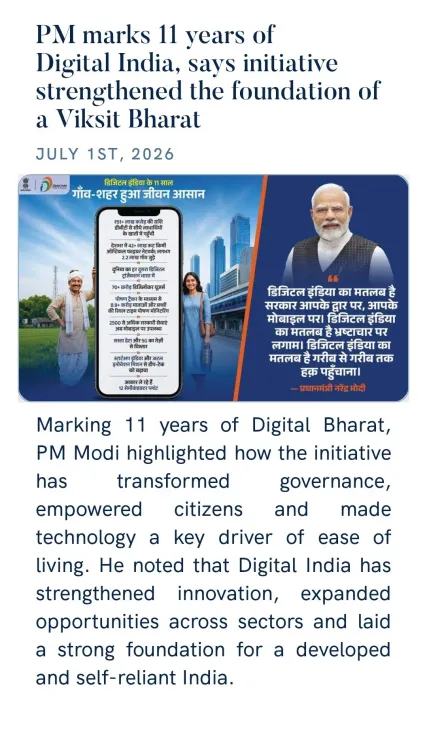
The Chief Minister's Office of Gujarat marked the 11th anniversary of Digital India on 1 July 2026, sharing PM Narendra Modi's assertion that the flagship programme has strengthened the foundation of Viksit Bharat — India's vision for becoming a developed nation by 2047.
Key Takeaways
Digital India completed 11 years on 1 July 2026 , having been launched by PM Narendra Modi on 1 July 2015 .
The Chief Minister's Office of Gujarat relayed the Prime Minister's remarks via the NaMo App , framing the programme as foundational to Viksit Bharat .
The programme consolidated earlier e-governance efforts including the National e-Governance Plan (NeGP) of 2006 .
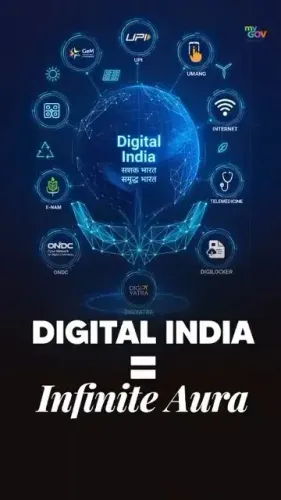
Key outcomes include Aadhaar-linked direct benefit transfers and the Unified Payments Interface (UPI) , which have reshaped citizen-state interaction.
Stakeholders include individual citizens, IT sector firms , and state governments that have integrated the programme's frameworks into their own governance systems.
Upcoming milestones to watch include a potential Digital India Phase-II announcement and the next annual progress report.
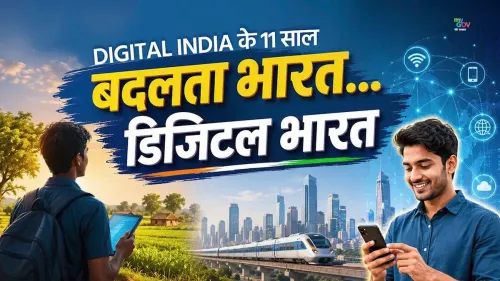
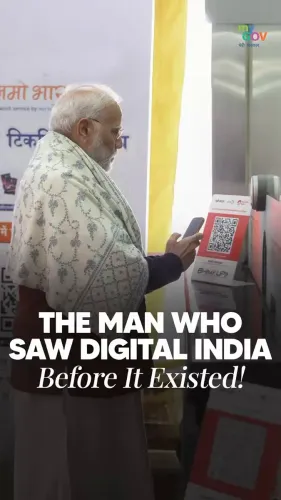
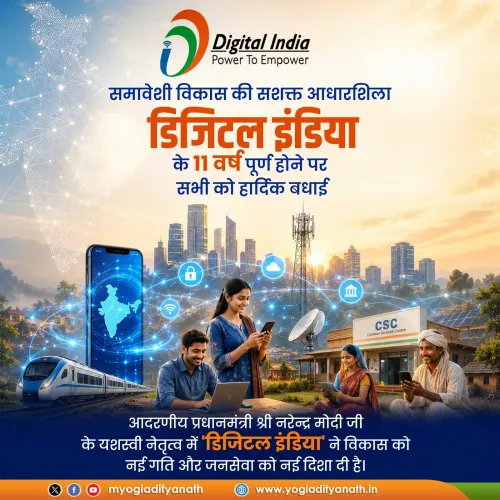
The Chief Minister's Office of Gujarat on Wednesday, 1 July 2026 shared Prime Minister Narendra Modi's remarks commemorating 11 years of the Digital India programme, noting that the initiative has strengthened the foundation of a Viksit Bharat. The post, shared via the NaMo App, was accompanied by the hashtag #11YearsOfDigitalIndia.
Context
Digital India was formally launched by Prime Minister Narendra Modi on 1 July 2015, making 1 July 2026 the programme's eleventh anniversary. The CMO Gujarat's post relayed the Prime Minister's position that the decade-plus initiative has laid critical groundwork for India's ambition to become a developed nation by 2047 — a goal the government has branded Viksit Bharat. The anniversary marks a moment for the government to take stock of how far digital infrastructure and service delivery have come since the programme's inception.
Policy Backdrop
The Digital India programme consolidated several earlier e-governance efforts, including the National e-Governance Plan (NeGP) approved in 2006, into a unified national push. Since 2014, successive Union budgets have continued to allocate resources for broadband expansion, data centres, and digital public infrastructure. Key delivery mechanisms that emerged under or alongside the programme include Aadhaar-linked direct benefit transfers and the Unified Payments Interface (UPI), both of which have fundamentally altered how citizens interact with the state and the financial system.
The programme's three core pillars — digital infrastructure as a utility for every citizen, governance and services on demand, and digital empowerment of citizens — have guided policy design across central ministries and state governments alike. Gujarat, as a state, has been among those that have integrated digital service delivery into its own governance architecture over this period.
Stakeholders and Impact
The beneficiaries of Digital India span a wide spectrum: individual citizens accessing government services online, IT sector firms that have built products and services on top of India's digital public infrastructure, and state governments that have used the programme's frameworks to modernise their own delivery systems. For ordinary citizens, the most visible outcomes include mobile-first access to welfare transfers, digital identity through Aadhaar, and the near-ubiquitous spread of digital payments through UPI. The programme is also credited with accelerating digital literacy in semi-urban and rural areas, though the pace and depth of that penetration has varied across states and demographics.
The IT sector has benefited from a growing domestic market for digital services, government contracts tied to e-governance modernisation, and a policy environment that has encouraged investment in data centres and cloud infrastructure within India.
What's Next
Observers will watch for the release of the next annual Digital India progress report, which typically details metrics on internet connectivity, digital transactions, and service delivery. Any new components or a formal Digital India Phase-II framework announced in the forthcoming Union Budget will be closely scrutinised as indicators of where the programme heads in its second decade. The government's framing of digital transformation as foundational to Viksit Bharat 2047 suggests continued high-level political commitment to the programme's expansion and deepening.
Point of View
The messaging signals that digital transformation is being positioned not merely as a legacy achievement but as an ongoing, forward-looking mandate. This framing serves a dual purpose: it reinforces the government's development narrative ahead of potential budget announcements, while also inviting scrutiny of what the next phase of Digital India will concretely deliver. The anniversary thus functions as both a celebration and a political commitment to deepen the programme's reach.
NationPress
1 Jul 2026
Frequently Asked Questions
When was Digital India launched and who started it?
Digital India was launched on 1 July 2015 by Prime Minister Narendra Modi to build digital infrastructure, deliver government services electronically, and promote digital literacy across the country.
What is Viksit Bharat and how does Digital India relate to it?
Viksit Bharat is the government's vision for India to become a developed nation by 2047 . PM Modi has described Digital India as having strengthened the foundation of this long-term national goal by integrating technology into governance, finance, and service delivery.
What has Digital India achieved in 11 years?
Over 11 years , Digital India has contributed to the spread of Aadhaar-linked direct benefit transfers , the growth of the Unified Payments Interface (UPI) , expansion of broadband infrastructure, and modernisation of government service delivery across central and state agencies.
Why did the Gujarat CMO post about Digital India's anniversary?
The Chief Minister's Office of Gujarat shared PM Modi 's remarks via the NaMo App to mark the 11th anniversary of Digital India on 1 July 2026 , amplifying the central government's messaging on the programme's significance to national development.
What is the NaMo App?
The NaMo App is the official mobile application used by the Prime Minister's Office to disseminate government updates, programme information, and policy communications directly to citizens and supporters.