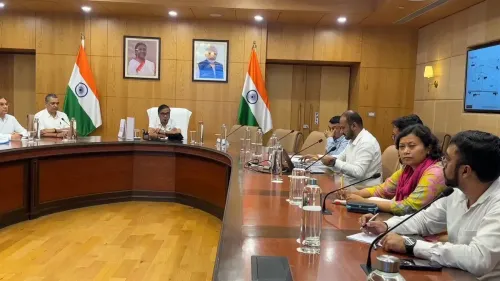
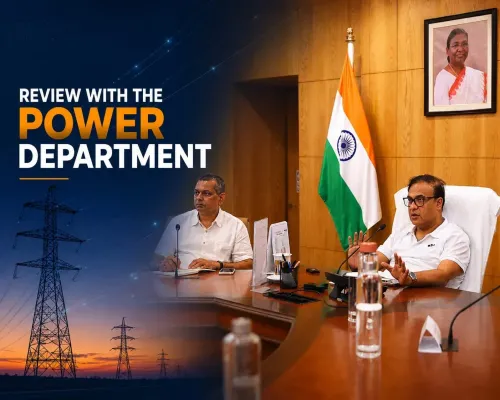
CM Himanta Hails Cabinet Nod to Green Energy Corridor Phase-III
Synopsis
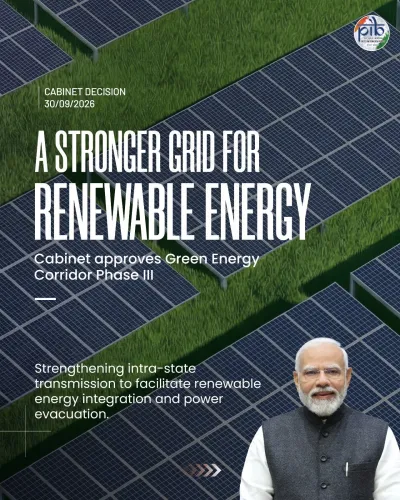
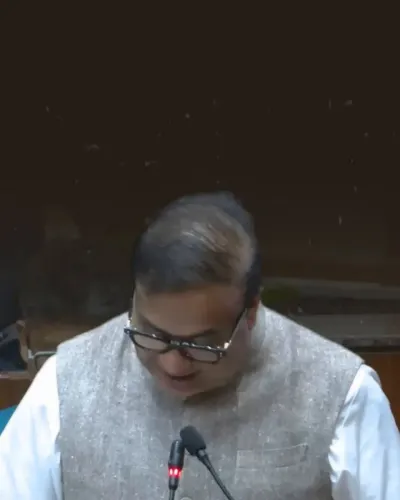
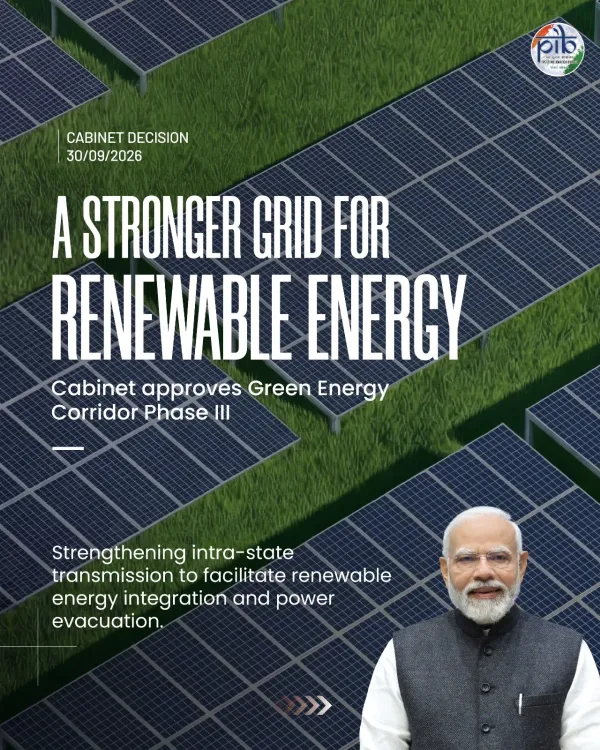
The Union Cabinet approved Green Energy Corridor Phase-III on September 30, 2026, boosting interstate transmission and battery storage for renewables. Assam CM Himanta Biswa Sarma welcomed the move, noting Assam is already working on both fronts to secure the state's power needs.
Key Takeaways
The Union Cabinet approved Green Energy Corridor Phase-III on September 30, 2026 , strengthening interstate transmission and battery energy storage.
Assam CM Himanta Biswa Sarma confirmed his state is actively working on both transmission upgrades and battery storage to meet rising power demand.
Green Energy Corridor Phase-I , approved in 2015 , targeted transmission infrastructure for 43,000 MW of renewable capacity, setting the foundation for successive phases.
Northeastern states, including Assam, face chronic supply constraints and growing industrial demand — making central corridor funding structurally significant.
Detailed project reports, fund release timelines, and state-level battery storage agreements for Assam are yet to be finalised.
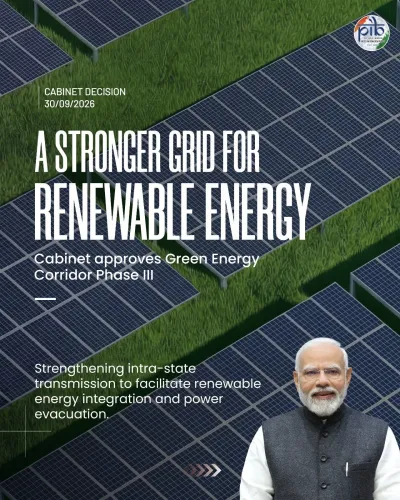
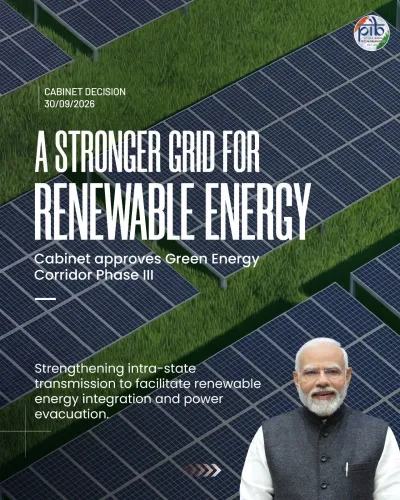
A single Cabinet decision on Wednesday, September 30, 2026 could reshape how power flows across India's northeast — and Assam Chief Minister Himanta Biswa Sarma was quick to flag what it means for his state. The Union Cabinet, chaired by Prime Minister Narendra Modi, approved the Green Energy Corridor Phase-III, a central scheme designed to strengthen interstate transmission infrastructure and scale up battery energy storage for renewable power evacuation.
Why Assam Has Skin in This Game
Assam has been running a parallel track on two fronts that sit at the heart of Phase-III: grid upgradation and storage solutions to meet rising power demand from homes and industry alike. CM Sarma noted that his government is 'closely working on' both transmission and battery energy storage — making the Cabinet clearance not an abstract national milestone but a direct tailwind for ongoing state-level efforts. The convergence of central funding with state priorities is exactly the kind of alignment that accelerates project timelines from paper to grid.
Green Energy Corridor: From Phase-I to Phase-III
This approval does not emerge from a vacuum. Green Energy Corridor Phase-I, approved in 2015, built dedicated transmission infrastructure to evacuate up to 43,000 MW of renewable capacity across multiple states — laying the architecture for what followed. Each successive phase has layered on greater ambition: more states, more storage, more capacity to absorb variable solar and wind generation that conventional grids struggle to handle. Phase-III continues this trajectory, coupling transmission augmentation with a battery storage mandate that is increasingly critical as India pushes toward its renewable targets.
Northeastern states have historically faced a double bind — chronic supply constraints on one side, rising industrial and residential demand on the other. Central schemes like this corridor offer a structural fix rather than a temporary patch, giving state utilities the backbone infrastructure to draw in more renewable power and store it when generation peaks.
What Comes Next for Assam
The Cabinet nod is the starting gun, not the finish line. The specifics that will matter for Assam — the detailed project report for state-specific components, fund release timelines, and any formal agreements for battery storage pilots — are still to be finalised. State power utilities and renewable energy developers will be watching closely, as these details will determine how quickly the national approval translates into actual transmission lines and storage units on Assam's grid.
What is already clear is that CM Sarma has positioned Assam as a ready partner rather than a passive beneficiary. When the wires go up and the batteries come online, the groundwork will have been long in the making.
Point of View
Publicly anchoring Assam's existing storage and transmission work to a central scheme is a deft political move: it positions his government as a proactive implementer rather than a passive grant recipient, strengthening the case for a larger state-specific allocation in the project's detailed reports. The battery storage component is the real watch-item — northeastern states that secure early pilot agreements could build a template for the wider region's energy transition.
NationPress
30 Sept 2026
Frequently Asked Questions
What is Green Energy Corridor Phase-III?
Green Energy Corridor Phase-III is a Union Government scheme to expand interstate electricity transmission infrastructure and deploy battery energy storage systems, enabling better evacuation and integration of renewable power into the national grid.
How does the Green Energy Corridor Phase-III affect Assam?
Assam is already working on transmission upgrades and battery energy storage. The Phase-III approval provides central support aligned with these ongoing state efforts, potentially accelerating grid strengthening and improving power supply reliability.
When was Green Energy Corridor Phase-I approved?
Green Energy Corridor Phase-I was approved in 2015, targeting transmission infrastructure to evacuate up to 43,000 MW of renewable energy capacity across multiple Indian states.
What did Himanta Biswa Sarma say about the Cabinet decision?
CM Sarma said the Cabinet nod to Phase-III 'will boost transmission and battery energy storage — two avenues which we in Assam are closely working on to secure the power requirements of our State,' and expressed gratitude to PM Modi.
What are the next steps for Assam under the Green Energy Corridor Phase-III?
Key next steps include finalising the detailed project report for Assam-specific components, confirming fund release timelines, and potentially signing state-level agreements for battery storage pilots.