CM Himanta backs UCC Assam as step for women's dignity

Synopsis
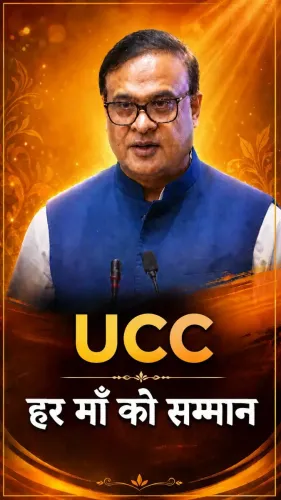
Assam Chief Minister Himanta Biswa Sarma on 27 May 2026 reaffirmed his government's push for a Uniform Civil Code in Assam, describing #UCCAssam as a commitment to social justice, equality, and women's dignity under PM Narendra Modi's leadership, continuing a roadmap first announced in 2023.
Key Takeaways
CM Himanta Biswa Sarma publicly reaffirmed Assam's commitment to a Uniform Civil Code on 27 May 2026 .
He described #UCCAssam as a step toward 'social justice, equality, and the dignity of women' under PM Narendra Modi .
The post was addressed to BJP leader Nitin Nabin , thanking him for guidance and good wishes on the initiative.
Uttarakhand passed India's first state-level UCC Bill in February 2024 , providing a legislative template.
The constitutional basis for UCC lies in Article 44 , a Directive Principle of State Policy.
A formal UCC bill tabled in the Assam Legislative Assembly is the anticipated next step, with potential legal challenges before the Gauhati High Court .
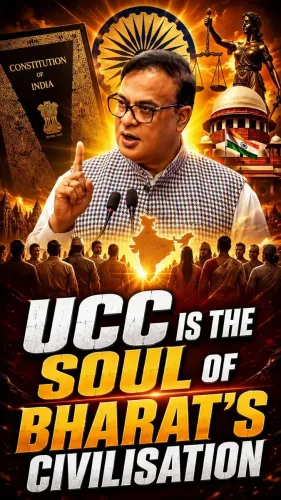
Assam Chief Minister Himanta Biswa Sarma on Wednesday, 27 May 2026 publicly reaffirmed his government's commitment to the Uniform Civil Code (UCC) for Assam, calling it a significant step toward social justice, equality, and women's dignity under the leadership of Prime Minister Narendra Modi. The statement came as a reply to BJP leader Nitin Nabin, thanking him for his guidance and good wishes on the initiative.
Context
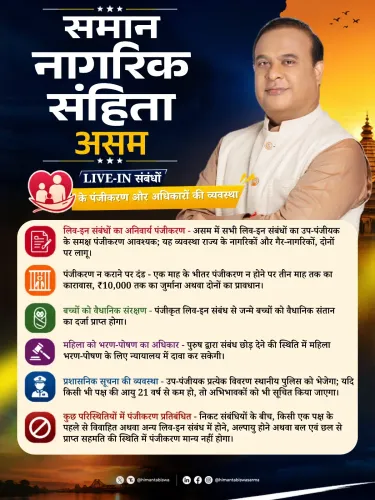
In his post, CM Sarma wrote — 'आदरणीय प्रधानमंत्री श्री @narendramodi जी के नेतृत्व में #UCCAssam सामाजिक न्याय, समानता और महिलाओं की गरिमा सुनिश्चित करने की दिशा में हमारी प्रतिबद्धता का एक महत्वपूर्ण कदम है' — translating to: 'Under the leadership of respected Prime Minister Shri Narendra Modi ji, #UCCAssam is an important step in our commitment to ensuring social justice, equality, and the dignity of women.' The remark signals that the Assam government regards UCC legislation not merely as a legal reform but as a social justice mandate.
Nitin Nabin, the BJP leader addressed in the post, had offered guidance and good wishes related to the UCC effort, prompting Sarma to publicly acknowledge the support. The exchange underlines the intra-party momentum building around the proposal within BJP's northeastern stronghold.
Policy Backdrop
The push for a Uniform Civil Code in Assam draws its constitutional grounding from Article 44 of the Indian Constitution, a Directive Principle of State Policy that enjoins the state to secure a uniform civil code for all citizens. BJP's 2019 Lok Sabha manifesto had explicitly committed to enacting a nationwide UCC, and state-level action is seen as a parallel track toward that goal.
Uttarakhand became the first Indian state to pass a UCC Bill in February 2024, creating a legislative template that other BJP-governed states have studied closely. CM Sarma had indicated as early as 2023 that a draft UCC for Assam would be prepared following public consultation, making the May 2026 reaffirmation a continuation of that announced roadmap.
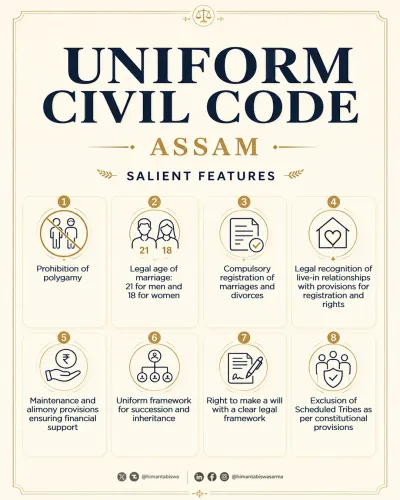
Personal laws governing marriage, divorce, inheritance, and adoption currently differ across religious communities in India. A state UCC would replace these religion-specific codes with a single common framework, a move supporters argue would most directly benefit women who face discriminatory provisions under certain personal law regimes.
Stakeholders and Impact
Proponents, including the BJP government in Dispur, argue that a UCC would deliver substantive equality to women across communities in Assam by standardising rights around marriage, divorce, and inheritance. Women's rights advocates who support the measure point to provisions in some personal laws that allow unilateral divorce or restrict inheritance rights as justification for reform.
Minority communities and some civil society groups have historically raised concerns that a uniform code could override religious and cultural practices protected under Articles 25-28 of the Constitution. Any bill tabled in the Assam Legislative Assembly is widely expected to face legal scrutiny before the Gauhati High Court or the Supreme Court of India.
What's Next
The immediate next step is the introduction of a formal UCC bill in the Assam Legislative Assembly. The government's public messaging — framing the code as a tool for women's dignity and social justice — suggests a deliberate effort to build broad-based support ahead of that tabling. Legal challenges, community consultations, and the Uttarakhand model's implementation experience are all likely to shape the final contours of the Assam draft. How the state navigates the balance between uniformity and constitutionally protected religious freedoms will set a precedent for other BJP-governed states watching closely.
Point of View
Lending the initiative both ideological cover and federal legitimacy. By framing UCC explicitly around women's dignity rather than religious uniformity, the BJP in Assam is attempting to shift the debate onto terrain where opposition is harder to sustain. The acknowledgment of Nitin Nabin's guidance also reveals the intra-party scaffolding being built around the proposal ahead of a formal legislative move. Placed alongside Uttarakhand's enacted UCC, Assam's trajectory suggests BJP is pursuing a state-by-state legislative strategy to normalise the code before any national legislation.
NationPress
11 Oct 2026
Frequently Asked Questions
Has Assam passed a UCC bill yet?
As of the CM's statement on 27 May 2026, Assam had not yet tabled a formal UCC bill; CM Himanta Biswa Sarma's post reaffirmed the government's commitment to the initiative, indicating the legislative step is still forthcoming.
Which Indian state first passed a Uniform Civil Code?
Uttarakhand became the first Indian state to pass a Uniform Civil Code Bill in February 2024, serving as a legislative model for other BJP-governed states including Assam.
What is the constitutional basis for a Uniform Civil Code in India?
Article 44 of the Indian Constitution, listed under the Directive Principles of State Policy, calls upon the state to endeavour to secure a uniform civil code for all citizens throughout India.
Who is Nitin Nabin in the context of UCC Assam?
Nitin Nabin is a BJP leader who offered guidance and good wishes to CM Himanta Biswa Sarma regarding the UCC Assam initiative, as acknowledged by the Chief Minister in his 27 May 2026 post on X.