CM Himanta Links Nalbari Medical Students to Community Health
Synopsis
Assam CM Himanta Biswa Sarma has spotlighted a programme at Nalbari Medical College where each MBBS student is assigned three families for preventive health outreach, aligning the state's medical training with the National Medical Commission's community-based curriculum introduced in 2022.
Key Takeaways
Every student at Nalbari Medical College is assigned responsibility for the health of three families , covering preventive care and regular check-ups.
CM Himanta Biswa Sarma described the model as 'an innovative convergence of medical education and public health' on 9 July 2026 .
The initiative is grounded in the National Medical Commission 's competency-based undergraduate curriculum revised in 2022 , which mandates community medicine training.
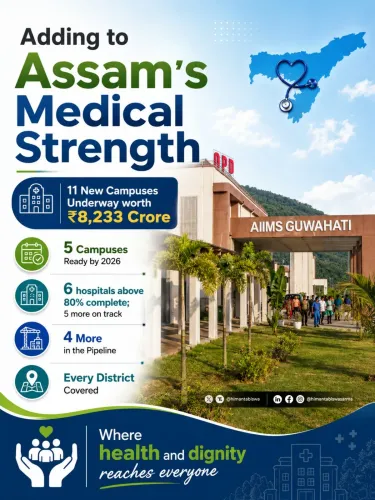
Assam has established multiple new government medical colleges since 2016 , including at Nalbari , to address district-level doctor shortages.
The model could be extended to newer colleges at Dhubri , Nagaon , and other districts if health-outcome reviews are favourable.
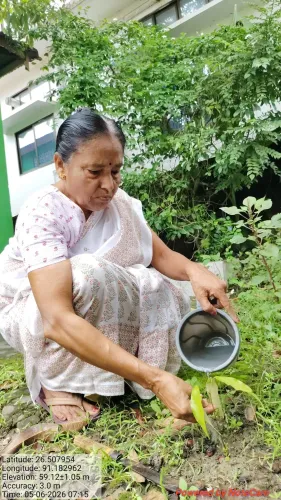
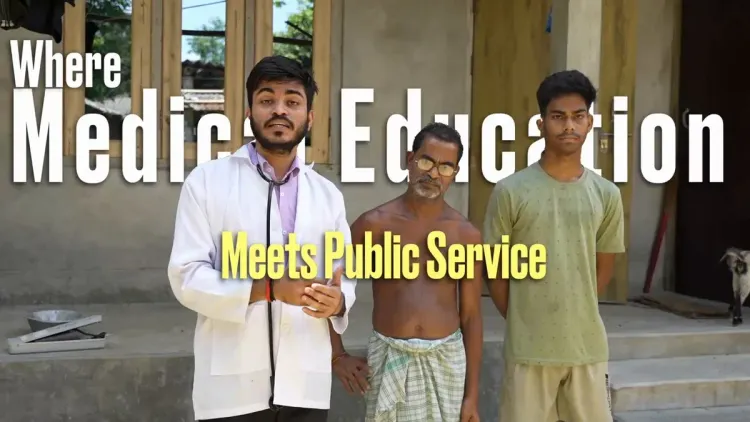
Assam Chief Minister Himanta Biswa Sarma on Thursday, 9 July 2026 highlighted an initiative at Nalbari Medical College under which every MBBS student is assigned responsibility for the health of three families, embedding preventive care and community medicine into the training programme from the first day of enrolment.
Context
Posting on X, CM Sarma described the model as 'an innovative convergence of medical education and public health,' adding that students promote 'preventive care, regular check-ups and healthier lifestyles' among their assigned families. The initiative, he said, aligns medical training with the needs of the community, producing 'doctors who serve society from day one.'
Nalbari Medical College is one of several government medical colleges sanctioned by the Assam government since 2016 to expand undergraduate medical seats and strengthen district-level healthcare capacity across the state.
Policy Backdrop
The programme draws on a family-adoption framework that the National Medical Commission (NMC) incorporated into the competency-based undergraduate medical curriculum in 2022. The revised curriculum requires students to engage with community health settings and preventive medicine practice from early in their training, moving away from a purely hospital-centric model.
Assam has used the NMC framework as a foundation and appears to have operationalised it at Nalbari Medical College with a specific family-assignment structure. Similar family-adoption pilots have been reported in states such as Maharashtra and Madhya Pradesh following the NMC regulation changes.
Stakeholders and Impact
The most direct beneficiaries are rural and semi-urban families in Nalbari district who gain a consistent point of contact for health guidance, early screening, and referrals — services that are often inaccessible in areas with low doctor-to-population ratios. Medical students, in turn, gain structured exposure to preventive and social medicine before they enter clinical rotations.
For Assam as a whole, the model addresses a persistent challenge: the state has historically faced a shortage of doctors willing to serve in rural postings. By training students within community settings from the outset, the approach attempts to build both competence and a service orientation early in a doctor's career.
What's Next
Attention will now turn to whether the Assam government extends the model to newer medical colleges at Dhubri, Nagaon, and other districts. A state-level review of health-outcome indicators — such as immunisation coverage and non-communicable disease screening rates — among families covered by student postings will be a key measure of the programme's effectiveness once the first cohort completes its community assignments.
If the outcomes are positive, Nalbari Medical College could serve as a template for community-integrated medical training across Northeast India, reinforcing CM Sarma's broader push to build a public-health infrastructure that is both modern and locally rooted.
Point of View
But its political salience for CM Sarma lies in framing Assam as a proactive implementer rather than a passive recipient of central mandates. By publicising the family-assignment model, the Chief Minister is signalling a governance philosophy that ties institutional expansion — Assam has added several medical colleges since 2016 — to measurable community outcomes. The broader arc here is a deliberate effort to reposition Northeast India's healthcare story from one of chronic deficit to one of innovation. Whether the programme produces verifiable improvements in rural health indicators will determine if it becomes a replicable model or remains a compelling pilot.
NationPress
9 Jul 2026
Frequently Asked Questions
What is the Nalbari Medical College family health programme?
Under the programme highlighted by CM Himanta Biswa Sarma , every MBBS student at Nalbari Medical College is assigned three families for whom they provide preventive care guidance, regular health check-ups, and lifestyle counselling as part of their community medicine training.
Is this programme part of the national medical curriculum?
Yes. The National Medical Commission incorporated a family-adoption framework into the competency-based undergraduate medical curriculum in 2022 , requiring students to engage with community health settings; Assam has operationalised this at Nalbari Medical College with a specific family-assignment structure.
Why is Assam opening new medical colleges?
Assam has sanctioned and operationalised several new government medical colleges since 2016 , including at Nalbari , to increase annual MBBS intake and address longstanding shortages of doctors at the district level across the state.
Will the programme be extended to other Assam medical colleges?
CM Sarma 's post does not confirm an extension, but the broader policy context suggests the government may roll out the model to newer colleges at Dhubri , Nagaon , and other districts, subject to outcome reviews of the Nalbari cohort.
How does Assam's approach compare with other Indian states?
Similar family-adoption pilots have been reported in states such as Maharashtra and Madhya Pradesh following the NMC regulation changes in 2022 , making Assam 's implementation part of a broader national shift toward community-integrated medical education.