CM Himanta Moves to Implement UCC in Assam, Cites BJP Ideology
Synopsis
Assam Chief Minister Himanta Biswa Sarma declared on 29 May 2026 that his BJP ideology gave him the courage to implement the Uniform Civil Code in Assam, invoking 5,000 years of Indian civilisation. The move follows Uttarakhand's 2024 UCC law and signals Assam's alignment with the BJP's national legislative agenda.
Key Takeaways
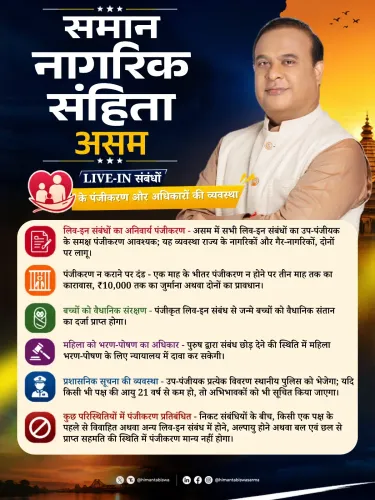
Assam CM Himanta Biswa Sarma announced on 29 May 2026 that he is moving to implement the Uniform Civil Code (UCC) in Assam.
He attributed his resolve to his identity as a BJP volunteer and party worker , rooting the decision in the party's ideological framework.
Uttarakhand passed India's first state-level UCC law in February 2024 , providing a legislative precedent for Assam.
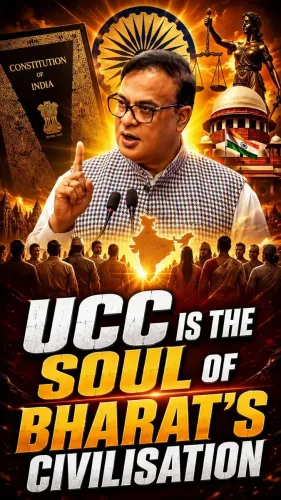
The UCC is a directive principle under Article 44 of the Indian Constitution, calling for uniform civil laws across all religious communities.
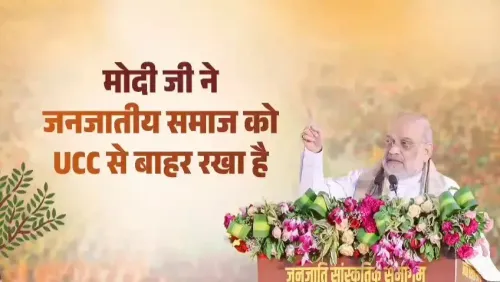
Tribal communities in Assam and the northeast have previously raised concerns about customary law protections under a uniform code.
The next steps include a potential UCC Bill in the Assam assembly and the likelihood of legal challenges in the Gauhati High Court .
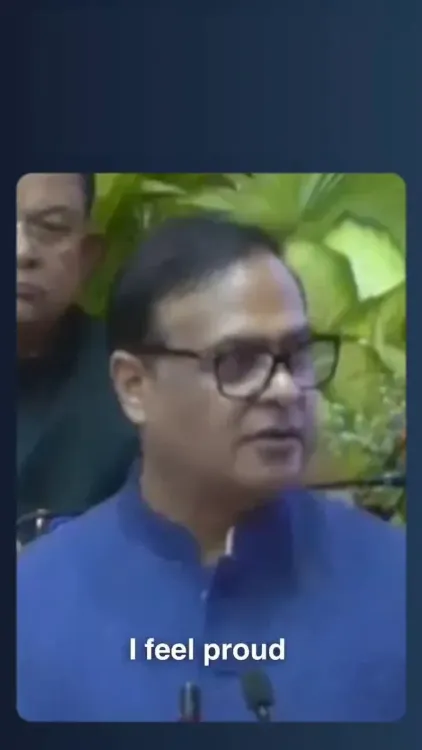
Assam Chief Minister Himanta Biswa Sarma on Friday, 29 May 2026, declared that his identity as a BJP volunteer and worker gave him the courage to move toward implementing the Uniform Civil Code (UCC) in Assam, framing the step as an expression of the party's ideological commitment to cultural nationalism and ancient Indian civilisation.
In a post on X, Sarma wrote in Hindi: 'मैं एक स्वयंसेवक और भाजपा कार्यकर्ता हूं, इसलिए असम में UCC लागू करने का साहस कर पाया हूं' — ['I am a volunteer and a BJP worker, which is why I have been able to muster the courage to implement UCC in Assam.'] He added that pride in 5,000 years of glorious civilisation and culture was itself a teaching of this ideology.
Context
The Uniform Civil Code is envisioned under Article 44 of the Indian Constitution as a set of common laws governing marriage, divorce, inheritance, and adoption for all citizens regardless of religion. It has remained a politically charged directive principle since 1950, long championed by the BJP as a matter of national integration and gender justice.
Sarma's statement positions Assam's move within a broader ideological arc, invoking the RSS-rooted concept of the 'swayamsevak' — a selfless volunteer — as the motivating force behind what he describes as a courageous policy decision.
Policy Backdrop
Uttarakhand became the first Indian state to pass a state-level UCC law in February 2024 under Chief Minister Pushkar Singh Dhami, setting a legislative template for other BJP-governed states. The BJP's 2019 Lok Sabha manifesto had explicitly reiterated the party's commitment to enacting a nationwide UCC.
Assam, governed by the BJP since 2016, has been among the more assertive northeastern states in aligning state policy with the party's national ideological agenda. Sarma, who also serves as convenor of the North-East Democratic Alliance (NEDA), has consistently used Assam as a laboratory for BJP governance priorities in the region.
Stakeholders and Impact
The UCC, if enacted in Assam, would affect the personal laws of all religious communities in the state — including Hindus, Muslims, Christians, and tribal communities — replacing religion-specific codes on family matters with a single uniform framework. Women's rights groups have historically been divided, with some welcoming standardised protections and others cautioning against overriding community-specific customs.
Tribal communities in Assam and across the northeast have in the past raised concerns about the potential impact of a uniform code on their customary laws and traditional practices, a tension that will likely shape the legislative and consultative process ahead.
What's Next
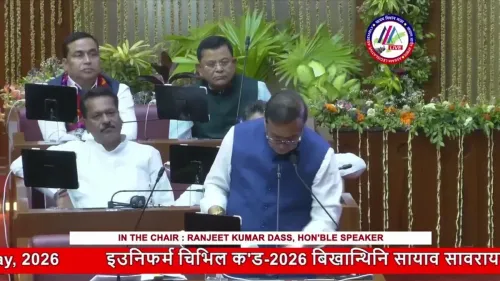
Attention will now turn to whether the Assam government tables a formal UCC Bill in the state assembly or issues executive notifications outlining the code's provisions. Any legislation is likely to face scrutiny in the Gauhati High Court and could eventually reach the Supreme Court of India, particularly on questions of constitutional validity and the rights of scheduled tribes.
The move also signals that Sarma may seek to position Assam as the second state after Uttarakhand to formally enact UCC, reinforcing his national profile within the BJP ahead of future electoral cycles.
Point of View
Casting the Chief Minister as a frontline culture-war executor rather than merely an administrator. By invoking the 'swayamsevak' identity, he ties Assam's legislative agenda directly to the RSS-BJP ideological continuum, reinforcing his stature within the national party hierarchy. The move follows Uttarakhand's trail but carries higher political stakes given Assam's significant Muslim population and the presence of protected tribal communities, making any UCC legislation a potential flashpoint. Sarma appears to be using the announcement to consolidate his position as the BJP's most assertive regional leader ahead of future political contests.
NationPress
19 Sept 2026
Frequently Asked Questions
What is the Uniform Civil Code and why is Assam implementing it?
The Uniform Civil Code (UCC) is a proposed set of common civil laws on marriage, divorce, inheritance and adoption applicable to all citizens regardless of religion, as envisaged under Article 44 of the Indian Constitution. Assam CM Himanta Biswa Sarma announced on 29 May 2026 that he is implementing it in Assam, citing his BJP ideology as the motivating force.
Which was the first Indian state to implement UCC?
Uttarakhand was the first Indian state to pass a UCC law, doing so in February 2024 under Chief Minister Pushkar Singh Dhami, setting a legislative template that other BJP-governed states including Assam are now following.
Will UCC in Assam affect tribal communities?
Tribal communities in Assam and the broader northeast have historically raised concerns that a uniform civil code could override their customary laws and traditional practices. How the Assam government addresses these exemptions will be a key aspect of any forthcoming legislation.
What does BJP's stance on UCC mean for Assam?
The BJP has advocated for a nationwide UCC since at least its 2019 Lok Sabha manifesto, viewing it as a matter of national integration and equal rights. In Assam, CM Sarma's announcement aligns state policy with this long-standing party position.
What happens next after Sarma's UCC announcement for Assam?
The next steps are expected to include a formal UCC Bill in the Assam state assembly or executive notifications detailing the code's provisions, followed by likely legal scrutiny in the Gauhati High Court and potentially the Supreme Court of India.