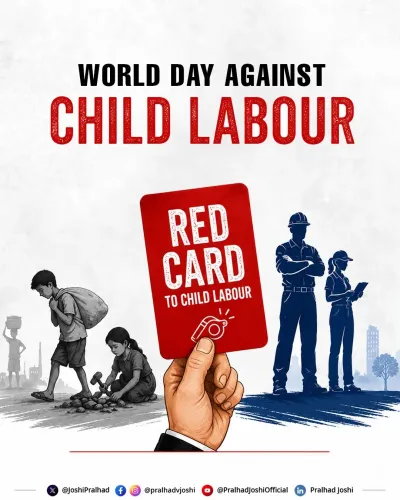
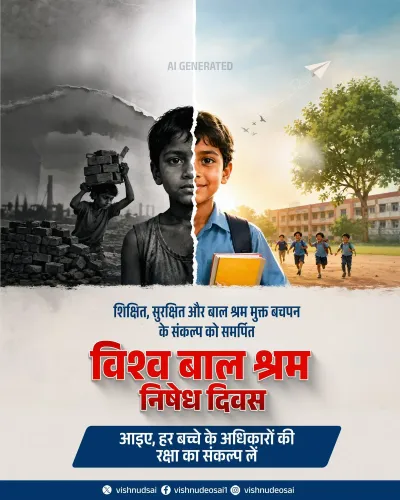
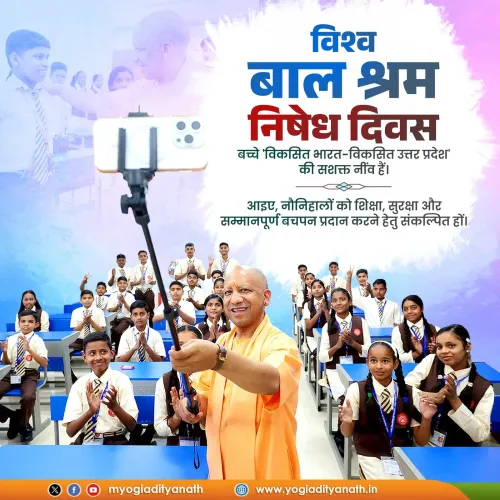
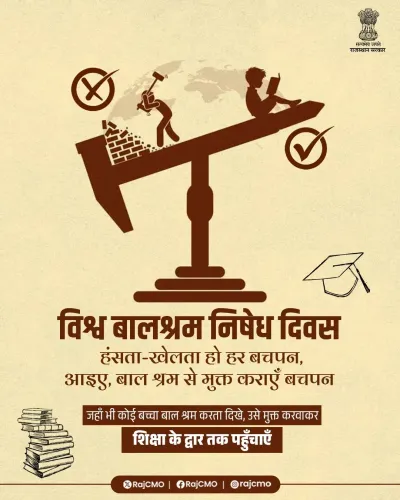
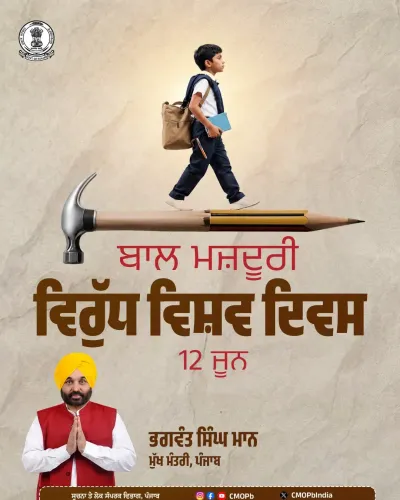
CM Himanta marks World Day Against Child Labour
Synopsis
On World Day Against Child Labour, Assam CM Himanta Biswa Sarma called for collective action to replace child labour with education access, reaffirming India's legislative push against child employment and the state's sector-specific enforcement drives in tea gardens and brick kilns.
Key Takeaways
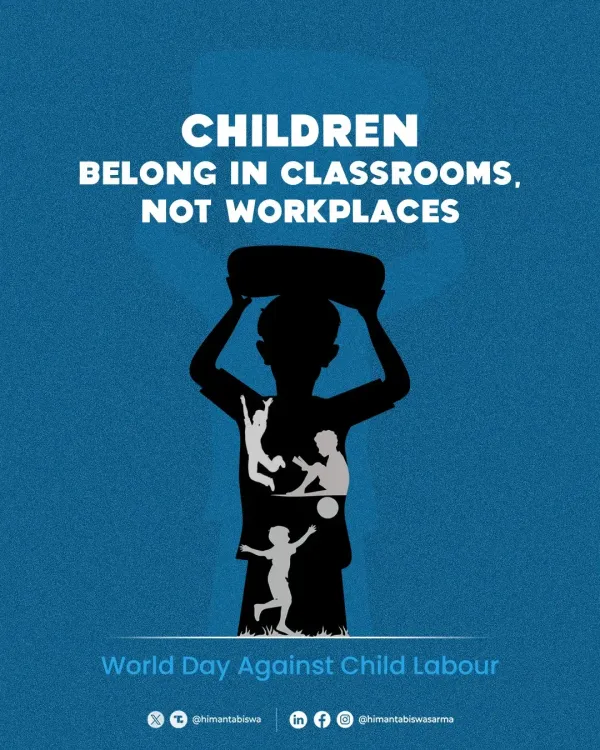
Assam CM Himanta Biswa Sarma posted a World Day Against Child Labour message on 12 June 2026 calling for every child to have the opportunity to learn and thrive.
World Day Against Child Labour is an annual ILO observance established in 2002 to spotlight global efforts to end child labour.
India's Child Labour (Prohibition and Regulation) Amendment Act, 2016 bans all employment of children under 14 , with limited exceptions for family enterprises.
The Right to Education Act, 2009 guarantees free and compulsory schooling for children aged 6–14 , a key structural tool against child labour.
Assam has conducted targeted inspections in tea gardens , brick kilns , and domestic work alongside school enrolment drives under Samagra Shiksha .
Updated state-level child labour survey data and new district action plans are expected to follow as benchmarks of on-ground progress.
Assam Chief Minister Himanta Biswa Sarma on Friday, 12 June used the occasion of World Day Against Child Labour to call for collective action to ensure every child has access to education rather than being burdened by work. The appeal, posted on his official X account, underscores the state's stated commitment to eliminating child labour and expanding school enrolment.
Context
World Day Against Child Labour is observed every year on 12 June, a date established by the International Labour Organization (ILO) in 2002 to focus global attention on the millions of children still engaged in labour that deprives them of childhood, education, and dignity. CM Sarma's post stated: 'The future of our society rests in the hands of our children,' adding a call for those hands to 'hold books, not burdens.'
The message is consistent with the annual advocacy cycle that governments, civil-society groups, and international bodies undertake around this date to renew pledges on child-labour elimination.
Policy Backdrop
India's legal framework against child labour has evolved over decades. The Child Labour (Prohibition and Regulation) Act, 1986 first banned the employment of children in specified hazardous occupations. The Right of Children to Free and Compulsory Education Act, 2009 mandated free schooling for children aged 6 to 14, directly addressing a root cause of child labour by making elementary education a justiciable right.
A landmark 2016 amendment to the child labour law extended the ban to all employment of children under 14, with a narrow exception for family enterprises outside school hours. At the central level, the National Child Labour Project has paired enforcement with rehabilitation and bridge-schooling for rescued children.
Assam has supplemented these national frameworks with sector-specific inspections targeting tea gardens, brick kilns, and domestic work — sectors where child labour has historically been concentrated in the state. School enrolment campaigns have run alongside these enforcement drives under the Samagra Shiksha umbrella.
Stakeholders and Impact
The most direct stakeholders are Assam's schoolchildren and the working families whose economic precarity often pushes children into labour. For these households, the gap between a legislative ban and its on-ground enforcement remains a lived reality, particularly in remote tea-estate districts.
Civil-society organisations working on child rights and district administration officials responsible for labour inspections are also key actors whose coordination determines whether policy intent translates into measurable reductions in child labour rates. The ILO and allied UN agencies provide technical benchmarks against which state-level progress is measured.
What's Next
Observers will watch for the release of updated state-level child labour survey data and any new district action plans that Assam may announce under the Samagra Shiksha framework in the coming months. Statements made on high-visibility advocacy days such as this one are often followed by administrative directives or inspection drives that test the seriousness of the political commitment. The broader national goal of eliminating child labour entirely will require sustained convergence between education access, social protection, and labour enforcement — a challenge that remains work in progress across India's northeastern states and beyond.
Point of View
But it carries added weight given Assam's specific vulnerability — the state's tea-garden economy has long been associated with child and bonded labour in ways that complicate simple legislative solutions. The message fits a broader BJP governance narrative that pairs welfare optics with existing central schemes, positioning state leadership as aligned with national and international child-rights goals. The real test lies in whether the symbolic statement is followed by measurable administrative action — inspection data, rescue and rehabilitation numbers, and enrolment figures in high-risk districts. Until such data is publicly available, the post is best read as political signalling on an internationally recognised advocacy day rather than an announcement of new policy.
NationPress
26 Oct 2026
Frequently Asked Questions
What is World Day Against Child Labour and when is it observed?
World Day Against Child Labour is an annual observance on 12 June , established by the International Labour Organization (ILO) in 2002 to raise awareness about child labour and mobilise action to end it globally.
What did Assam CM Himanta Biswa Sarma say on World Day Against Child Labour 2026?
CM Sarma posted that 'the future of our society rests in the hands of our children' and called for collective action to ensure those hands 'hold books, not burdens,' emphasising education and opportunity for every child.
What laws protect children from labour in India?
The Child Labour (Prohibition and Regulation) Act, 1986 , its 2016 amendment banning all employment of children under 14 , and the Right to Education Act, 2009 together form India's core legal framework against child labour.
What is Assam doing to eliminate child labour?
Assam has conducted sector-specific inspections in tea gardens , brick kilns , and domestic work, and has run school enrolment campaigns under the Samagra Shiksha framework to keep children in education and out of labour.
What is the National Child Labour Project in India?
The National Child Labour Project is a central government scheme that pairs enforcement of child labour bans with rehabilitation support and bridge-schooling for children rescued from labour situations across India.