CM Himanta Opens 720-m ROB in Tinsukia, Assam
Synopsis
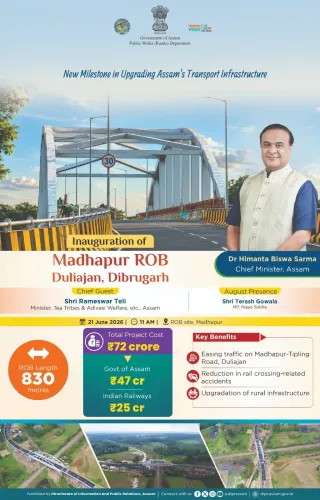
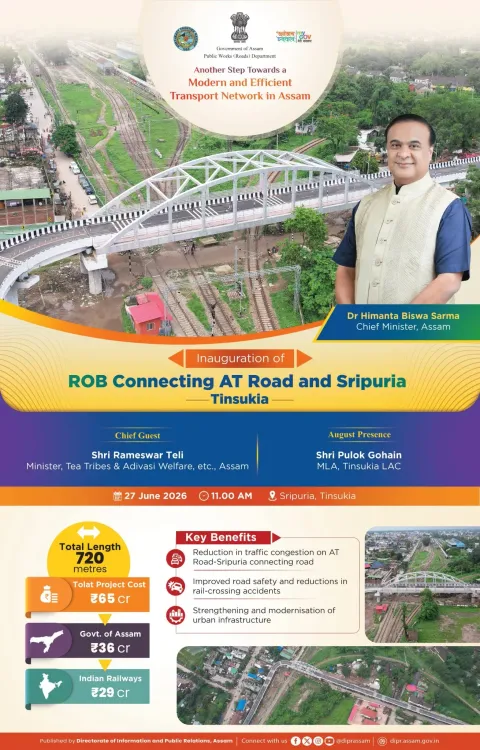
Chief Minister Dr. Himanta Biswa Sarma inaugurated the 720-metre AT Road–Shripuria Road Over Bridge in Tinsukia on 27 June 2026, eliminating a key level crossing to improve road safety and commuter flow in Upper Assam.
Key Takeaways
The AT Road–Shripuria Road Over Bridge in Tinsukia was inaugurated on 27 June 2026 by Chief Minister Dr.
Himanta Biswa Sarma .
The structure spans 720 metres and separates road traffic from the railway line, eliminating a level crossing.
Tinsukia is a key Upper Assam district bordering Arunachal Pradesh , with significant tea-trade and freight activity.
Assam has been systematically replacing level crossings with ROBs since 2016 , accelerating under the Assam Infrastructure Development Fund from 2021.
The project aligns with the national Bharatmala connectivity framework and Northeast India infrastructure priorities.
Daily commuters, local businesses, and the tea industry in Tinsukia are the primary beneficiaries of the new bridge.
The Chief Minister's Office of Assam announced on Saturday, 27 June 2026 that Chief Minister Dr. Himanta Biswa Sarma inaugurated the AT Road–Shripuria Road Over Bridge (ROB) in Tinsukia, marking a significant infrastructure milestone for the Upper Assam district. The newly opened structure spans 720 metres, designed to separate road and rail traffic and deliver faster, safer movement for daily commuters and freight carriers alike.
Context
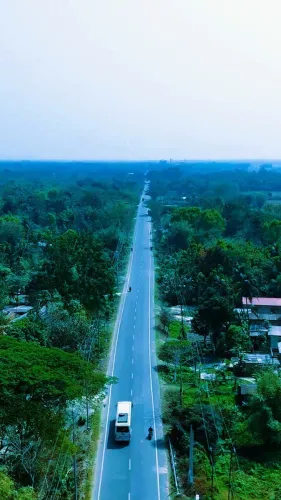
Tinsukia, a commercially active district in Upper Assam bordering Arunachal Pradesh, has long depended on a dense network of road-rail crossings that create bottlenecks and pose safety hazards. Level crossings in high-traffic corridors like AT Road routinely stall vehicles during train movements, affecting both commuters and the district's substantial tea-trade logistics. The inauguration of the AT Road–Shripuria ROB directly addresses this chokepoint by routing road traffic over the railway line entirely.
The Chief Minister's Office stated that the project ensures 'faster, safer and seamless travel for the people,' underscoring the state government's framing of the ROB as a quality-of-life intervention rather than merely an engineering project.
Policy Backdrop
Assam's push to eliminate level crossings through Road Over Bridges dates to 2016, when the state began systematically identifying high-risk rail-road intersections under its road safety initiative. The pace of execution accelerated from 2021 onward, with multiple ROB projects in Upper Assam districts funded through the Assam Infrastructure Development Fund after Dr. Sarma assumed office as Chief Minister.
The broader national framework supporting such projects is Bharatmala, the central government's flagship road connectivity programme, which coordinates with state Public Works Departments and railway authorities to fund grade separators across the country. Assam's Upper Assam districts have been priority zones given their strategic proximity to the Northeast's international borders and their role in regional supply chains.
Stakeholders and Impact
The most immediate beneficiaries are Tinsukia's daily commuters — office-goers, schoolchildren, and traders — who previously lost considerable time waiting at the level crossing. Local businesses, particularly those involved in the tea industry that defines Upper Assam's economy, stand to gain from more predictable freight movement across the corridor.
Road safety advocates have consistently pointed to level crossings as disproportionate contributors to road fatalities in the state. By removing the conflict point between road and rail traffic entirely, the AT Road–Shripuria ROB is expected to reduce accident risk significantly along one of Tinsukia's busiest arteries. Residents of Shripuria and adjoining localities gain direct, uninterrupted road access that was previously interrupted multiple times daily by train schedules.
What's Next
The Assam government's current infrastructure agenda includes a broader list of ROBs and road upgrades across the state's five-year road plan, several of which are at varying stages of completion in Upper Assam. Traffic volume data and commute-time assessments from the AT Road–Shripuria ROB corridor, expected after the structure has been operational for several months, will offer the clearest picture of the project's real-world impact.
With Dr. Himanta Biswa Sarma positioning infrastructure delivery as a centrepiece of his administration's record ahead of the state's electoral cycle, the pace at which remaining ROBs and connectivity projects are commissioned will be closely watched by both policy observers and Assam's electorate.
Point of View
District-level infrastructure deliveries to build a governance narrative ahead of the next electoral cycle. Road Over Bridges carry particular political salience in Assam because they address a daily friction point that cuts across class lines — from tea-garden workers to traders. By anchoring these projects under the Chief Minister's personal brand, the government is also centralising credit for what are often jointly funded central-state initiatives. The broader pattern suggests Assam is using Northeast connectivity as both a development priority and a political asset, a combination that has proved durable in other BJP-governed states.
NationPress
27 Jun 2026
Frequently Asked Questions
What is the AT Road–Shripuria ROB in Tinsukia?
The AT Road–Shripuria ROB is a 720-metre Road Over Bridge in Tinsukia, Assam, inaugurated on 27 June 2026. It separates road traffic from the railway line, removing a level crossing that previously caused congestion and safety risks on one of the district's busiest corridors.
Who inaugurated the Tinsukia ROB in 2026?
Assam Chief Minister Dr. Himanta Biswa Sarma inaugurated the AT Road–Shripuria Road Over Bridge in Tinsukia on 27 June 2026, as announced by the Chief Minister's Office of Assam.
Why is the Tinsukia ROB important for Assam?
The ROB eliminates a dangerous level crossing in Tinsukia, a commercially significant Upper Assam district. It improves daily commute times, reduces accident risk, and supports freight movement for the region's tea and trade economy.
How long is the AT Road–Shripuria Road Over Bridge?
The AT Road–Shripuria Road Over Bridge spans 720 metres, making it a substantial grade-separation structure designed to handle the traffic volumes of a busy Upper Assam urban corridor.
What is Assam's policy on eliminating level crossings?
Assam has been replacing level crossings with Road Over Bridges since 2016 as part of its road safety initiative. The programme was scaled up from 2021 under the Assam Infrastructure Development Fund, with Upper Assam districts among the priority zones.