CM Himanta Pledges Full Assam Flood Relief & Rehab
Synopsis
Assam Chief Minister Himanta Biswa Sarma on 25 July 2026 pledged full state assistance to every family hit by the Assam floods, covering immediate relief, home reconstruction, and livelihood restoration — reaffirming the government's multi-stage disaster response as the monsoon season peaks.
Key Takeaways
Assam CM Himanta Biswa Sarma publicly committed to supporting every family affected by the Assam floods on 25 July 2026 .
The pledge covers three phases: immediate relief , home rebuilding , and livelihood restoration .
Assam faces annual flooding from the Brahmaputra River basin, making it one of India's most flood-vulnerable states.
The Disaster Management Act, 2005 and the National Disaster Response Fund form the legal and financial backbone of India's flood relief architecture.
The National Disaster Response Force is expected to coordinate with state agencies in the coming weeks for rescue and rehabilitation operations.
Parliamentary scrutiny of Assam flood funding is anticipated during the monsoon session of Parliament.
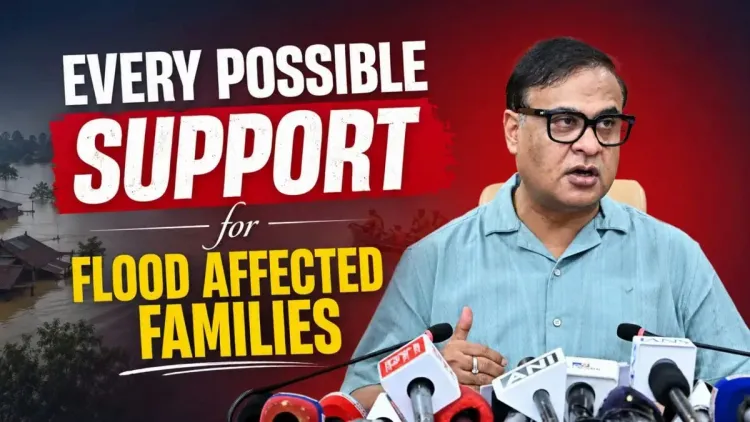
Assam Chief Minister Himanta Biswa Sarma on Saturday, 25 July 2026, reaffirmed the state government's commitment to every family affected by the ongoing Assam floods, promising assistance spanning immediate relief, home reconstruction, and livelihood restoration.
Context
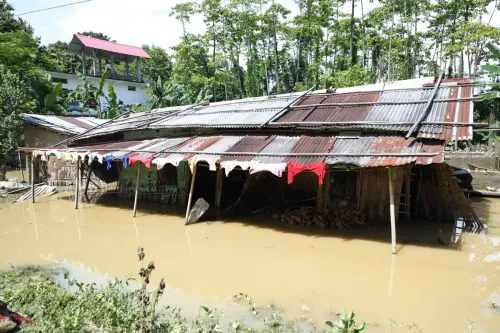
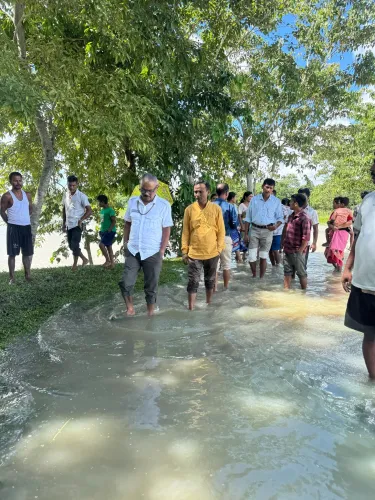
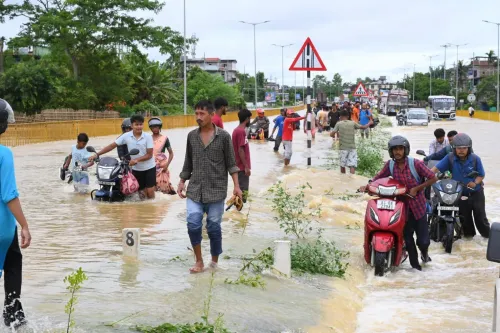
Assam endures annual monsoon flooding driven by the overflow of the Brahmaputra River and its tributaries — a cycle that displaces rural households, submerges cropland, and damages infrastructure across the state's low-lying districts. The floods rank among the most predictable yet persistently destructive natural disasters in northeastern India.
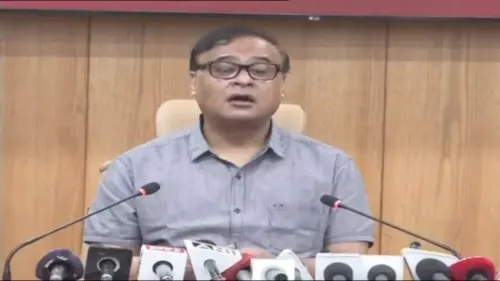
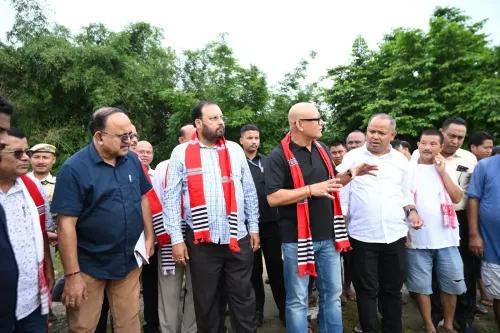
Sarma's post, shared on his official X account, stated: 'The Govt of Assam stands committed to every family affected by the #AssamFloods. From relief and rehabilitation to rebuilding homes and restoring livelihoods, we will extend every possible assistance.' The message was accompanied by a video.
Policy Backdrop
The Disaster Management Act, 2005 established state-level disaster management authorities and mandated coordinated flood response, while the National Disaster Response Fund (NDRF), created the same year, has served as the primary channel for central financial assistance to flood-hit states including Assam.
Successive Assam administrations have combined emergency relief operations — food, shelter, and medical aid — with longer-term embankment maintenance and early-warning systems. Despite these efforts, critics have repeatedly raised concerns about the pace of permanent river-management solutions and climate adaptation planning in the Brahmaputra basin.
The National Disaster Response Force typically deploys teams in Assam during peak monsoon months to assist in rescue and relief coordination, working alongside state machinery and district administrations.
Stakeholders and Impact
The communities most directly affected are rural households in Assam's flood-prone districts, whose agricultural livelihoods and homes face recurring damage each monsoon season. Farmers lose standing crops, while daily-wage workers and small traders see income disruptions that can extend well beyond the flood period.
Sarma, who has served as Chief Minister of Assam since 2021 and is the convenor of the North-East Democratic Alliance (NEDA), has used public commitment statements during peak monsoon periods as part of a broader pattern of direct communication with affected citizens. The pledge covers three distinct phases: immediate relief, home rebuilding, and livelihood restoration — signalling a multi-stage response framework.
What's Next
Attention will now shift to the rollout of specific rehabilitation packages and the pace of coordination between the state government and central agencies. Parliamentary questions on Assam flood funding are expected during the ongoing monsoon session, putting additional scrutiny on disbursement timelines and the scale of central support.
The durability of the government's commitment will ultimately be measured not by the pledge itself but by the speed and reach of assistance to the most vulnerable households — many of whom face displacement year after year with limited access to permanent resettlement or flood-proof housing.
Point of View
Rebuilding, and livelihoods, which mirrors the language of structured rehabilitation rather than ad hoc emergency response. The pledge will be tested by the speed and equity of actual disbursements, particularly to marginalised rural communities that have faced repeated displacement. Longer-term, the statement feeds into a broader national debate on whether annual flood relief spending should be redirected toward permanent infrastructure solutions in the Brahmaputra basin.
NationPress
26 Jul 2026
Frequently Asked Questions
What did Assam CM Himanta Biswa Sarma say about the Assam floods?
On 25 July 2026, CM Himanta Biswa Sarma stated that the Government of Assam is committed to every family affected by the Assam floods, promising assistance covering relief, rehabilitation, home rebuilding, and livelihood restoration.
What causes Assam to flood every year?
Assam floods are caused primarily by the seasonal overflow of the Brahmaputra River and its tributaries during the monsoon months, a pattern driven by heavy rainfall in the eastern Himalayas and Meghalaya hills.
What central funds are available for Assam flood relief?
The National Disaster Response Fund, established under the Disaster Management Act of 2005, is the primary mechanism through which the central government channels financial assistance to flood-affected states like Assam.
What is the role of the NDRF in Assam floods?
The National Disaster Response Force deploys rescue and relief teams in Assam during peak monsoon flooding, working alongside state disaster management authorities to evacuate residents and distribute emergency supplies.
Who is Himanta Biswa Sarma?
Himanta Biswa Sarma is the Chief Minister of Assam, in office since 2021, a senior BJP leader, and the convenor of the North-East Democratic Alliance (NEDA), a coalition of BJP-aligned parties in northeastern India.