CM Himanta Tells PM Modi Assam Flood Relief Work Is Under Way
Synopsis
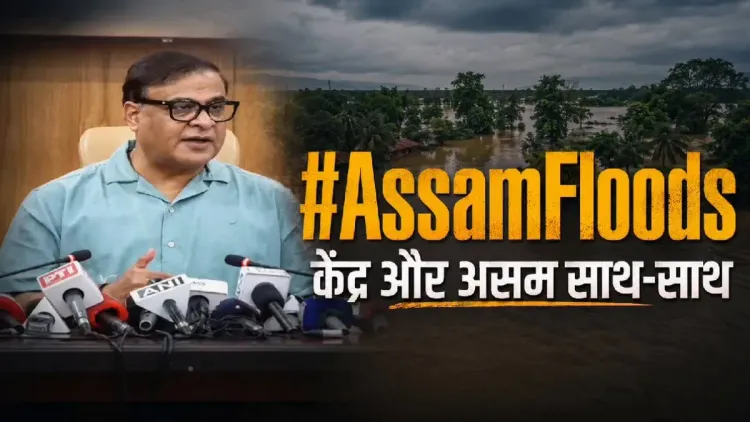
Assam Chief Minister Himanta Biswa Sarma announced on 25 July 2026 that Prime Minister Narendra Modi has expressed concern over the state's flood situation and assured all possible central assistance. Relief and rehabilitation operations are described as progressing rapidly across the state.
Key Takeaways
CM Himanta Biswa Sarma confirmed on 25 July 2026 that PM Narendra Modi personally expressed concern over the Assam flood situation.
The Prime Minister assured 'every possible help' from the Centre to address the crisis.
Relief and rehabilitation work is described as progressing rapidly across flood-affected areas of Assam .
The post was accompanied by a video, underscoring the state government's active communication on the disaster.
Annual Brahmaputra flooding makes Assam one of India's most recurrently flood-affected states, with Centre-state coordination a well-established response mechanism.
Further central aid announcements, NDRF deployments, and damage assessments are expected as the monsoon season continues.
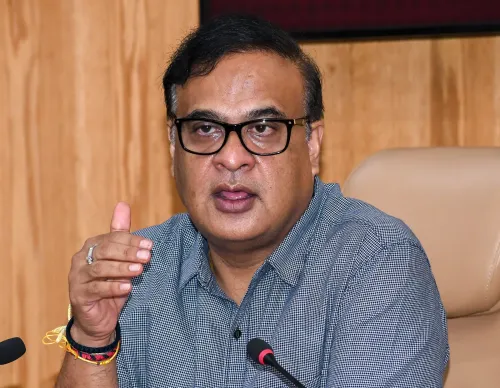
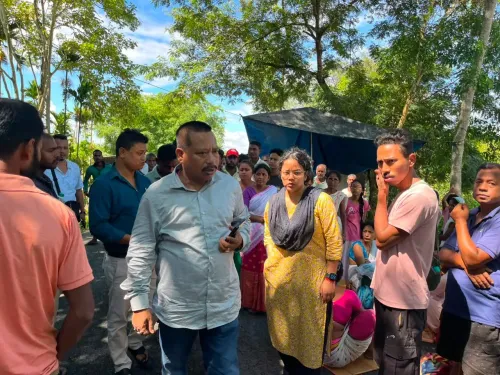
Assam Chief Minister Himanta Biswa Sarma on Saturday, 25 July 2026, said that Prime Minister Narendra Modi has expressed concern over the flood situation in Assam and assured all possible assistance from the Centre. The Chief Minister added that relief and rehabilitation operations are progressing rapidly across the state.
Posting on X in Hindi, CM Sarma wrote: 'Aadarniya Narendra Modi ji Assam ki baadh ki sthiti ko lekar chintit hain aur unhone har sambhav sahayata ka aashwasan diya hai. Rahat aur punarvas kary tezi se chal rahe hain.' [Respected Narendra Modi ji is concerned about the flood situation in Assam and has given assurance of every possible help. Relief and rehabilitation work is progressing rapidly.] The post was accompanied by a video, the contents of which have not been independently detailed.
Context
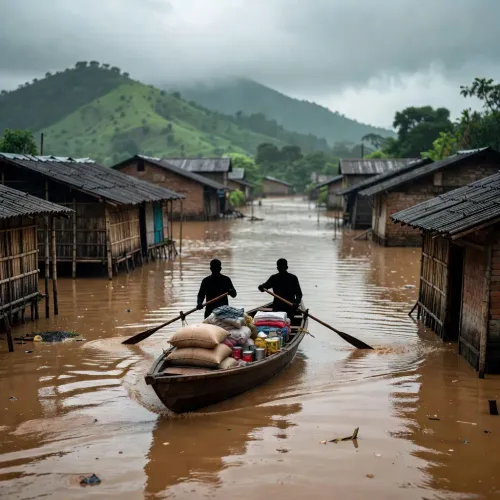
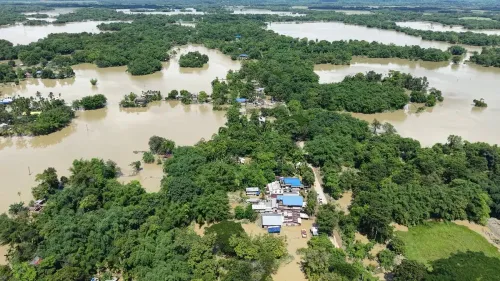
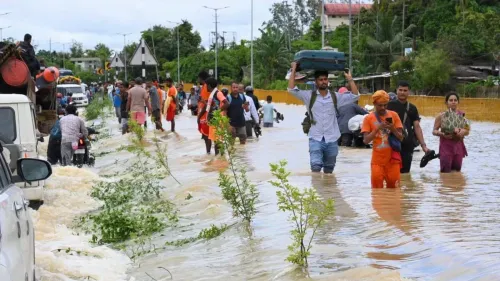
Assam is one of India's most flood-prone states, with the Brahmaputra and its tributaries inundating large swathes of the state almost every monsoon season. Annual flooding displaces hundreds of thousands of residents, damages crops and infrastructure, and stretches the state administration's emergency response capacity. The 2026 monsoon season has once again brought severe inundation to parts of the state, prompting the Chief Minister to be in direct communication with the Prime Minister.
CM Sarma serves as convenor of the North-East Democratic Alliance (NEDA), a coalition of BJP-aligned parties in the region, and has maintained close coordination with the Union government on both development and disaster management matters since taking office.
Policy Backdrop
The Centre has, over successive monsoon seasons, deployed National Disaster Response Force (NDRF) teams to Assam and released funds under the State Disaster Response Fund (SDRF) and the National Disaster Response Fund (NDRF) to support relief operations. This established framework of state-Centre coordination forms the backbone of Assam's annual flood response machinery.
PM Modi has regularly engaged with chief ministers of flood-affected states during monsoon emergencies, and his assurance of 'every possible help' — as conveyed by CM Sarma — follows this pattern of direct outreach. Further announcements on specific aid packages, additional NDRF deployments, or central team assessments are typically made in the days following such high-level consultations.
Stakeholders and Impact
The most immediate stakeholders are the flood-affected residents of Assam, who depend on swift relief distribution, temporary shelter, food supplies, and eventual rehabilitation of homes and livelihoods. The state administration, district collectors, and NDRF personnel are the primary operational actors on the ground.
Farmers whose standing crops have been damaged, residents of low-lying riverine areas, and communities in districts along the Brahmaputra valley face the sharpest impact. Livestock losses and damage to road and bridge connectivity are recurring secondary consequences that complicate relief logistics.
What's Next
Watchers of Assam's flood response will look for formal announcements of central aid quantum, additional NDRF company deployments, and a possible aerial survey or central team visit to assess ground conditions. The state government is expected to release district-wise damage assessments as waters recede, which will form the basis for compensation and reconstruction funding claims to the Centre.
With the 2026 monsoon still active, further spells of heavy rainfall in the Brahmaputra catchment could extend the relief phase well into August. The pace and scale of rehabilitation will be a key measure of how effectively the state-Centre coordination translates into on-ground outcomes for affected communities.
Point of View
Reinforcing the BJP's narrative of seamless state-Centre governance in the Northeast. The communication follows a now-familiar template in Indian disaster politics, where state leaders publicly credit the Prime Minister's personal intervention to build confidence during crises. For Assam, where floods are a near-annual political flashpoint, the speed of this outreach matters as much as the eventual aid quantum. The real test will come in the rehabilitation phase, where delays in fund disbursement and reconstruction have historically drawn criticism.
NationPress
26 Jul 2026
Frequently Asked Questions
What did PM Modi say about Assam floods 2026?
According to Assam Chief Minister Himanta Biswa Sarma, PM Narendra Modi expressed concern over the flood situation in Assam and assured all possible assistance from the central government.
What is the current flood situation in Assam?
As of 25 July 2026, CM Himanta Biswa Sarma stated that relief and rehabilitation work is progressing rapidly across flood-affected areas of Assam, following severe monsoon flooding.
Is NDRF deployed in Assam floods 2026?
The central government has a standing practice of deploying NDRF teams to Assam during monsoon floods; formal announcements of additional deployments for the 2026 season are expected following the PM's assurance of central support.
Why does Assam flood every year?
Assam floods annually because the Brahmaputra river and its tributaries swell significantly during the monsoon season, inundating low-lying plains across the state and affecting large populations.
What relief funds are available for Assam flood victims?
The central government typically releases funds under the State Disaster Response Fund (SDRF) and National Disaster Response Fund (NDRF) to states like Assam for flood relief, rescue, and rehabilitation operations.