CM Himanta's Assam: 5 Medical Colleges, 2 Cancer Centres Win NABH Tag
Synopsis
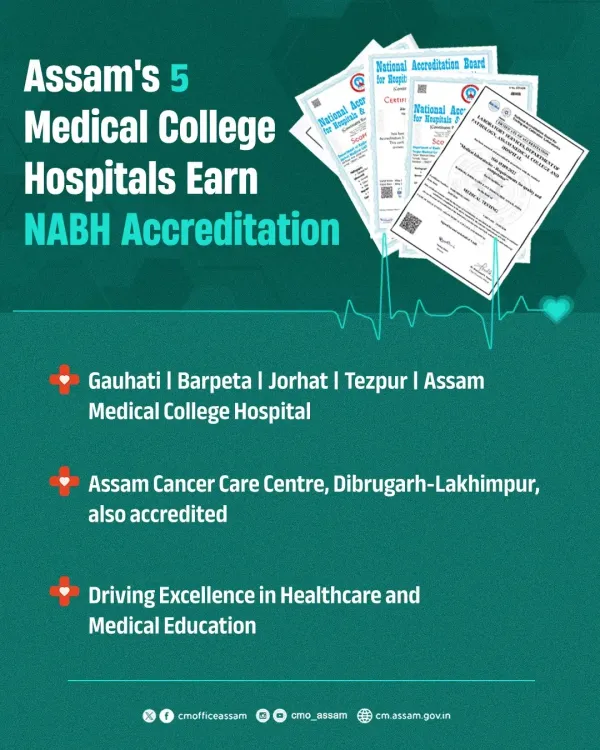
Five Assam government medical colleges — GMCH, AMCH, FAAMCH, JMCH and TMCH — along with two Assam Cancer Care Foundation cancer centres in Dibrugarh and Lakhimpur have received NABH accreditation, the state's CMO announced on 26 June 2026, citing CM Himanta Biswa Sarma's push for clinical excellence.
Key Takeaways
Five medical colleges — GMCH, AMCH, FAAMCH, JMCH and TMCH — have received NABH accreditation as of June 2026.
Assam Cancer Care Foundation centres in Dibrugarh and Lakhimpur also earned NABH certification.
NABH is India's apex hospital-quality body; accreditation signals compliance with national clinical and patient-safety standards.
The Assam Cancer Care Foundation was set up in 2017 as a public-private partnership with Tata Trusts to expand oncology access.
The drive is part of CM Dr.
Himanta Biswa Sarma's broader healthcare structural-reform agenda since 2021 .
Future focus is on extending NABH processes to district and sub-divisional hospitals across Assam's 35 districts .
The Chief Minister's Office of Assam announced on Friday, 26 June 2026 that five government medical colleges and two Assam Cancer Care Foundation centres have received NABH accreditation, marking a significant quality milestone for public healthcare in the state under Chief Minister Dr. Himanta Biswa Sarma.
Context
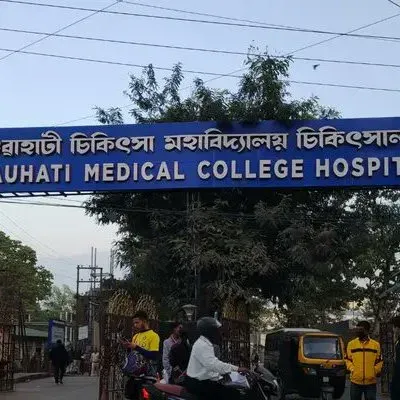
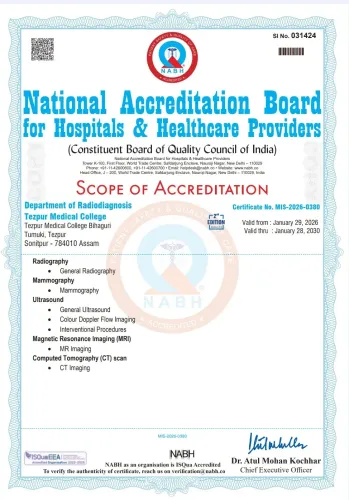
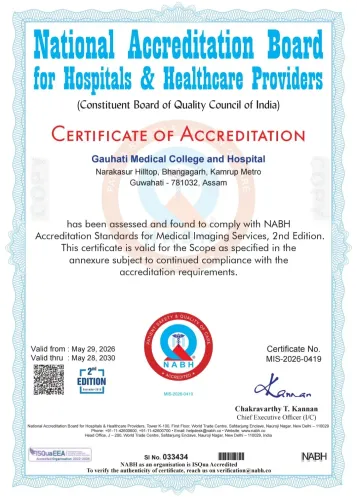
The accreditations cover Gauhati Medical College and Hospital (GMCH), Assam Medical College and Hospital (AMCH), Fakhruddin Ali Ahmed Medical College and Hospital (FAAMCH), Jorhat Medical College and Hospital (JMCH), and Tezpur Medical College and Hospital (TMCH). The two cancer facilities recognised are Assam Cancer Care Foundation centres in Dibrugarh and Lakhimpur.
The National Accreditation Board for Hospitals and Healthcare Providers (NABH) is India's apex body for hospital quality certification, setting benchmarks for clinical care, patient safety, and institutional governance. Earning NABH status is widely regarded as a mark of institutional credibility in the Indian healthcare system.
Policy Backdrop
The Assam government's push for NABH compliance is part of a broader structural reform drive that has accelerated since 2021, when Dr. Sarma assumed office. The state has simultaneously pursued infrastructure expansion — including new medical college campuses — under centrally sponsored schemes that added several institutions between 2016 and 2021.
The Assam Cancer Care Foundation, a public-private partnership established in 2017 with Tata Trusts, was designed as a hub-and-spoke network to bring oncology care closer to patients in remote and semi-urban districts. The accreditation of its Dibrugarh and Lakhimpur centres signals that the network is now meeting national clinical standards, not merely expanding geographically.
Stakeholders and Impact
The accreditations directly benefit millions of residents across Assam who depend on government medical colleges for tertiary care. For cancer patients in districts such as Lakhimpur — historically underserved for oncology — NABH-certified facilities offer a credible assurance of treatment protocols and safety standards.
Medical students and faculty at the five colleges also stand to gain, as NABH accreditation is increasingly factored into institutional rankings and post-graduate training recognition. The move aligns with a national policy emphasis on raising NABH compliance rates in public hospitals to improve clinical outcomes and support medical tourism within the northeastern region.
What's Next
Attention will now turn to whether the state extends NABH accreditation drives to remaining district hospitals and sub-divisional facilities across Assam's 35 districts. The 2026-27 state budget and any forthcoming health policy announcements will indicate how aggressively the government intends to scale this quality-assurance framework.
The Chief Minister's Office framed the accreditations as 'a testament to the state's unwavering commitment to clinical excellence and trustworthy public healthcare,' signalling that institutional quality benchmarking will remain a centrepiece of Assam's health governance narrative going forward.
Point of View
' the CMO is framing quality certification as a political deliverable ahead of future electoral cycles. The inclusion of the Assam Cancer Care Foundation centres is particularly notable: it validates the Tata Trusts partnership model and could encourage similar PPP arrangements in other northeastern states. The broader question is whether accreditation momentum translates into measurable outcomes — reduced referrals out of state, improved patient satisfaction scores — or remains primarily a governance optics exercise.
NationPress
26 Jun 2026
Frequently Asked Questions
What is NABH accreditation and why does it matter for Assam hospitals?
NABH stands for National Accreditation Board for Hospitals and Healthcare Providers, India's apex body for hospital quality certification. For Assam's government hospitals, earning NABH status means they meet national benchmarks for patient safety, clinical protocols, and institutional governance, giving patients greater confidence in public facilities.
Which Assam medical colleges received NABH accreditation in 2026?
Five government medical colleges received NABH accreditation: Gauhati Medical College and Hospital (GMCH), Assam Medical College and Hospital (AMCH), Fakhruddin Ali Ahmed Medical College and Hospital (FAAMCH), Jorhat Medical College and Hospital (JMCH), and Tezpur Medical College and Hospital (TMCH).
What is the Assam Cancer Care Foundation?
The Assam Cancer Care Foundation is a public-private partnership set up in 2017 between the Assam government and Tata Trusts to build a hub-and-spoke network of cancer hospitals across the state, bringing oncology care to underserved districts. Its centres in Dibrugarh and Lakhimpur have now received NABH accreditation.
How has CM Himanta Biswa Sarma contributed to healthcare in Assam?
Since taking office in May 2021, Chief Minister Dr. Himanta Biswa Sarma has prioritised comprehensive structural reforms in Assam's health sector, including medical college expansions, infrastructure upgrades, and the push for NABH accreditation across government hospitals and cancer care centres.
Will more Assam hospitals get NABH accreditation?
The state government has signalled an intent to extend quality reforms beyond the five medical colleges and two cancer centres already accredited. Observers are watching the 2026-27 state budget for allocations that could bring NABH certification to district and sub-divisional hospitals across Assam's 35 districts.