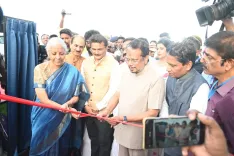
CM Majhi Highlights Subhadra Yojana as Path to Women's Economic Freedom
Synopsis
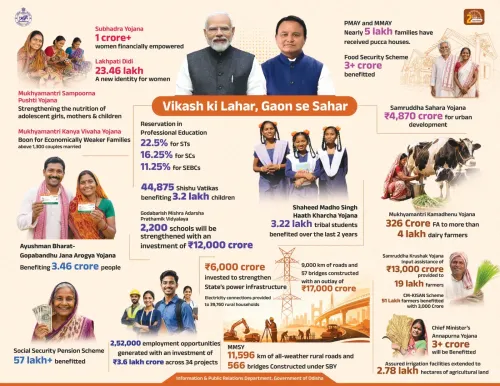
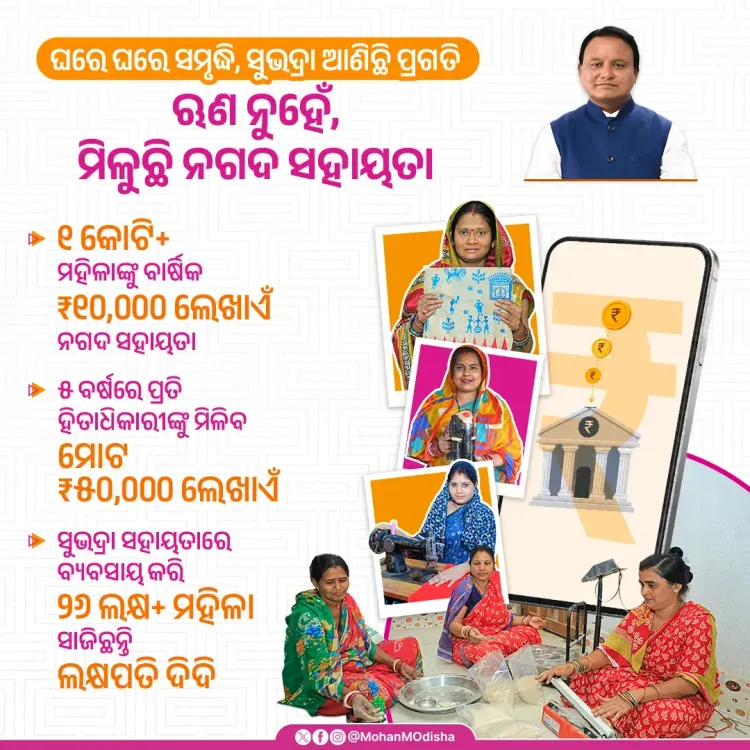
Odisha Chief Minister Mohan Charan Majhi highlighted the Subhadra Yojana on 25 June 2026, saying direct bank transfers under the scheme are helping lakhs of women across Odisha become self-reliant entrepreneurs and earn the 'Lakhpati Didi' title, marking a shift from earlier group-based welfare models.
Key Takeaways
Odisha CM Mohan Charan Majhi posted on 25 June 2026 championing the Subhadra Yojana as a vehicle for women's real economic empowerment.
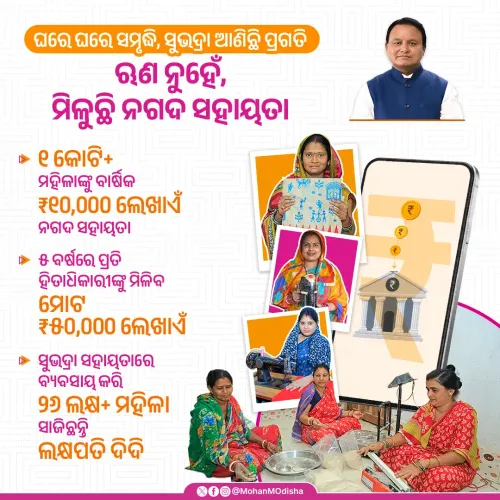
The scheme provides direct financial assistance to women's individual bank accounts , departing from earlier group-based welfare delivery.
Majhi credited the yojana with enabling lakhs of women to become successful entrepreneurs and attain the 'Lakhpati Didi' status.
The post draws a sharp contrast with previous governments in Odisha , accusing them of treating women merely as a vote bank .
The BJP government took charge in Odisha in June 2024 after more than two decades of BJD rule, and women's welfare has been a flagship policy focus since.
State budget allocations and independent evaluations of beneficiary income growth under the scheme remain key metrics to watch.
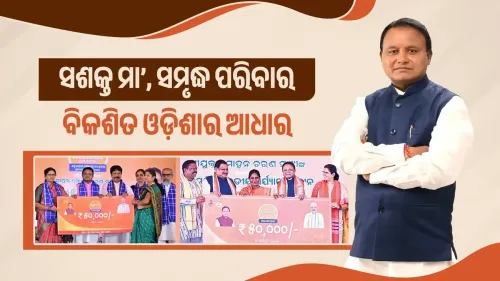
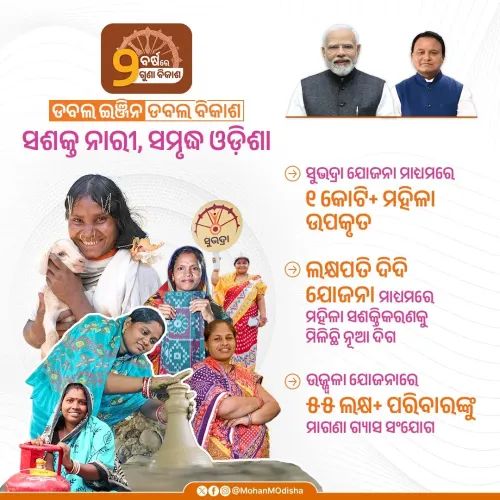
Odisha Chief Minister Mohan Charan Majhi on Thursday, 25 June 2026, invoked the Subhadra Yojana to assert that his government has moved beyond vote-bank politics to deliver real financial independence to women across the state. The BJP leader said direct cash transfers under the scheme are enabling lakhs of women to emerge as successful entrepreneurs and earn the title of 'Lakhpati Didi' — women who have achieved sustained livelihoods through self-enterprise.
Context
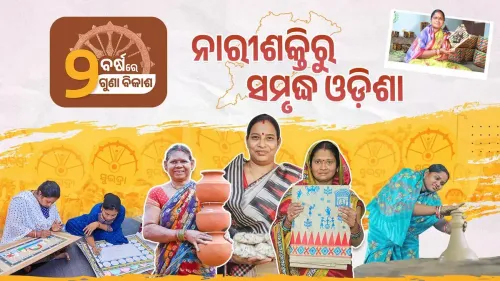
Posting in Odia, Chief Minister Majhi declared that his government has ended what he called the 'narrow political thinking' of previous administrations that treated Odisha's Narishakti — women's power — merely as a vote bank. He wrote that today, through the Subhadra Yojana, financial assistance is reaching women's bank accounts directly, enabling lakhs of sisters to proudly emerge as 'Lakhpati Didi' (women who have achieved lakh-level income). 'We believe not in slogans, but in the self-respect and real empowerment of Odisha's women,' he stated.
Policy Backdrop
The Subhadra Yojana is an Odisha government welfare scheme that channels financial assistance directly into women's individual bank accounts, reflecting the Direct Benefit Transfer model that has been central to national financial inclusion efforts since 2014. This marks a shift from earlier group-based approaches, including the Mission Shakti programme launched in 2001, which promoted women's self-help groups and micro-enterprises across the state but routed support through collective structures rather than individual accounts.
Odisha transitioned to a BJP-led government in June 2024 after more than two decades of Biju Janata Dal rule. Chief Minister Majhi's post draws a pointed contrast between the new administration's approach and the welfare model of predecessor governments, framing individual bank-linked transfers as a more empowering alternative.
Stakeholders and Impact
The primary beneficiaries are rural women and women entrepreneurs across Odisha. The 'Lakhpati Didi' designation — an honorary title for women who achieve sustained income through entrepreneurship supported by state schemes — signals a policy goal of measurable income growth, not just access to welfare. By tying assistance to individual bank accounts, the scheme aims to build financial identity and credit history for women who may previously have had limited access to formal banking.
The broader pattern mirrors national-level DBT expansion, where targeted, verifiable transfers have been positioned as more accountable than subsidy-based or intermediary-dependent delivery. For Odisha, with its large rural and tribal population, the effectiveness of last-mile banking access remains a key variable.
What's Next
Independent assessments of income growth among Lakhpati Didi participants and state budget allocations to the Subhadra Yojana in the coming fiscal year will be closely watched as indicators of on-ground impact. The Chief Minister's framing also signals that women's welfare will remain a central political and policy plank for the BJP government in Odisha ahead of future electoral cycles. Whether the scheme's reach and outcomes match the ambition outlined in the post will determine its long-term political and developmental credibility.
Point of View
He frames the BJP's DBT-linked welfare model as both morally superior and practically effective. The 'Lakhpati Didi' framing borrows from a nationally resonant BJP vocabulary, tying Odisha's state scheme to a broader identity the party has cultivated among women voters since 2024. The emphasis on individual bank accounts over collective SHG structures also signals a quiet policy departure from the Mission Shakti legacy, which was a flagship of the BJD era. Whether beneficiary numbers and verified income data eventually back these claims will define the scheme's political durability beyond the current election cycle.
NationPress
25 Jun 2026
Frequently Asked Questions
What is Subhadra Yojana in Odisha?
Subhadra Yojana is an Odisha government welfare scheme that provides direct financial assistance to women through their individual bank accounts, aimed at promoting economic self-reliance and entrepreneurship among women in the state.
Who is a Lakhpati Didi?
'Lakhpati Didi' is an honorary title given to women who achieve a sustained lakh-level annual income through entrepreneurship supported by government schemes. In Odisha, CM Majhi has cited the Subhadra Yojana as enabling lakhs of women to attain this status.
What did Odisha CM Mohan Majhi say about women's empowerment?
CM Mohan Charan Majhi said on 25 June 2026 that his government has ended the narrow political thinking of previous administrations that treated women as a vote bank, and that the Subhadra Yojana is now delivering real financial independence to women across Odisha.
How is Subhadra Yojana different from Mission Shakti in Odisha?
While Mission Shakti, launched in 2001, channelled support through women's self-help groups and collective structures, the Subhadra Yojana delivers direct cash transfers to individual women's bank accounts, aligning with the Direct Benefit Transfer model emphasised nationally since 2014.
When did BJP come to power in Odisha?
The BJP-led government under Mohan Charan Majhi came to power in Odisha in June 2024, ending more than two decades of Biju Janata Dal rule in the state.