CM Mohan Yadav Hails ₹23,731 Cr GOBARdhan Cabinet Nod
Synopsis
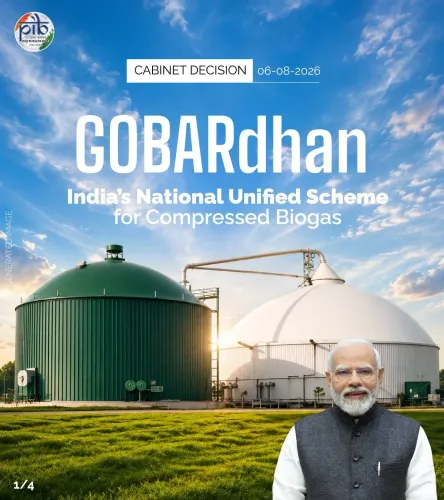
The Union Cabinet chaired by PM Modi approved the ₹23,731 crore GOBARdhan scheme on 6 August 2026, targeting a ten-fold jump in domestic compressed biogas production. MP Chief Minister Dr. Mohan Yadav hailed the decision as a milestone for clean energy, farmer income and Atmanirbhar Bharat.
Key Takeaways
The Union Cabinet approved the GOBARdhan scheme with an outlay of ₹23,731 crore on 6 August 2026 .
The scheme targets a ten-fold increase in domestic Compressed Biogas (CBG) production capacity.
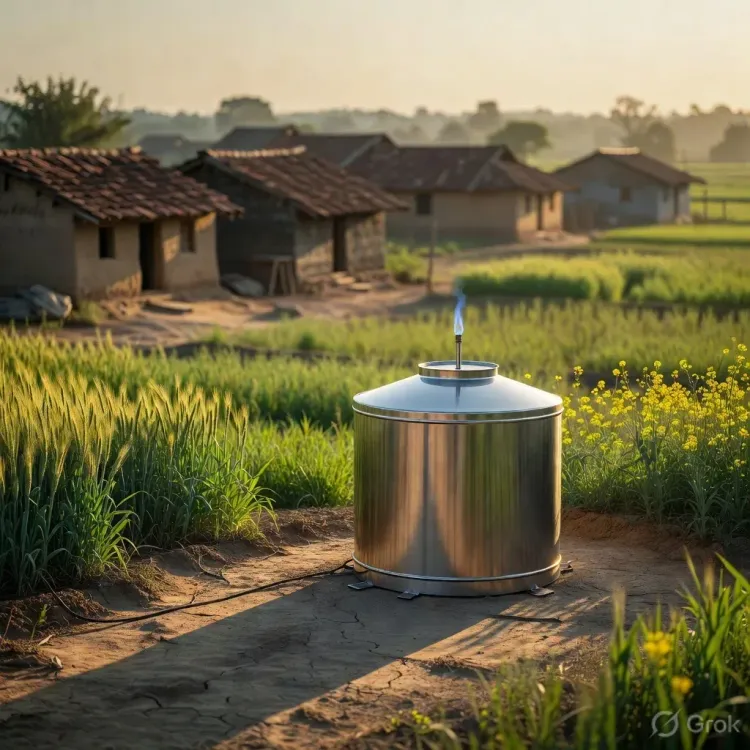
GOBARdhan converts cattle dung and organic farm waste into biogas and bio-fertiliser, creating a dual income stream for farmers.
The scheme was originally launched in 2018 under the Swachh Bharat Mission-Gramin and has since evolved into a bioenergy pillar.
Madhya Pradesh CM Dr.
Mohan Yadav welcomed the decision, linking it to clean energy, rural development and energy security goals.
State-level implementation — including new CBG plant approvals and private investment — will determine real-world impact over the next two to three years.
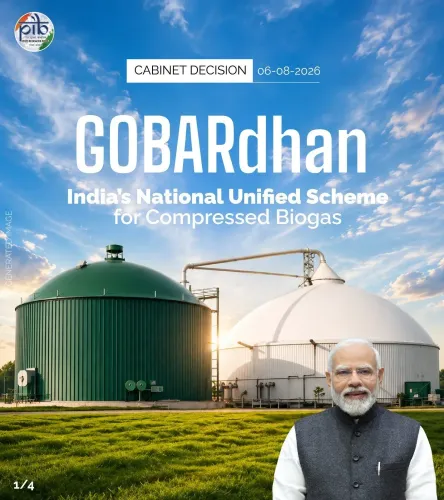
Cattle dung is about to become a cornerstone of India's energy future. Madhya Pradesh Chief Minister Dr. Mohan Yadav on Thursday, 6 August 2026 welcomed the Union Cabinet's approval of the GOBARdhan scheme worth ₹23,731 crore, calling it a milestone for clean energy, rural development and Atmanirbhar Bharat — a self-reliant India.
A ₹23,731 Crore Bet on Biogas
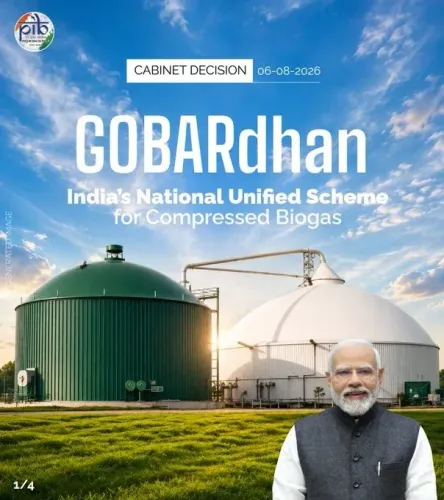
The Cabinet, chaired by Prime Minister Narendra Modi, cleared the expanded outlay for the Galvanising Organic Bio-Agro Resources Dhan (GOBARdhan) scheme, which converts cattle dung and organic farm waste into compressed biogas and bio-fertiliser. The headline target: a nearly ten-fold increase in domestic Compressed Biogas (CBG) production capacity — a number that, if achieved, would fundamentally reshape India's rural energy map.
Dr. Mohan Yadav described the decision as 'a new momentum for the resolve of clean energy, rural development and Atmanirbhar Bharat,' adding that the scheme would 'prove to be a milestone in boosting farmers' income, better utilisation of organic resources, and strengthening the country's energy security.'
From Swachh Bharat to Energy Security
GOBARdhan was first launched in 2018 under the Swachh Bharat Mission-Gramin, initially framed as a sanitation and waste-management initiative. Over eight years it has steadily evolved into a pillar of India's bioenergy strategy, running in parallel with the National Policy on Biofuels (2018), which set binding targets for alternative fuel blending and CBG plant roll-out.
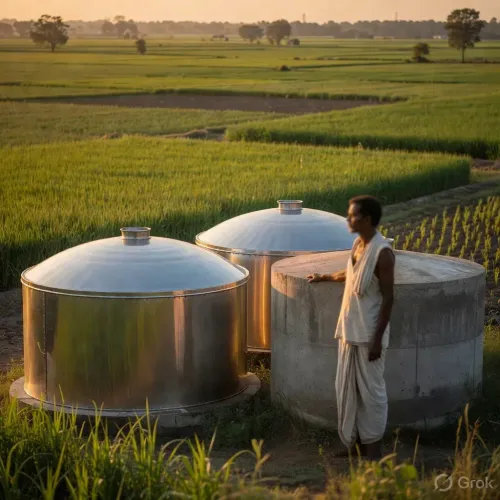
The logic is circular-economy arithmetic: farm and livestock waste that once polluted water bodies and emitted methane into the atmosphere is instead captured, converted into CBG — a direct substitute for natural gas — and the residual slurry sold as organic fertiliser. Farmers earn twice: once from the waste they sell and again from the fertiliser they buy back cheaper.
What the Ten-Fold CBG Target Means in Practice
India currently imports a significant share of its natural gas needs, making domestic CBG scale-up a direct lever on the import bill. A ten-fold production jump would require hundreds of new CBG plants across rural districts — approvals, land, feedstock supply chains and off-take agreements that will define whether this Cabinet nod translates into kilowatt-hours or stays on paper.
State governments, including Madhya Pradesh — one of India's largest cattle-rearing states — will be central to execution. The real test begins now: plant approvals, private investment mobilisation and actual capacity addition over the next two to three years.
Dr. Yadav closed his post with 'heartfelt gratitude' to Prime Minister Modi for what he called a 'visionary decision in the direction of environmental protection.' The politics of credit-sharing aside, the scale of the outlay signals that New Delhi is treating biogas not as a fringe clean-energy footnote but as a serious infrastructure bet — one that links India's farms, its climate commitments and its fuel-import bill in a single policy stroke.
Point of View
731 crore GOBARdhan approval is not simply a subsidy for biogas — it is a structural bet that waste-to-energy can simultaneously address rural income stagnation, fossil-fuel import dependence and climate commitments, three policy headaches the government has struggled to solve separately. The ten-fold CBG target is ambitious by any measure and will stress-test India's capacity to execute complex rural infrastructure at scale. CM Yadav's enthusiastic endorsement also signals Madhya Pradesh's intent to position itself as a lead implementation state, which could matter for fund allocation. The real verdict will come not from Cabinet approvals but from the number of functional CBG plants two years from now.
NationPress
6 Aug 2026
Frequently Asked Questions
What is the GOBARdhan scheme?
GOBARdhan — Galvanising Organic Bio-Agro Resources Dhan — is a central government scheme that converts cattle dung and organic farm waste into compressed biogas (CBG) and bio-fertiliser, generating clean energy while boosting farmer incomes. It was first launched in 2018 under the Swachh Bharat Mission-Gramin.
How much money has the government approved for GOBARdhan in 2026?
The Union Cabinet approved ₹23,731 crore for the GOBARdhan scheme on 6 August 2026 , chaired by Prime Minister Narendra Modi.
What is Compressed Biogas (CBG) and why does it matter?
Compressed Biogas is a clean fuel produced from bio-waste such as cattle dung and agricultural residue. It is a direct substitute for natural gas, and scaling domestic CBG production can reduce India's dependence on imported fossil fuels while cutting methane emissions from farm waste.
How will the GOBARdhan scheme benefit farmers?
Farmers benefit in two ways: they earn income by supplying organic waste to CBG plants, and they gain access to cheaper bio-fertiliser produced as a by-product of the biogas process, reducing their input costs.
What did Madhya Pradesh CM Mohan Yadav say about the GOBARdhan approval?
CM Dr. Mohan Yadav called the Cabinet decision a 'milestone' for clean energy, rural development and Atmanirbhar Bharat, and expressed gratitude to PM Modi for what he described as a visionary step toward environmental protection and energy security.