CM Pema Khandu Hails Rouble Nagi on 2026 Global Teacher Prize
Synopsis
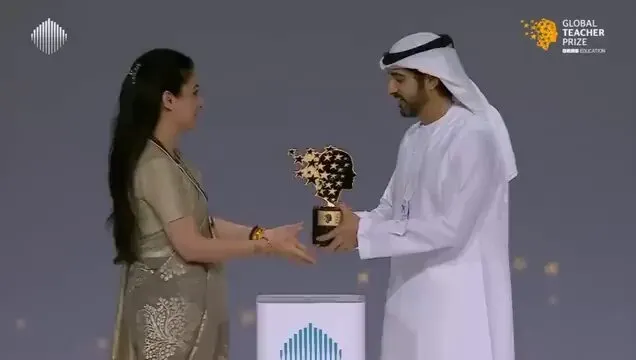
Arunachal Pradesh Chief Minister Pema Khandu has praised artist and social reformer Rouble Nagi, whose foundation has transformed over 1.5 lakh homes and set up 800-plus learning centres for underprivileged children, earning her the 2026 Global Teacher Prize.
Key Takeaways
CM Pema Khandu publicly celebrated Rouble Nagi on 9 July 2026 via X, calling her journey 'inspiring.' The Rouble Nagi Art Foundation has transformed more than 1.5 lakh homes with colour and established over 800 learning centres for underprivileged children.
Nagi has been awarded the 2026 Global Teacher Prize , an annual honour by the Varkey Foundation recognising outstanding educational contribution.
Her programmes target underprivileged children and women , using art as a tool for education, dignity, and social transformation.
CM Khandu's tribute reflects a broader political narrative linking grassroots cultural initiatives to national goals of inclusive growth and nation-building.
Arunachal Pradesh Chief Minister Pema Khandu on Thursday, 9 July 2026, took to X to celebrate artist and social reformer Rouble Nagi, lauding her transformative work in art-based education and community empowerment across India and her recognition with the 2026 Global Teacher Prize.
Context
In his post, CM Khandu described Nagi's journey as one of taking 'art beyond galleries and turning it into a tool for education, dignity, and social transformation.' He highlighted that her foundation has touched over 1.5 lakh homes through colour and established more than 800 learning centres for underprivileged children across the country. The Chief Minister framed her work as proof that 'creativity can be a powerful force for nation-building.'
Nagi is an acclaimed contemporary artist who channelled her practice into the Rouble Nagi Art Foundation, a non-governmental initiative focused on using art as a vehicle for social change. Her programmes have engaged children, women, and marginalised communities in multiple states.
Policy Backdrop
The Global Teacher Prize is an annual international award conferred by the Varkey Foundation, recognising individuals who have made an outstanding contribution to the teaching profession. The prize carries global prestige and is widely seen as a benchmark for innovative educational impact.
Indian leaders across the political spectrum have periodically spotlighted private citizens who deploy art and culture for grassroots education, aligning such recognition with national priorities around inclusive growth and community welfare. CM Khandu's tribute fits within this broader pattern of political messaging that bridges cultural initiatives with the language of empowerment and nation-building.
Stakeholders and Impact
The primary beneficiaries of Nagi's foundation are underprivileged children and women from low-income communities across India. The twin pillars of her model — mural-based neighbourhood beautification and structured learning centres — aim to simultaneously restore dignity to public spaces and expand educational access for those outside the formal schooling ecosystem.
For Arunachal Pradesh, a state where the intersection of tribal art traditions and modern education policy is a live policy conversation, CM Khandu's endorsement of art-led social reform carries particular resonance. The Northeast has been an area of growing focus for non-governmental education initiatives seeking to complement state infrastructure.
What's Next
The 2026 Global Teacher Prize recognition is expected to raise the international profile of the Rouble Nagi Art Foundation and could attract further institutional partnerships and philanthropic support for its programmes. CM Khandu's public endorsement may signal openness to exploring state-level collaborations between the foundation and Arunachal Pradesh's education or cultural affairs departments. As art-based pedagogy gains credibility on the global stage, India's northeastern states — rich in indigenous artistic traditions — stand as natural candidates for scaled pilots of such models.
Point of View
Khandu signals that non-governmental, creativity-driven models of community development deserve official endorsement alongside conventional welfare schemes. The post also fits a wider pattern among BJP-aligned leaders of celebrating individual achievers whose work embodies 'nation-building' themes, reinforcing a narrative of grassroots transformation driven by civil society rather than the state alone. For the Northeast, where indigenous art traditions remain underutilised in formal education, this kind of political visibility could be the precursor to structured state-foundation partnerships.
NationPress
9 Jul 2026
Frequently Asked Questions
Who is Rouble Nagi and what is her foundation?
Rouble Nagi is an acclaimed contemporary Indian artist who founded the Rouble Nagi Art Foundation, which uses art as a tool for social transformation by beautifying communities and running learning centres for underprivileged children and women across India.
What is the Global Teacher Prize and who gives it?
The Global Teacher Prize is an annual international award presented by the Varkey Foundation to recognise an individual who has made an outstanding contribution to the teaching profession. Rouble Nagi won the 2026 edition of the prize.
Why did Pema Khandu post about Rouble Nagi?
Arunachal Pradesh Chief Minister Pema Khandu shared a tribute on X on 9 July 2026 to celebrate Rouble Nagi's 2026 Global Teacher Prize win and highlight her foundation's work transforming over 1.5 lakh homes and establishing 800-plus learning centres.
How many learning centres has the Rouble Nagi Art Foundation set up?
According to CM Pema Khandu's post on X, the Rouble Nagi Art Foundation has established more than 800 learning centres for underprivileged children across India.
What does the Rouble Nagi Art Foundation do for communities?
The foundation works to empower children, women, and communities by using art for education and social uplift, including transforming over 1.5 lakh homes with colour and providing structured learning opportunities outside the formal school system.