CM Pema Khandu hails Sarnath's UNESCO World Heritage listing
Synopsis
Arunachal Pradesh Chief Minister Pema Khandu hailed the UNESCO World Heritage inscription of Sarnath on 25 July 2026, describing the ancient site near Varanasi as a place where Lord Buddha first taught the Middle Path. The recognition advances India's Buddhist heritage diplomacy and tourism ambitions.
Key Takeaways
Sarnath , near Varanasi, Uttar Pradesh , has been inscribed on the UNESCO World Heritage List .
Arunachal Pradesh CM Pema Khandu welcomed the inscription on 25 July 2026 , citing Sarnath's role as the site of Buddha's first sermon on the Middle Path .
The listing follows the Mahabodhi Temple Complex at Bodh Gaya , inscribed in 2002 as India's first major Buddhist UNESCO site.
India's national Buddhist Circuit under the Swadesh Darshan scheme positions Sarnath as a key pilgrimage and tourism node.
The recognition is expected to boost heritage conservation funding, international pilgrimage, and cultural diplomacy with Buddhist-majority nations.
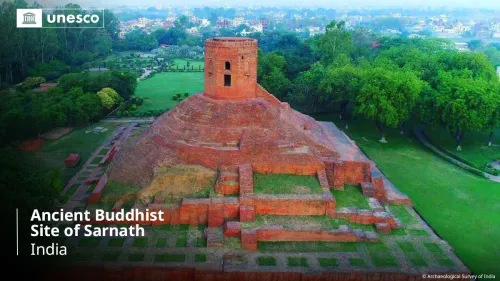
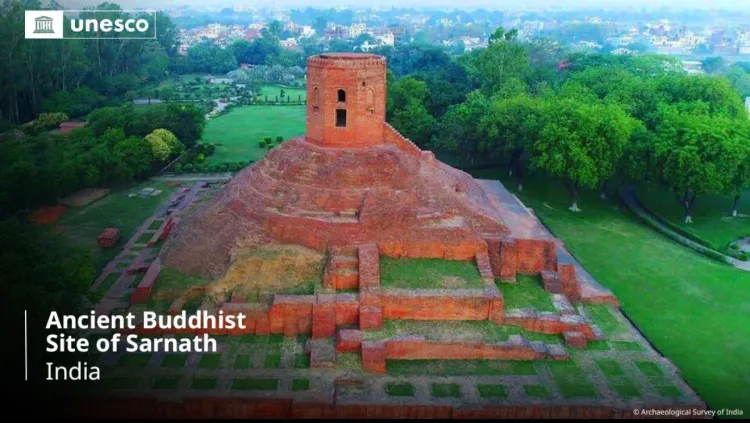
Arunachal Pradesh Chief Minister Pema Khandu on Saturday, 25 July 2026, welcomed the inscription of Sarnath on the UNESCO World Heritage List, calling it a global recognition of a site where 'history, spirituality, and humanity converged.' The ancient Buddhist pilgrimage town near Varanasi, Uttar Pradesh, is revered as the place where Lord Buddha delivered his first sermon after attaining enlightenment.
Context
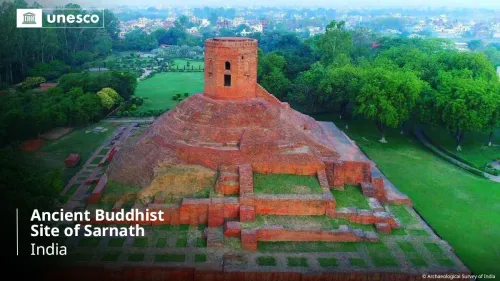
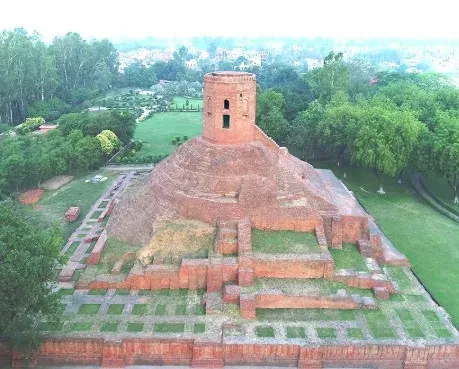
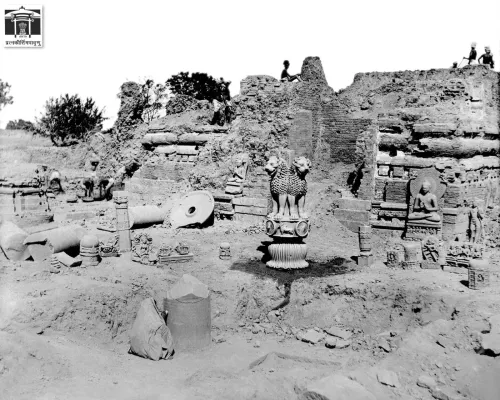
Sarnath holds a foundational place in Buddhist tradition as the site of the Dhammacakkappavattana Sutta — the 'Setting in Motion of the Wheel of the Dhamma' — where the Buddha first expounded the Middle Path. CM Khandu quoted this legacy directly, writing that it was here that 'Lord Buddha first shared the message of the Middle Path, a message of compassion over conflict, wisdom over ignorance, and peace over division.' The site is home to the iconic Dhamek Stupa and extensive archaeological remains that have drawn scholars and pilgrims for centuries.
The UNESCO inscription elevates Sarnath to the same tier of international recognition as the Mahabodhi Temple Complex at Bodh Gaya, which was listed in 2002 as India's first major Buddhist site on the World Heritage List. The new listing adds significant weight to India's cultural heritage portfolio on the global stage.
Policy Backdrop
The recognition fits squarely within a long-running policy arc. Since the 2010s, the Government of India has invested in a national Buddhist Circuit under the Swadesh Darshan tourism scheme, linking pilgrimage sites across states to improve visitor infrastructure and boost religious tourism. Sarnath is a central node in that circuit, alongside Bodh Gaya, Kushinagar, and Lumbini (in neighbouring Nepal).
India has also pursued Buddhist heritage nominations as an instrument of cultural diplomacy, strengthening ties with countries such as Japan, Thailand, and Sri Lanka, which share deep Buddhist traditions. Positioning India as the origin of Buddhism supports both domestic pilgrimage infrastructure and broader soft-power objectives in Asia.
Stakeholders and Impact
The inscription is expected to benefit Buddhist pilgrims, heritage conservationists, and the broader tourism sector. A UNESCO listing typically triggers heightened international attention, increased footfall, and greater eligibility for conservation funding and technical assistance. Local communities in and around Varanasi stand to gain from expanded tourism revenue.
For Arunachal Pradesh, which has its own network of historic Buddhist monasteries, the recognition resonates culturally even though the site lies in Uttar Pradesh. CM Khandu's statement reflects the cross-state significance of Buddhist heritage within India's national narrative. He concluded his message with a call for Sarnath to 'continue to inspire seekers from every corner of the world.'
What's Next
Attention will now turn to decisions by the UNESCO World Heritage Committee on related Indian nominations and to any announcements by the central or state governments on conservation plans and upgraded visitor facilities at Sarnath. The listing could also accelerate diplomatic engagements with Buddhist-majority nations that look to India as the cradle of the faith. The broader question is whether this momentum translates into sustained investment in heritage protection at sites across the Buddhist Circuit.
Point of View
The message transcends party lines and positions India as a moral and cultural anchor in the Indo-Pacific. The timing also reinforces the strategic logic of the Swadesh Darshan Buddhist Circuit, where a UNESCO stamp can unlock both tourist dollars and diplomatic goodwill. For a northeastern leader like Khandu, whose state borders Buddhist-majority Bhutan and China's Tibetan regions, aligning with this heritage narrative carries particular geopolitical weight.
NationPress
25 Jul 2026
Frequently Asked Questions
Why is Sarnath important in Buddhism?
Sarnath, near Varanasi in Uttar Pradesh, is where Lord Buddha delivered his first sermon after attaining enlightenment, teaching the Middle Path — a philosophy of compassion, wisdom, and peace — making it one of the four holiest sites in Buddhism.
When was Sarnath inscribed on the UNESCO World Heritage List?
According to Arunachal Pradesh Chief Minister Pema Khandu's post on 25 July 2026, Sarnath has been inscribed on the UNESCO World Heritage List, though the exact date of the committee decision was not specified in his statement.
Which other Indian Buddhist sites are on the UNESCO World Heritage List?
The Mahabodhi Temple Complex at Bodh Gaya in Bihar was inscribed in 2002 as India's first major Buddhist UNESCO World Heritage Site; Sarnath's inscription adds a second landmark Buddhist location to that list.
What is India's Buddhist Circuit under Swadesh Darshan?
The Buddhist Circuit is a Government of India tourism initiative under the Swadesh Darshan scheme that links major pilgrimage sites — including Sarnath, Bodh Gaya, and Kushinagar — with improved infrastructure to attract domestic and international Buddhist pilgrims.
Why did Arunachal Pradesh CM Pema Khandu comment on a site in Uttar Pradesh?
Pema Khandu's statement reflects the national and pan-Buddhist significance of Sarnath's UNESCO recognition; Arunachal Pradesh has its own rich Buddhist monastery heritage, and leaders across states often acknowledge milestones in India's shared cultural and spiritual legacy.