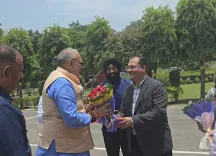
CM Pema Khandu highlights Tawang's Ayurvedic Park
Synopsis
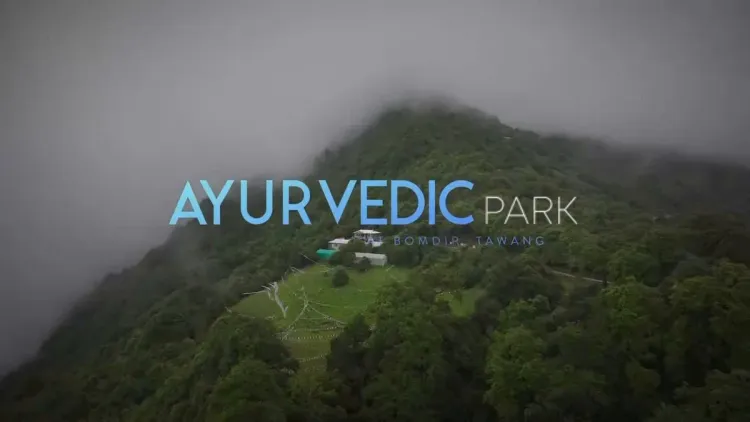
Arunachal Pradesh CM Pema Khandu has highlighted the High Altitude Ayurvedic Park at Bomdir, Tawang, where rare Himalayan medicinal plants are being conserved, indigenous healing wisdom documented, research promoted and a new eco-tourism destination developed, showcasing the state's rich biodiversity.
Key Takeaways
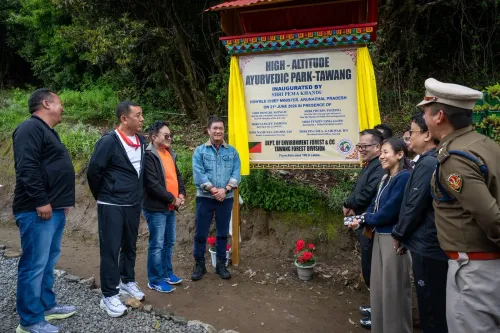
Chief Minister Pema Khandu spotlighted the High Altitude Ayurvedic Park at Bomdir, Tawang on 22 June 2026 .
The park conserves rare Himalayan medicinal plants and documents indigenous healing wisdom of local communities.
It is being developed as an eco-tourism destination to showcase Arunachal Pradesh's biodiversity globally.
The initiative aligns with the National Medicinal Plants Board (est.
2000 ) and the Ministry of AYUSH (est.
2014 ) policy framework.
Future research collaborations and visitor infrastructure development at the site are being closely watched.
The model could potentially be replicated across other biodiversity-rich districts of Arunachal Pradesh .
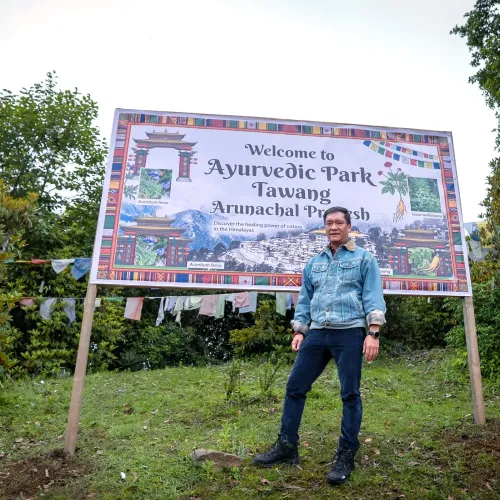
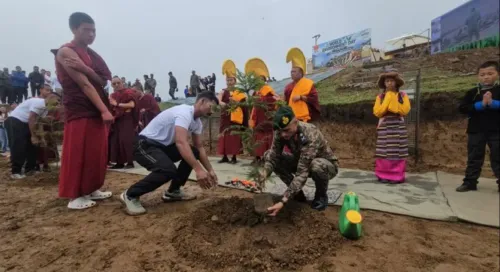
Arunachal Pradesh Chief Minister Pema Khandu on Monday, 22 June 2026, spotlighted the High Altitude Ayurvedic Park at Bomdir, Tawang, describing it as a confluence of nature, science and tradition that is conserving rare Himalayan medicinal plants while nurturing a new eco-tourism destination for the state.
Context
Tawang, a high-altitude district bordering Bhutan and China, is celebrated for its Buddhist heritage and exceptional Himalayan biodiversity. The district's elevation and geographic isolation have allowed a range of rare medicinal flora to survive largely undisturbed, making it a natural candidate for conservation-linked initiatives. The Bomdir site sits within this ecologically sensitive belt.
Chief Minister Khandu noted that at the park, 'rare Himalayan medicinal plants are being protected, indigenous healing wisdom is being documented, research is being encouraged, and a unique eco-tourism destination is taking shape.' The statement underlines a multi-pronged mandate that goes beyond passive preservation to active scientific engagement and economic development.
Policy Backdrop
The park aligns with a national policy architecture built over two decades. The National Medicinal Plants Board, established in 2000, laid the groundwork for in-situ conservation and sustainable use of medicinal plants across India. The creation of the Ministry of AYUSH in 2014 gave further institutional momentum, mainstreaming Ayurveda alongside scientific research and biodiversity stewardship.
Arunachal Pradesh, as a northeastern frontier state, has been a focal point for policies that link traditional healing practices with sustainable economic activity. The Biological Diversity Act also provides a legal framework for documenting and protecting indigenous knowledge systems of the kind being recorded at Bomdir. The High Altitude Ayurvedic Park represents a state-level expression of these converging national mandates.
Stakeholders and Impact
The initiative directly benefits multiple groups. Indigenous communities in and around Tawang, whose generations-old healing traditions are being formally documented, stand to gain both recognition and a measure of intellectual-property protection for their knowledge. Ayurveda researchers and institutions gain field access to high-altitude plant species that are difficult to study elsewhere.
For eco-tourists, the park is being positioned as a destination that showcases Arunachal Pradesh's extraordinary biodiversity — the Chief Minister's own framing — to a national and international audience. This has downstream implications for local livelihoods, hospitality infrastructure and the state's broader tourism economy, which already draws visitors to Tawang's monasteries and landscapes.
What's Next
Attention will now turn to the pace at which research collaborations, visitor infrastructure and documentation programmes take concrete shape at the Bomdir site. If the model proves viable, it could be replicated in other biodiversity-rich districts of Arunachal Pradesh, extending the state's reach in both traditional medicine conservation and sustainable tourism.
The Chief Minister's public communication signals that the park is an active priority for the state government, suggesting that further announcements on partnerships — possibly with AYUSH bodies or academic institutions — may follow in the coming months.
Point of View
Scientific conservation and sustainable tourism — three policy currents that carry strong political salience in India's current AYUSH-forward climate. By publicly anchoring the Bomdir park to both ecological and economic outcomes, the CM is signalling that the initiative is not merely ceremonial but part of a broader development narrative for a strategically sensitive border district. The move also reflects a wider pattern among northeastern states of leveraging unique biodiversity assets to attract research investment and tourism revenue simultaneously. Whether the park delivers on its multi-pronged promise will depend on the depth of institutional partnerships and funding that follow this political visibility.
NationPress
22 Jun 2026
Frequently Asked Questions
What is the High Altitude Ayurvedic Park in Tawang?
The High Altitude Ayurvedic Park is located at Bomdir in Tawang district, Arunachal Pradesh. It conserves rare Himalayan medicinal plants, documents indigenous healing traditions, promotes scientific research and is being developed as an eco-tourism destination.
Where is Bomdir located in Arunachal Pradesh?
Bomdir is situated in Tawang district, a high-altitude area in Arunachal Pradesh bordering Bhutan and China. The district is known for its Buddhist heritage and exceptional Himalayan biodiversity.
What did CM Pema Khandu say about the Ayurvedic Park?
CM Pema Khandu stated that at the Bomdir park, rare Himalayan medicinal plants are being protected, indigenous healing wisdom is being documented, research is being encouraged, and a unique eco-tourism destination is taking shape that showcases Arunachal Pradesh's extraordinary biodiversity.
How does the Tawang Ayurvedic Park relate to AYUSH policy?
The park aligns with the national AYUSH framework, which has been promoting Ayurveda and traditional medicine since the Ministry of AYUSH was created in 2014. It also connects to the National Medicinal Plants Board established in 2000 for in-situ conservation of medicinal plants.
Who benefits from the High Altitude Ayurvedic Park at Bomdir?
Indigenous communities whose traditional healing knowledge is being documented, Ayurveda researchers who gain access to rare high-altitude plant species, and eco-tourists exploring Arunachal Pradesh's biodiversity are the primary beneficiaries of the Bomdir park.