CM Rekha Gupta Calls for Greener Delhi on Nature Conservation Day
Synopsis
Delhi Chief Minister Rekha Gupta marked World Nature Conservation Day on 28 July 2026 by calling conservation of water, air, forests and land a shared civic responsibility, framing a 'Green Delhi, Clean Delhi' vision as central to the capital's environmental future.
Key Takeaways
Delhi Chief Minister Rekha Gupta posted a conservation message on World Nature Conservation Day, 28 July 2026 .
She described protection of water, air, forests and land as the foundation of a secure future for coming generations.
The CM framed nature conservation as an inseparable part of lifestyle, not merely a governmental obligation.
She called a ' Green Delhi, Clean Delhi and environment-friendly future' the shared responsibility of all citizens.
The statement aligns with national frameworks including the Swachh Bharat Mission and India's Paris Agreement commitments .
Analysts will watch for concrete policy follow-through such as tree-planting drives or pollution-control announcements from the Delhi government.
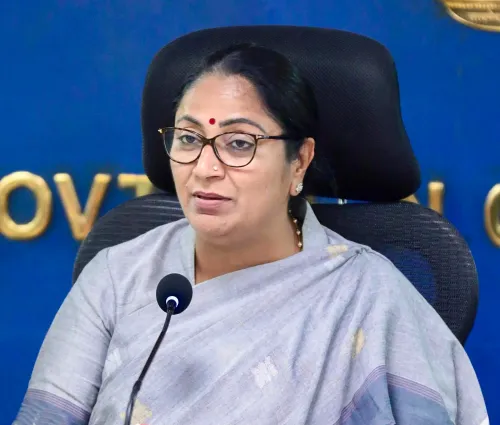
Delhi Chief Minister Rekha Gupta on Tuesday, 28 July 2026, marked World Nature Conservation Day by calling on citizens to strengthen their commitment to protecting the environment, framing conservation of water, air, forests and land as the foundation of a secure future for generations to come.
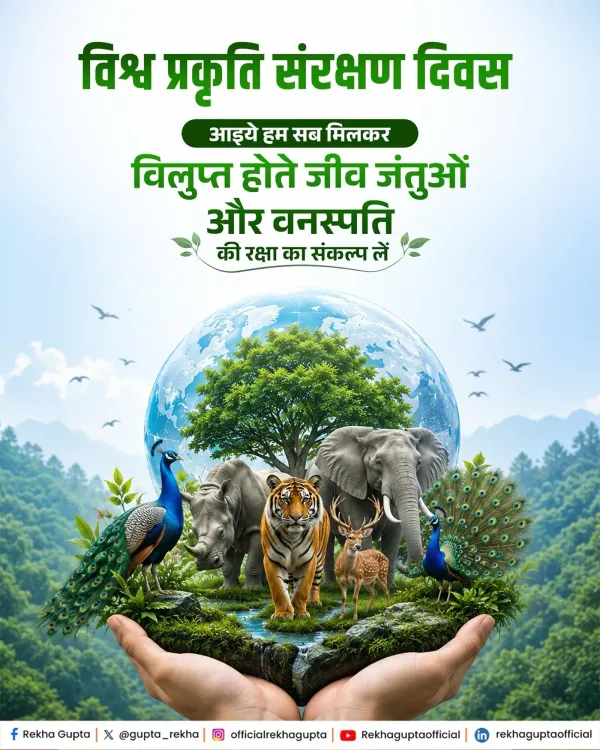
In her post on X, the Chief Minister wrote: 'प्रकृति का संरक्षण केवल हमारा दायित्व नहीं, हमारी जीवन शैली का अभिन्न हिस्सा है' — 'Conservation of nature is not merely our duty; it is an inseparable part of our way of life.' She added that a 'Green Delhi, Clean Delhi and an environment-friendly future is the shared responsibility of all of us.'
Context
World Nature Conservation Day, observed every year on 28 July, is a global call to action on protecting natural resources and ecosystems. The day has become a regular occasion for political leaders across India to reaffirm environment commitments, particularly in cities facing acute urban pressures. Delhi, as the national capital, sits at the intersection of rapid urbanisation and persistent environmental stress, making such messaging especially visible.
Gupta's statement places conservation firmly within the domain of lifestyle and civic identity, not just government policy — a framing that echoes national discourse on behavioural change as a pillar of sustainability.
Policy Backdrop
India's environmental governance rests on several long-standing frameworks. The National Action Plan on Climate Change, launched in 2008, laid out eight national missions covering solar energy, water, the Himalayan ecosystem, sustainable agriculture and more. The Swachh Bharat Mission, initiated in 2014, extended the conversation to urban cleanliness and waste management — themes that overlap directly with Gupta's 'Clean Delhi' vision.
At the international level, India's Nationally Determined Contributions submitted under the Paris Agreement in 2015 committed the country to reducing emission intensity and expanding its forest and tree cover. State governments, including Delhi's, have repeatedly been called upon to translate these national targets into local action on air quality, green cover and water management.
Stakeholders and Impact
Delhi's residents bear the most direct consequences of the city's environmental challenges. The capital has for years ranked among the world's most polluted cities by air quality indices, with particulate matter levels spiking sharply in winter months. Water scarcity and groundwater depletion add further pressure, particularly for lower-income neighbourhoods dependent on public supply.
Gupta's invocation of 'future generations' as the primary beneficiaries of conservation aligns with a broader political consensus across parties that environmental inaction carries long-term electoral and governance costs. The shared-responsibility framing also signals an expectation that citizens, civil society and businesses — not just the state — must participate in Delhi's green transition.
What's Next
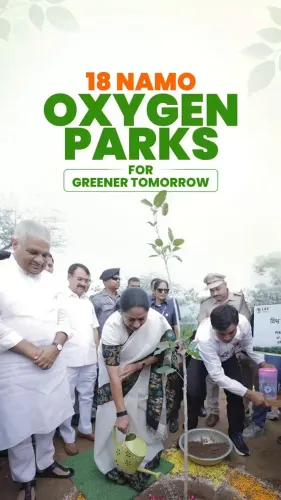
Observers will watch whether the Chief Minister's statement on World Nature Conservation Day is followed by concrete policy announcements — including tree-planting drives, pollution-control measures, or dedicated green budgeting in the Delhi government's upcoming plans. India's participation in international climate forums could also shape the state's follow-up commitments. For now, the message signals that environmental stewardship will remain a visible part of the Gupta administration's public communication and governance agenda.
Point of View
She broadens responsibility beyond government — a politically safe but strategically useful move that positions the BJP-led Delhi administration as environmentally conscious. The 'Green Delhi, Clean Delhi' formulation also echoes the linguistic template of centrally sponsored missions, subtly aligning state messaging with the national party's governance brand. Whether this translates into measurable action on Delhi's chronic air and water challenges will determine how the statement ages.
NationPress
28 Jul 2026
Frequently Asked Questions
What is World Nature Conservation Day and when is it observed?
World Nature Conservation Day is an annual global observance held on 28 July each year to raise awareness about protecting natural resources, ecosystems and biodiversity for future generations.
What did Delhi CM Rekha Gupta say on World Nature Conservation Day 2026?
Delhi Chief Minister Rekha Gupta said that conservation of nature is not merely a duty but an inseparable part of our way of life, and called a 'Green Delhi, Clean Delhi and environment-friendly future' the shared responsibility of all citizens.
What is the 'Green Delhi, Clean Delhi' vision?
'Green Delhi, Clean Delhi' is a phrase used by the Delhi government to describe its environmental goals, encompassing improvements in air quality, green cover, water management and urban cleanliness, broadly aligned with national missions like Swachh Bharat .
What are India's key national policies on environment and climate?
India's major frameworks include the National Action Plan on Climate Change (2008), the Swachh Bharat Mission (2014) and its Nationally Determined Contributions under the Paris Agreement (2015), which commit to reducing emission intensity and expanding forest cover.
What environmental challenges does Delhi face?
Delhi faces persistent challenges including poor air quality driven by high particulate matter levels, groundwater depletion, water scarcity and the pressures of rapid urbanisation on its green cover and natural ecosystems.