CM Rekha Gupta Hails Modi Govt's Northeast Development Push
Synopsis
Delhi Chief Minister Rekha Gupta credited PM Narendra Modi's leadership for transforming Northeast India through rail, road and air connectivity, calling the region a 'strong pillar' of Developed India under the #12YearsOfRisingNorthEast campaign.
Key Takeaways
Delhi CM Rekha Gupta posted on June 20, 2026 crediting PM Narendra Modi for Northeast India's development transformation over 12 years .
She described the Northeast's journey as moving 'from neglect to development and from distance to trust.' Rail, road and air connectivity expansion were cited as the primary drivers of change in the region.
The Act East Policy (2014) and Bharatmala Pariyojana (2015) form the policy backbone of the central government's Northeast infrastructure push.
The post was part of the BJP's #12YearsOfRisingNorthEast social media campaign marking the party's governance record.
The Northeast's eight states and their residents, alongside infrastructure investors and the tourism sector, are identified as key stakeholders.
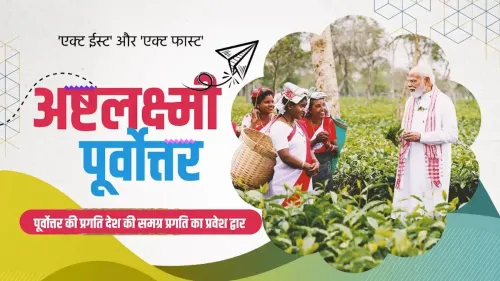
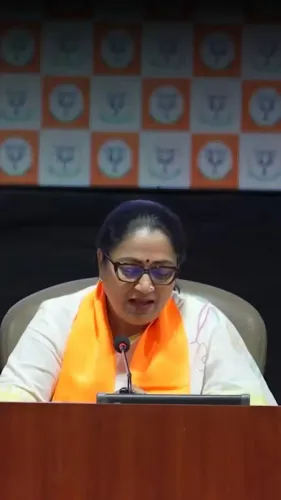
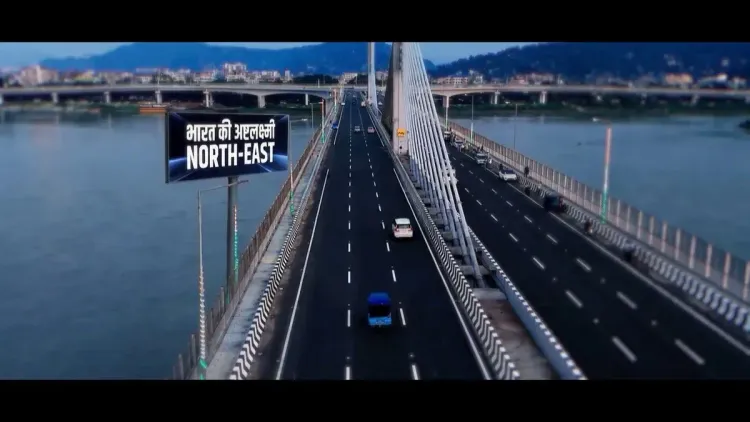
Delhi Chief Minister Rekha Gupta on Saturday, June 20, 2026, credited Prime Minister Narendra Modi's leadership for transforming Northeast India from a region of neglect into a symbol of development and connectivity, marking what she called a journey 'from distance to trust.' Her remarks, posted on X under the hashtag #12YearsOfRisingNorthEast, highlighted rail, road and air expansion as the central drivers of the region's transformation.
Context
In her post, Gupta wrote — 'आदरणीय प्रधानमंत्री श्री नरेंद्र मोदी जी के नेतृत्व में पूर्वोत्तर भारत उपेक्षा से विकास और दूरी से विश्वास की यात्रा का सशक्त प्रतीक बनकर उभरा है' — meaning: 'Under the leadership of respected Prime Minister Narendra Modi, Northeast India has emerged as a powerful symbol of the journey from neglect to development, and from distance to trust.' She further noted that 'new streams of development have reached every corner of the Northeast' through unprecedented expansion of connectivity infrastructure.
The post accompanied a video and was published as part of a broader BJP narrative marking 12 years of the party's governance record on Northeast policy. Gupta concluded by describing the Northeast as 'a strong foundational pillar of the resolve for a Developed India.'
Policy Backdrop
The Act East Policy, launched in 2014, reframed India's earlier Look East approach with an explicit focus on integrating the eight northeastern states with ASEAN markets through physical and economic connectivity. The policy placed Northeast India at the strategic centre of India's outward economic engagement, treating improved roads, railways and airports as prerequisites for investment and trade flows.
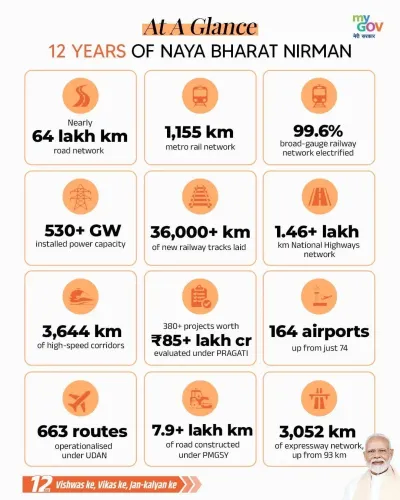
Complementing this, the Bharatmala Pariyojana, approved in 2015, included multiple road corridors across northeastern states to address decades of underinvestment in surface connectivity. Rail expansion projects — including bridge crossings and new lines in states such as Arunachal Pradesh, Manipur and Meghalaya — have been central to the government's connectivity agenda. Air connectivity improvements under the UDAN scheme have opened smaller cities in the region to commercial aviation.
Stakeholders and Impact
Residents across the eight northeastern states — Assam, Arunachal Pradesh, Manipur, Meghalaya, Mizoram, Nagaland, Sikkim and Tripura — stand as the primary beneficiaries of improved connectivity. Better road and rail links reduce travel time, lower logistics costs for local produce, and open pathways for tourism, which has grown as an economic sector in states such as Sikkim and Meghalaya.
Infrastructure investors and private sector players have also been drawn into the region as physical access improves. The North Eastern Council, the statutory advisory body for regional planning, has been a key institutional vehicle for channelling central funds and coordinating development priorities across state governments.
What's Next
Attention will turn to the progress of rail and highway projects listed under the 2024-25 Union Budget and the outcomes of the next North Eastern Council meeting, which will signal whether on-ground execution matches the political narrative. For the BJP, the #12YearsOfRisingNorthEast campaign represents an effort to consolidate electoral goodwill in a region where the party has made significant political inroads since 2014. Sustained infrastructure delivery — particularly completing last-mile rail links and operationalising new airports — will determine whether the development story holds beyond the campaign cycle.
Point of View
Once a BJP blind spot, is now a region where the party holds power in most states, making it both a political asset and a governance accountability test. By anchoring the narrative in physical infrastructure — rail, road, air — rather than welfare schemes, the BJP is signalling that it views connectivity as the most defensible and visible metric of regional development. The forward challenge is that campaign hashtags invite scrutiny of delivery gaps, and any stalled projects become opposition ammunition in a region with a history of unmet central promises.
NationPress
20 Jun 2026
Frequently Asked Questions
What did Delhi CM Rekha Gupta say about Northeast India?
Rekha Gupta praised PM Narendra Modi's 12-year record on Northeast India, saying the region has transformed from neglect to development through unprecedented expansion of rail, road and air connectivity.
What is the #12YearsOfRisingNorthEast hashtag about?
It is a BJP social media campaign marking 12 years of the party's governance, highlighting infrastructure and connectivity achievements in the eight northeastern states under PM Modi's leadership.
What is India's Act East Policy and how does it relate to the Northeast?
The Act East Policy, launched in 2014, focuses on integrating Northeast India economically with ASEAN nations through improved physical connectivity, making the region central to India's eastward engagement strategy.
Which states make up Northeast India?
Northeast India comprises eight states: Assam, Arunachal Pradesh, Manipur, Meghalaya, Mizoram, Nagaland, Sikkim and Tripura.
What infrastructure projects have been undertaken in Northeast India since 2014?
Key projects include road corridors under the Bharatmala Pariyojana, new and extended rail lines in states such as Manipur and Arunachal Pradesh, and expanded air connectivity under the UDAN scheme.