CM Rekha Gupta pays tribute to Birsa Munda on Janjatiya Gaurav Divas
Synopsis
Delhi Chief Minister Rekha Gupta marked Janjatiya Gaurav Divas on 15 November 2026 with a tribute to Bhagwan Birsa Munda, honouring the tribal icon's resistance against colonial rule and his enduring legacy of jal-jungle-zameen rights.
Key Takeaways
Delhi CM Rekha Gupta posted a tribute to Bhagwan Birsa Munda on his birth anniversary, 15 November 2026 .
Janjatiya Gaurav Divas was officially instituted by the Government of India in 2021 to mark Birsa Munda's birth anniversary each year on 15 November .
Birsa Munda, known as 'Dharti Aaba' (Father of the Earth), led the Ulgulan movement against British land policies in the Chota Nagpur region.
He died in British custody in 1900 at the age of just 25 , having already forced colonial authorities toward the Chotanagpur Tenancy Act of 1908 .
CM Gupta's tribute emphasised his struggle for jal, jungle, zameen as a fight for the entire nation's identity, not only tribal communities.
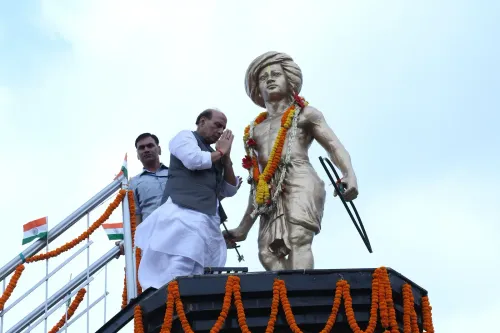
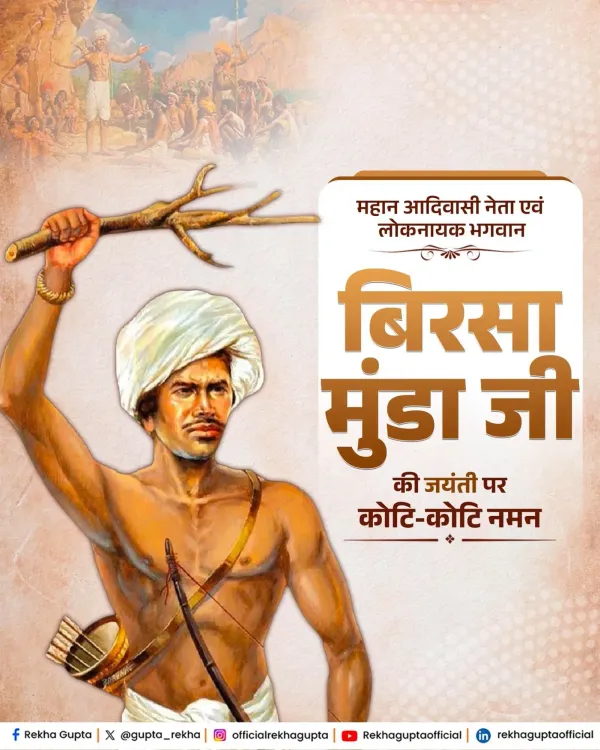
On the birth anniversary of one of India's most revered tribal icons, Delhi Chief Minister Rekha Gupta on Sunday, 15 November 2026 offered her homage to Bhagwan Birsa Munda, hailing him as an immortal symbol of tribal self-respect, courage, and patriotism — and extended warm wishes to the nation on Janjatiya Gaurav Divas.
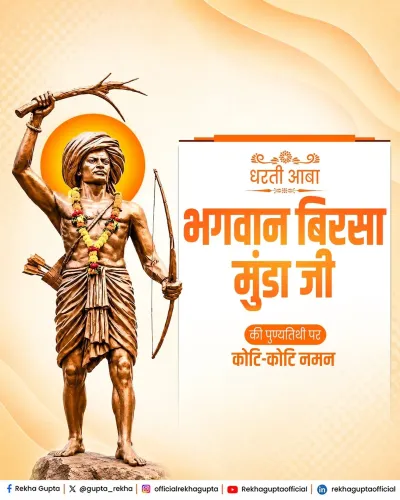
In her post, CM Gupta wrote: 'जनजातीय स्वाभिमान, साहस और राष्ट्रभक्ति के अमर प्रतीक 'धरती आबा' भगवान बिरसा मुंडा जी की जयंती पर कोटि-कोटि नमन' — ('Countless salutations on the birth anniversary of 'Dharti Aaba' Bhagwan Birsa Munda, the immortal symbol of tribal pride, courage, and patriotism'). She described his struggle against injustice and foreign rule as one that awakened a new consciousness of self-respect and freedom across tribal society, and called his sacrifice an eternal chapter in India's great tribal heritage.
Who was 'Dharti Aaba' Birsa Munda?
Bhagwan Birsa Munda, revered as Dharti Aaba (Father of the Earth), was a late 19th-century tribal leader from the Chota Nagpur region — in present-day Jharkhand. At a remarkably young age, he led the Ulgulan (meaning 'The Great Tumult'), a mass movement that challenged British land-grab policies and fought for Adivasi communities' rights over jal, jungle, zameen — water, forest, and land. His movement was not merely a local uprising; it forced colonial administrators to enact the Chotanagpur Tenancy Act of 1908, which provided significant protections for tribal land rights.
Janjatiya Gaurav Divas: from movement to national observance
The Government of India formally declared 15 November as Janjatiya Gaurav Divas in 2021, institutionalising the date as a national observance to honour the contributions of tribal communities to India's freedom struggle and cultural heritage. The declaration marked a significant step in mainstreaming Adivasi history within the national narrative. Since then, 15 November has seen state and central programmes ranging from cultural events to tribal welfare scheme announcements across the country.
CM Gupta's tribute fits within a broader pattern visible since 2014 of BJP-led governments — at both the centre and in states — issuing prominent public homages to tribal icons on this date, weaving the jal-jungle-zameen struggle into a wider national story of resistance to foreign domination and the defence of indigenous identity.
The legacy that outlasted a short life
Birsa Munda was born on 15 November 1875 and died in British custody in 1900, aged just 25. In her post, CM Gupta specifically noted that he sounded the bugle of resistance against injustice 'at a young age' — 'अल्पायु में ही' — underscoring how much he achieved in so little time. His image now adorns the Central Hall of Parliament, and his legacy continues to shape debates around tribal land rights, forest governance, and Adivasi political representation in contemporary India.
On a day when the nation pauses to remember a 25-year-old who shook an empire, the question his legacy keeps asking is a live one: how well have the institutions he forced into existence actually protected the communities he fought for?
Point of View
Serving the dual purpose of honouring a genuine freedom hero and consolidating the party's outreach to India's sizable Adivasi electorate. CM Gupta's framing — situating Birsa Munda's struggle as a national rather than merely tribal cause — reflects a deliberate narrative strategy to integrate indigenous history into the mainstream freedom-movement canon. This approach has grown more pronounced since 2021, when the Centre institutionalised the observance, giving state-level leaders a formal occasion to amplify the message. The durability of this political investment will ultimately be tested against measurable outcomes in tribal land rights, forest governance, and welfare delivery.
NationPress
15 Nov 2026
Frequently Asked Questions
What is Janjatiya Gaurav Divas and why is it celebrated on 15 November?
Janjatiya Gaurav Divas is a national observance held every year on 15 November to honour the contributions of tribal communities to India's freedom struggle and cultural heritage. The date marks the birth anniversary of Bhagwan Birsa Munda . The Government of India formally declared it in 2021 .
Who was Bhagwan Birsa Munda?
Bhagwan Birsa Munda was a tribal leader born on 15 November 1875 in the Chota Nagpur region. He led the Ulgulan movement against British land policies, fighting for Adivasi rights over water, forests, and land. He died in British custody in 1900 , aged 25 .
What did CM Rekha Gupta say about Birsa Munda?
Delhi CM Rekha Gupta described Birsa Munda as an immortal symbol of tribal self-respect, courage, and patriotism, calling him 'Dharti Aaba' . She said his struggle for jal, jungle, zameen was not just a tribal cause but a fight for the entire nation's pride and identity.
What was the Ulgulan movement led by Birsa Munda?
The Ulgulan , meaning 'The Great Tumult,' was a mass uprising led by Birsa Munda in the late 19th century against British land-grab policies in the Chota Nagpur region. It demanded Adivasi rights over water, forests, and land, and eventually contributed to the passage of the Chotanagpur Tenancy Act of 1908 .
When was Janjatiya Gaurav Divas officially declared a national observance?
The Government of India declared 15 November as Janjatiya Gaurav Divas in 2021 , institutionalising the date to recognise tribal communities' contributions to India's independence movement and cultural legacy.