CM Rekha Gupta Pays Tribute to Homi Bhabha on Birth Anniversary
Synopsis
Delhi Chief Minister Rekha Gupta paid tribute to Dr. Homi Jahangir Bhabha on his birth anniversary on 30 October 2026, honouring the Padma Bhushan-winning physicist who founded India's nuclear programme, established TIFR in 1945, and chaired the Atomic Energy Commission from 1948 until his death.
Key Takeaways
Delhi CM Rekha Gupta posted a tribute to Dr.
Homi Jahangir Bhabha on his birth anniversary, 30 October 2026 .
Bhabha is widely regarded as the father of India's nuclear programme and was awarded the Padma Bhushan .
He founded the Tata Institute of Fundamental Research (TIFR) in 1945 and chaired the Atomic Energy Commission from 1948 until his death in 1966 .
The Atomic Energy Act, 1948 , drafted under his guidance, remains the statutory backbone of India's civilian nuclear research.
CM Gupta highlighted Bhabha's vision of making India self-reliant — aatmanirbhar — in nuclear power through indigenous capability.
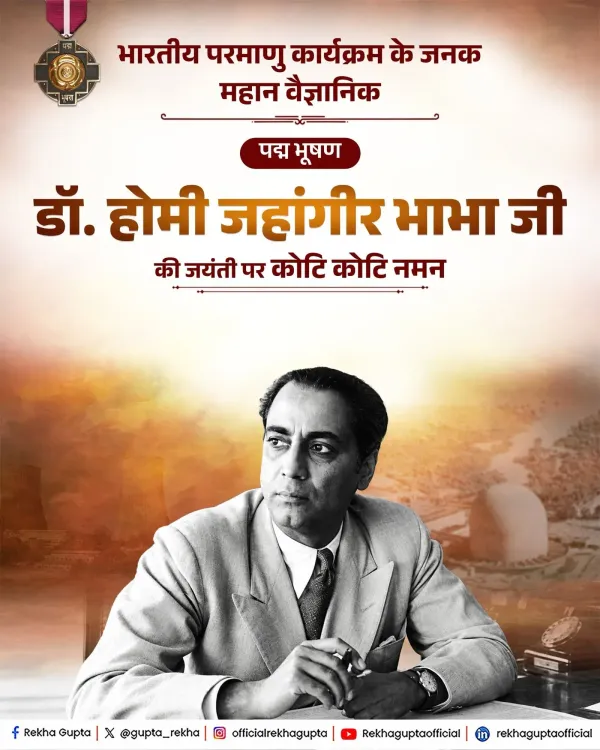
On the birth anniversary of the man who gave India its nuclear backbone, Delhi Chief Minister Rekha Gupta offered a heartfelt tribute to Dr. Homi Jahangir Bhabha on Friday, 30 October 2026 — honouring the physicist who turned a newly independent nation's atomic ambitions into an enduring reality.
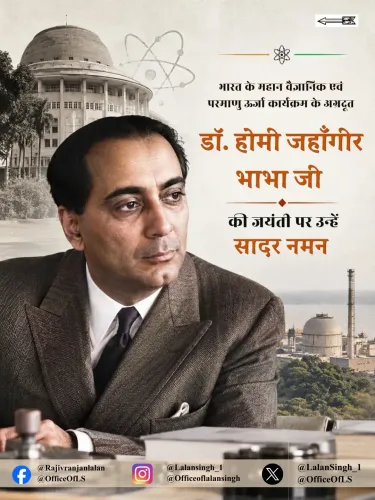
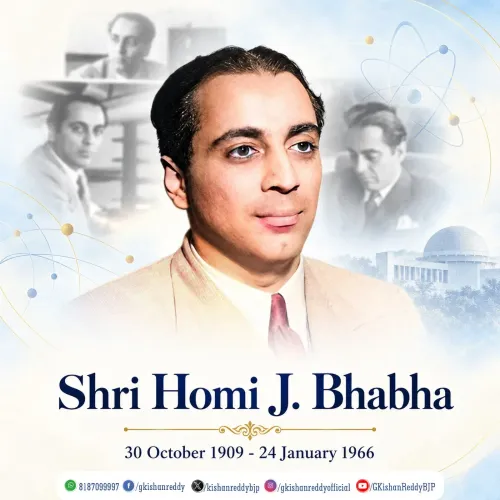
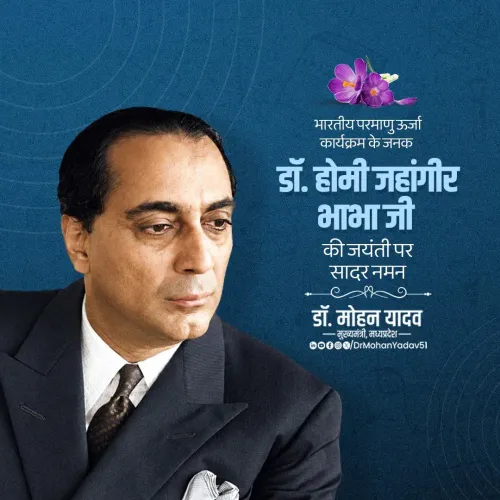
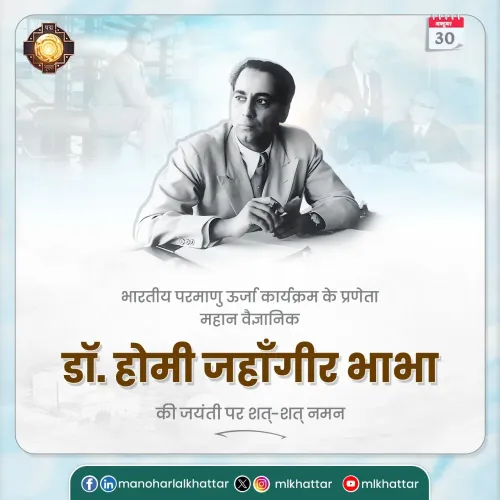
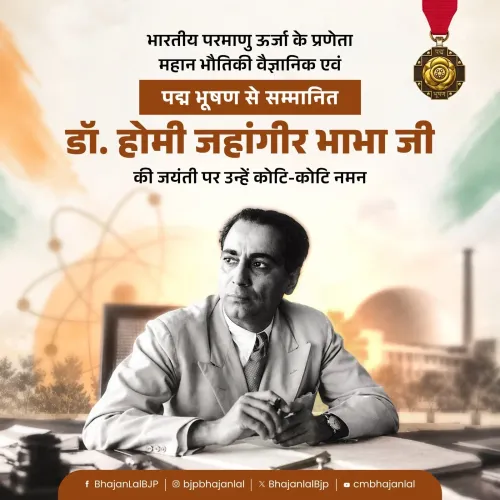
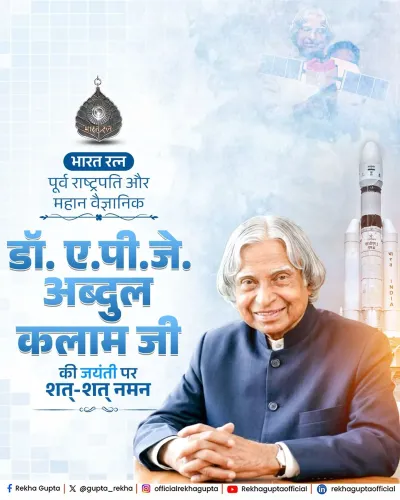
Posting in Hindi, CM Gupta wrote: 'भारतीय परमाणु कार्यक्रम के जनक... डॉ. होमी जहांगीर भाभा जी की जयंती पर शत-शत नमन' — 'A hundred salutes on the birth anniversary of Dr. Homi Jahangir Bhabha, the father of India's nuclear programme.' She added that Bhabha's 'extraordinary scientific skill and foresight laid a strong foundation to make India self-reliant in the field of nuclear power,' and that 'his resolve and contribution to empowering the nation through science will always be remembered.'The Scientist Who Built India's Nuclear Foundation
Dr. Homi Jahangir Bhabha was born on 30 October 1909. A Cambridge-trained theoretical physicist who had worked alongside some of Europe's finest scientific minds, he returned to India during the Second World War and never left. In 1945, he established the Tata Institute of Fundamental Research (TIFR) in Bombay — the seed from which India's entire scientific nuclear enterprise would grow. When India became independent, Prime Minister Jawaharlal Nehru placed the country's nuclear future squarely in Bhabha's hands. In 1948, Bhabha became the founding chairman of the Atomic Energy Commission of India, a role he held until his death in 1966. The Atomic Energy Act of 1948 — drafted under his guidance — created the statutory framework that governs India's civilian nuclear research to this day. The Padma Bhushan conferred on him recognised not just scientific excellence but strategic nation-building at a moment when the world was learning the weight of the atom.Self-Reliance in Science — A Theme That Outlasted Bhabha
The phrase Gupta invoked — aatmanirbhar, self-reliant — resonates deliberately across Indian political discourse today, but Bhabha had embodied it decades before the word became policy shorthand. His insistence that India develop indigenous nuclear capability rather than depend on foreign technology shaped a doctrine that successive governments, across party lines, have honoured. Annual tributes on 30 October have become a fixture of India's official calendar, underscoring the bipartisan consensus around Bhabha's legacy. The scientific community continues to regard him as a founding figure — not merely of nuclear physics in India, but of the institutional scaffolding that supports fundamental research across the country. TIFR, the Bhabha Atomic Research Centre (BARC) in Trombay, and the broader Department of Atomic Energy all trace their lineage directly to decisions Bhabha made in the first two decades of independence. A giant of Indian science, remembered each October — and still very much at work in every reactor that lights an Indian city.Point of View
Reflecting a rare bipartisan consensus: nuclear self-reliance is non-negotiable national doctrine. CM Rekha Gupta's invocation of the aatmanirbhar frame connects Bhabha's mid-century vision directly to the BJP's contemporary governance vocabulary, lending historical depth to a current policy priority. The tribute also signals that science-and-security nationalism — linking fundamental research to strategic autonomy — remains a durable political asset well beyond any single government. As India continues expanding its nuclear energy capacity, Bhabha's foundational choices are increasingly cited to legitimise investment in indigenous technology over foreign partnerships.
NationPress
30 Oct 2026
Frequently Asked Questions
Who was Dr. Homi Jahangir Bhabha?
Dr. Homi Jahangir Bhabha was a Cambridge-trained theoretical physicist born on 30 October 1909, widely regarded as the father of India's nuclear programme. He founded the Tata Institute of Fundamental Research in 1945 and chaired the Atomic Energy Commission of India from 1948 until his death in 1966.
Why is 30 October significant for Indian science?
30 October is the birth anniversary of Dr. Homi Jahangir Bhabha. It is observed annually with official tributes across India, recognising his foundational role in building the country's nuclear and scientific research institutions.
What award did Homi Bhabha receive?
Dr. Homi Jahangir Bhabha was awarded the Padma Bhushan, one of India's highest civilian honours, in recognition of his extraordinary contribution to science and national development.
What is the Atomic Energy Commission of India?
The Atomic Energy Commission of India was established in 1948 under the Atomic Energy Act of the same year. Dr. Homi Bhabha was its founding chairman and guided India's civilian nuclear research strategy from its inception.
What did Rekha Gupta say about Homi Bhabha?
Delhi Chief Minister Rekha Gupta posted on X on 30 October 2026, calling Bhabha the father of India's nuclear programme and stating that his extraordinary scientific skill and foresight laid a strong foundation for making India self-reliant in nuclear power.